
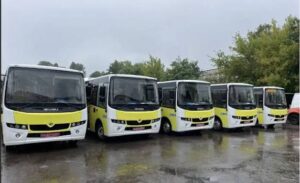
Initial registrations of new and used buses (including minibuses) in Ukraine in September 2026 rose by 39% compared to the same month in 2025—to 324 units, according to a report by Ukravtoprom on its Telegram channel.
Compared to August of this year, the bus market grew by 21.8% (58 units).
According to the association, new vehicles accounted for 64% of registrations in September, compared to 58% last year.
Last month, among new buses, the most frequently registered were domestic models: Ataman—38 units (nearly three times more than in August 2026), ZAZ—37 units (12% fewer), and Etalon—20 units (38% fewer).
Among used buses, the top three were Mercedes-Benz—59 units, Volkswagen—15 units, and Iveco—7 units.
In total, from January through September 2026, Ukraine’s bus fleet grew by 1,716 buses (+4% compared to the same period in 2025), including 731 new buses (-9%) and 985 used buses (+15%).
Meanwhile, the information and analytical group Auto-Consulting also reported a record number of new buses delivered to customers in September—the highest in the last 10 years.
“Another point is that most of these buses are school models purchased by local communities using partial funding from the state budget. This made it possible to deliver nearly 200 new buses in September alone, which is 64% more than last year,” according to a statement on the group’s website.
Over the first nine months, the new bus market grew by 2.6%.
Experts believe that this year’s anomaly in bus deliveries in September is linked to the financing of these purchases, which is why the bulk of deliveries occurred not at the start of the school year, but specifically during the first month of classes.
In fact, government purchases of school buses from four Ukrainian manufacturers accounted for 80% of the market.
As previously reported, the state budget allocated a subsidy of 2 billion UAH this year for the implementation of the “School Bus” program.
According to “Ukravtoprom,” Ukraine’s bus fleet grew by 2,040 buses in 2025 (+8% compared to the same period in 2025). Of these: 939 were new (+0.4%); 1,101 were used (+16%).
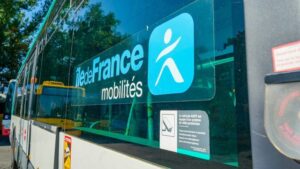
The Kyiv Oblast State Administration has delivered five more passenger buses to Bucha as part of aid from its French partners—the Île-de-France region—according to the administration’s press service.
“Four buses had previously been added to the community’s fleet, and now five more have been added. The vehicles are adapted for people with disabilities and parents with strollers. The barrier-free design makes the buses more comfortable for all passengers,” the statement on the Telegram channel reads.
It is emphasized that this is an important step toward strengthening the local transportation system, as people’s daily mobility directly affects their quality of life.
In total, as part of the partnership with the Île-de-France region, Kyiv Oblast has already received 60 buses, which are being transferred to local communities.
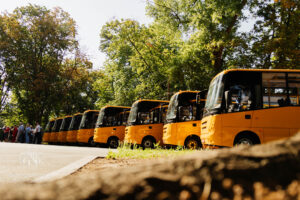
High schools and gymnasiums in the Dniprovskyi and Samarivskyi districts of the Dnipropetrovsk Region have received 10 new school buses as part of the Ukraine Facility program, with plans to purchase another 42 by the end of the year, according to Oleksandr Hanzha, head of the Dnipropetrovsk Regional Military Administration.
“The new buses are comfortable and adapted for students with special educational needs; these 10 vehicles will provide transportation for nearly 1,200 students to 32 educational institutions,” he wrote on Telegram on Monday.
In total, according to Hanzha, there are currently 462 school buses operating in Dnipropetrovsk Oblast. Another 42 are planned to be purchased this year. The procurement is being funded by an educational subsidy, co-financed with local communities as part of the Ukraine Facility program.
The head of the Regional State Administration thanked the president, the government, the Ministry of Education and Science, and European partners for supporting this initiative.
BUS, DNIPROPETROVSK REGION, SCHOOL, Ukraine Facility, СТУДЕНТ
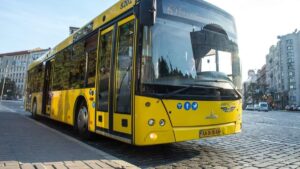
Initial registrations of new and imported used buses (including minibuses) in Ukraine in June 2026 rose by 19% compared to the same month in 2025—to 183 units, according to a report by Ukravtoprom on its Telegram channel.
At the same time, compared to May of this year, demand for buses fell by 16%.
According to Ukravtoprom, the share of new vehicles in total bus sales in June continued to decline, reaching only 28%, compared to 48% last year and 31% in May of this year.
Last month, the most frequently registered new buses were Ataman models from the Cherkasy Bus plant (12 units), Ford (12 units), and ZAZ (11 units).
Among used buses, the top three were Mercedes-Benz (66 units), Volkswagen (12 units), and Van Hool (11 units).
In total, during the first half of 2026, Ukraine’s bus fleet was expanded by 1,230 buses (+4% compared to the same period in 2025). Of these: new buses – 500 units (-6%); used buses – 730 units (+12%).
As reported, citing data from “Ukravtoprom,” Ukraine’s bus fleet was expanded by 2,700 buses in 2025—21% more than in 2024—including 1,343 new buses (+4%) and 1,364 imported used buses (+44%).

During a government visit, Azerbaijan provided Ukraine with five passenger buses as humanitarian aid for community needs, Ukrainian Foreign Minister Andriy Sibiga announced.
“Since 2022, Azerbaijan has repeatedly contributed to supporting the Ukrainian people. In particular, it has provided humanitarian aid worth over $45 million, including powerful generators, transformers, and critical equipment that helps maintain the operation of our energy system amid constant attacks,” he wrote on the social media platform X.
The minister noted that the country is also providing support to Ukrainian children.
“More than 500 Ukrainian children have participated in rehabilitation programs in Azerbaijan—this is especially valuable in the context of war. We deeply appreciate this solidarity, as it helps Ukraine stay on its feet and move forward,” Sibiga noted.
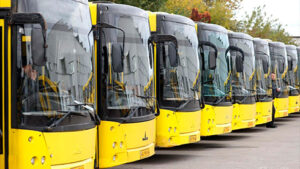
Bus registrations (new, imported used, and domestic resales) in March 2026 rose by 41.8% compared to February of the same year—to 553 units—though this is three buses fewer than the figure for March 2025, according to the Automotive Market Research Institute (AMRI).
“Domestic resales remain the main channel for vehicle sales (355 transactions), showing a 47.9% increase compared to February. However, on an annual basis (compared to March 2025), the market still lags by 9.9%, which is a consequence of the high operating costs of outdated models,” reads a post on the IAM website.
The Mercedes-Benz Sprinter remains the leader in resales (72 transactions), which, according to experts, has effectively monopolized the niche of suburban and intercity express transportation. Second place goes to the VDL Citea (46 transactions), which, according to experts, indicates active turnover of used European low-floor buses in the domestic market.
Third and fourth places are held by the Ukrainian brands “Etalon” and “Bogdan”—with 21 and 20 transactions, respectively. They hold positions in the school and budget commuter transport segment.
The import segment for used buses in March grew by 26% compared to February 2026, reaching 97 units (102 units in March 2025). More than half of the top five registrations are accounted for by Daimler Group products—led by the Mercedes-Benz Sprinter (31 units), with the Cirato and Vario models in second and third place (12 and 7 units, respectively).
“With diesel priced at 90 UAH/liter, carriers are opting for Euro-5 and Euro-6 compliant vehicles, which is a necessary condition for maintaining profitability on routes,” the report states.
The new bus segment (imports and Ukrainian production) totaled 101 units in March—68% more than in March of last year, but, as noted by the IDA, the main trend was the growth in imports of new vehicles (53 units—four times more than in February 2026), which for the first time in a long time exceeded domestic production volumes (48 units).
According to experts, the Isuzu Citiport (20 units) became the market leader, indicating the implementation of targeted programs to renew city fleets. Second place went to the new Ford Transit (17 units), which are used as social and corporate transport. Next are the Ukrainian “Etalon” and “Bogdan” – 12 units each.
“Domestic manufacturers (BAZ, ”Bogdan,” Ataman, ZAZ) recorded a 20% decline in production in March compared to February. The majority of the vehicles produced are small-class suburban models, which are traditionally purchased with budget funds. The positive year-over-year trend (+71.4% compared to March 2025) indicates a gradual resumption of factory operations following last year’s stagnation,” experts note.



