
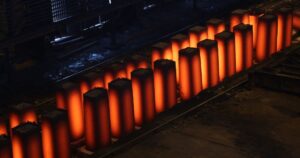
In 2025, the Kryvyi Rih Iron and Steel Works PJSC ArcelorMittal Kryvyi Rih (AMKR, Dnipropetrovsk region) was quite successful in selling metal products on the EU market, but now, due to CBAM and electricity shortages, it is reducing production and operating at a loss.
As AMKR Director of Government Relations Oleg Krykavsky noted during the event “How does the shelling of the power grid affect business operations?” organized by the Center for Economic Strategy (CES), the fact that the company is part of a large multinational corporation helps it to operate and stay afloat.
“We were helped by the fact that we received more than $1 billion in aid from a multinational corporation, which was used to keep the company running. Currently, the company is operating at an average of 50% of its capacity. We were quite successful in the EU market last year, partly thanks to the government’s actions, as a good agreement was reached with the European Union to extend duty-free trade for another three years. In 2025, we exported 1.2 million tons of metal products to the European market, down from 3 million tons. But because of the CETA, our costs are rising, which means we will have to close one workshop – the blooming shop,” said the top manager.
He added that AMKR is at a disadvantage compared to European producers under CETA, as it will have to pay $63-90/ton, depending on the type of product. Also, electricity tariffs are high, and electricity import contracts are very short.
“We had several cases where we did not meet the electricity consumption volumes, and our trader sold it on the market for UAH 0. Not only did we not receive what we bought, but we were also forced to reduce production, which resulted in direct losses. And, of course, we are in dialogue with the government on this issue,” the company explained.
Responding to a question about equipment arrivals, Krykavsky noted that the equipment works during alarms. But there are losses due to emergency situations, and they are painful. Under normal conditions, the enterprise consumes 400 MW*h, but due to restrictions, we now consume 230-250 MW*h, and there are limits of 70 MW*h.
“That is, the rest is peak hours, and you have to think about what to do with that. Usually, you think about importing, because you have to work somehow. Plus, you can’t fire people for five to seven hours without paying them. People get paid at work, so you have to work,” said the AMKR representative.
He added that there was a case at the enterprise when a coke battery was damaged due to a power outage caused by a network failure.
“We are investigating who is to blame for this. But one coke battery burned down. A coke battery is, in essence, a chemical process, which means it cannot be stopped. We have installed industrial generators for such cases, but even they need 16 hours or more to start up,” the manager explained.
With half of its capacity in operation, the company is trying to cover some capacities with others, while repairing something that is idle so that it can be started up at some point.
“We are thinking about our own generation, about cogeneration. There are limited resources and limited potential. It is very expensive. But we are working on it in parallel; we have our own CHP plants and technologies today that allow us to do this. But we are a large enterprise and require large capacities,” summarized the AMKR director for relations with state authorities.
ArcelorMittal Kryvyi Rih is the largest producer of rolled steel in Ukraine. It specializes in the production of long products, in particular, rebar and wire rod. The company has a full production cycle, with production capacities designed for an annual output of over 6 million tons of steel, more than 5 million tons of rolled products, and over 5.5 million tons of pig iron.
ArcelorMittal owns Ukraine’s largest mining and metallurgical complex, ArcelorMittal Kryvyi Rih, and a number of small companies, including ArcelorMittal Beryslav.
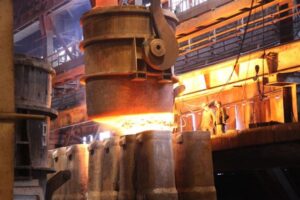
The Kryvyi Rih Mining and Metallurgical Plant PJSC ArcelorMittal Kryvyi Rih (AMKR, Dnipropetrovsk region) has announced that it will be forced to shut down its blooming shop in the second quarter of 2026.
According to the company’s press release on Monday, this decision is not an easy one, but it is objectively dictated by the current economic and market conditions in which the company is operating in the context of a full-scale war.
The key factor that led to this step was the European Commission’s decision to introduce the Carbon Border Adjustment Mechanism (CBAM) for Ukrainian producers from January 1, 2026, without any exceptions or transition period. In effect, this means the loss of the European market for a significant portion of Ukrainian metallurgical products, which critically affects the production volumes and utilization of individual units.
It is noted that ArcelorMittal Kryvyi Rih has made significant efforts to reorient sales to the European Union market after the start of the full-scale war. In fact, this market was built from scratch in extremely difficult conditions. However, the introduction of CBAM without taking into account the military realities in Ukraine has nullified these efforts. In the absence of a stable European market, the company does not have sufficient orders to ensure the operation of the blooming mill both today and in the medium term.
ArcelorMittal Kryvyi Rih is the largest producer of rolled steel in Ukraine. It specializes in the production of long products, in particular, rebar and wire rod. The company has a full production cycle, with production capacities designed for an annual output of over 6 million tons of steel, more than 5 million tons of rolled products, and over 5.5 million tons of pig iron.
ArcelorMittal owns Ukraine’s largest mining and metallurgical complex, ArcelorMittal Kryvyi Rih, and a number of small companies, including ArcelorMittal Beryslav.
The Kryvyi Rih Mining and Metallurgical Plant PJSC ArcelorMittal Kryvyi Rih (AMKR, Dnipropetrovsk region) has announced that it will be forced to shut down its blooming shop in the second quarter of 2026.
According to the company’s press release on Monday, this decision is not an easy one, but it is objectively dictated by the current economic and market conditions in which the company is operating in the context of a full-scale war.
The key factor that led to this step was the European Commission’s decision to introduce the Carbon Border Adjustment Mechanism (CBAM) for Ukrainian producers from January 1, 2026, without any exceptions or transition period. In effect, this means the loss of the European market for a significant portion of Ukrainian metallurgical products, which critically affects the production volumes and utilization of individual units.
It is noted that ArcelorMittal Kryvyi Rih has made significant efforts to reorient sales to the European Union market after the start of the full-scale war. In fact, this market was built from scratch in extremely difficult conditions. However, the introduction of CBAM without taking into account the military realities in Ukraine has nullified these efforts. In the absence of a stable European market, the company does not have sufficient orders to ensure the operation of the blooming mill both today and in the medium term.
ArcelorMittal Kryvyi Rih is the largest producer of rolled steel in Ukraine. It specializes in the production of long products, in particular, rebar and wire rod. The company has a full production cycle, with production capacities designed for an annual output of over 6 million tons of steel, more than 5 million tons of rolled products, and over 5.5 million tons of pig iron.
ArcelorMittal owns Ukraine’s largest mining and metallurgical complex, ArcelorMittal Kryvyi Rih, and a number of small companies, including ArcelorMittal Beryslav.

Ukrainian cement producers require equal conditions with their European counterparts in the implementation of the Carbon Border Adjustment Mechanism (CBAM) from 2026.
“While EU companies have support and equal conditions for investments in decarbonization, Ukrainian companies do not have such support. During martial law, the cost of CBAM certificates puts Ukrainian exports at a disadvantage compared to EU producers and creates additional obstacles for Ukrainian enterprises, exacerbating the negative consequences of the war,” said Lyudmila Krypka, executive director of the Ukrcement Association, on Wednesday during the event “CBAM and the readiness of Ukrainian industry for decarbonization: from methodology to competitive advantage,” organized as part of the STEP IN 2 EU program.
She reminded that Ukraine does not have developed financial markets that would allow it to attract funding for decarbonization. Instead, there are challenges and barriers, one of which is the war and constant round-the-clock rocket and drone attacks, destroyed energy facilities, including generation, staffing problems due to mobilization and emigration, and much more.
As reported, on December 17, 2025, the European Commission (EC) took measures to strengthen the effectiveness of the Carbon Border Adjustment Mechanism (CBAM). From 2026, updated, stricter benchmarks will come into force and a surcharge will be applied to the default values: 10% (2026), 20% (2027), and 30% (from 2028).
According to the expert, to ensure transparency and meaningful participation of all relevant stakeholders, it is important to review the default values as early as 2026, as the values proposed for Ukraine range from 1,500 to 1,794, which are several times higher than the actual figures.
Thus, actual CO2 emissions in the 1990s amounted to 0.956 kg, provided that a larger number of enterprises in the industry (up to 15 enterprises) were operating and production amounted to 17-18 million tons; from 2017 to 2020, emissions decreased from 891 to 879 kg (production decreased from 6,333 to 7,419 thousand tons, the number of enterprises was 10). According to forecasts, in 2025, emissions will be around 0.700 kg, not 1,500.
“The production of 1 ton of cement clinker emits approximately 850 kg of CO2. When using alternative fuels, 90% of CO2 emissions will amount to 672 kg/1 ton of clinker,” Kripka gave an example.
Unfortunately, she added, the alternative fuel market in Ukraine is not working, and Ukrainian cement producers buy it in the EU. Over the past two years, cement companies have been using 20 to 30% alternative fuels, with the goal of increasing the share of alternative fuels to 40% by 2030.
Ukrcement has made a number of proposals to level the playing field for Ukrainian companies subject to the ETS. First of all, our producers should receive free quotas similar to those in the EU; the tax should be applied to actual emissions rather than default values; Ukrainian legislation needs to be harmonized with EU rules on biomass taxation. It is also necessary for producers to be able to use tax “environmental” payments to decarbonize their own enterprises. Cooperation with European verifiers and training courses on CBAM calculation are important.
The Ukrcement Association was established in January 2004 through the reorganisation of the Ukrainian Concern of Cement Industry Enterprises and Organisations “Ukrcement”. The association has four members, comprising eight enterprises that meet 100% of the domestic Ukrainian market’s cement needs.
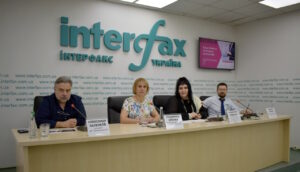
Ukrainian exporters of products to EU countries and the Ukrainian government should pay more attention to the problem of decarbonization within the Green Deal strategy and, in particular, CBAM – an additional tax for goods with a high level of carbonization during production, which comes into effect from 2026.
This opinion was expressed by experts and representatives of companies during a roundtable discussion held at the press center of the Interfax-Ukraine news agency on Tuesday on “The impact of CBAM on domestic exporters”.
Olga Kulik, Director of the Department of Ecology of Energy and Green Economy of the Federation of Employers of Ukraine, noted that CBAM is very important, it affects exporters, every enterprise.

According to her, during a recent business trip she communicated with representatives of enterprises and structures in Europe, they collect information on CBAM reports. At the same time, if European companies realize the requirement for verification of emission reports, Ukrainian enterprises have problems in this direction, in particular, Ukrainian verifiers must be accredited by the European Commission.
“Verification by data – time is going fast, and we cannot delay these problems. Therefore, the Ministry of Economy together with the Ministry of Ecology will negotiate so that verification will be accredited in the EC. But so far the issue has not been resolved,” Kulik said.
On the other hand, according to her, European countries also have certain problems with the unified standardization of a number of points, with further steps to implement the “green” initiative. It is necessary to create a working group, for work within the framework of which Ukraine should receive an invitation.
In turn, the director of the information and analytical center GMK Center Stanislav Zinchenko stated that by implementing the SWAM mechanism the EU protects its markets. And in the future similar mechanisms will be introduced in other countries, such as the UK, USA, Australia.
“This is a new wave of protectionism, this is ‘green’ protectionism and it will step the planet. It will lead to a reformatting of flows, but it will also help reduce emissions,” Zinchenko predicts, adding that there are currently not enough emission verifiers in the EU, in Ukraine and globally.
“Less than 10% of the 20,000 companies in Germany that were supposed to report on time have done so. And in Ukraine there are also problems with the reports, with the methodology. A very crude procedure, a crude experiment, but it is starting to affect Ukrainian companies. Ukraine does not have a single document on SWAM”, – stated the expert.
According to him, due to force majeure circumstances because of the war, Ukraine may not be subject to the requirement to submit verified reports from 2026, but only declarative reports on SWAM, without payment for certificates.
According to him, in case of introduction of strict requirements of the SWAM, Ukraine’s losses, if calculated at 2023 prices, may amount to $600 million for pig iron exports (“minus” 1.4 million tons), $640 million for semi-finished products, and $200 million for rolled products. In general, losses at steel enterprises may reach $1.5 billion.
Other industries will also suffer losses.
“We do not see the interest of either the government or the ministries, which should conduct constant negotiations. And the EU is surprised why Ukraine is not actively involved in this process. Unfortunately, part of the government employees believe that this is a problem of business, not the Cabinet,” Zinchenko summarized.

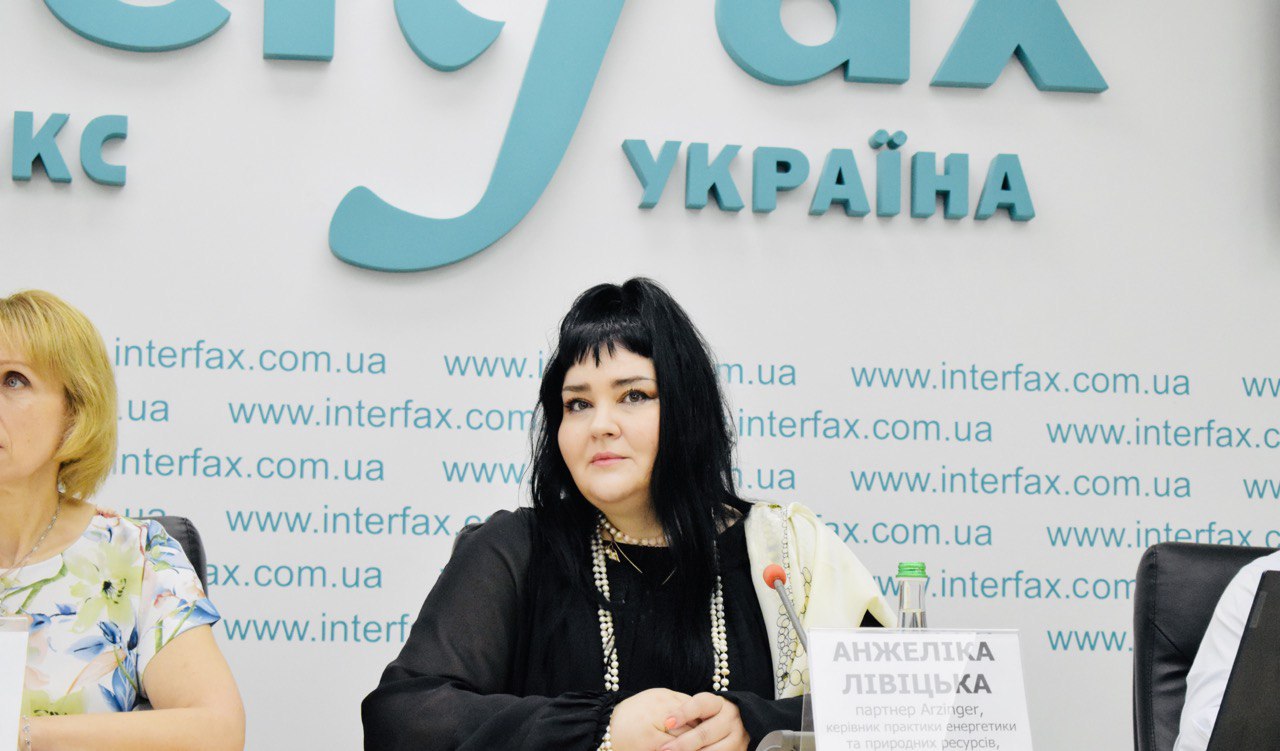
Arzinger partner, head of the Energy and Natural Resources, Environmental Protection and Sustainable Development practice Angelika Livitskaya emphasized that SWAM is a mix of ecology and economics, and Ukraine has an obligation to implement EU legislation in Ukraine.
“We are implementing a number of waste management regulations. And we expect more cooperation from the government and ministries. It is unlikely that we will make it by 2050, but we have a commitment,” Livitskaya said.
According to her, cement, steel, aluminum, and fertilizers will fall mainly under SWAM. And it is necessary to submit reports by May 31 of each year, the first time – by May 31, 2027 with a report for 2026. Failure to submit reports will result in significant fines, from EUR10 to EUR50 for each ton of emissions.
“The government needs to raise the issue of force majeure for Ukrainian enterprises,” Livitskaya believes.
Lyudmyla Kripka, executive director of the Ukrcement association, noted that Ukrainian enterprises have the opportunity to declaratively submit emission reports.
“We initiated such a procedure, we are not obliged to buy SWAM certificates under force majeure circumstances. We offer and ask to work within the framework of SWAM on a declarative principle,” – emphasized Kripka.
The President of Ukrmetallurgprom OP Oleksandr Kalenkov noted that metallurgical enterprises consider SWAM as an irreversible process: “One way or another, it will be implemented and will be worldwide, it will lead to some reformatting of trade all over the world”.
Previously up to a third of steel products went to the EU, the share has now increased due to the blocking of the sea route, and it could increase if the blockade resumes.
“It is important for the government to get involved in the process, to pay more attention to it,” Kalenkov stressed, noting that Euro companies from this eco-initiative receive certain subsidies for their development and modernization.

“It is necessary to level the playing field between Ukrainian and European companies – to apply force majeure conditions for Ukrainian enterprises. It is necessary to approach this issue comprehensively, to take into account the issues of modernization of companies. The Ministry of Industry and Ministry of Economy are involved in this process, but it is important that there is one center that will manage this process, so that a unified position is communicated to European colleagues”, – said the head of Ukrmetallurgprom.
He also believes it is necessary to create a competitive market of verifiers in Ukraine so that both local and European companies could work here.
Earlier, the head of international relations of Metinvest Group Andriy Kryl during Ukraine’s Future Summit said that soon a new obstacle for Ukrainian companies to work in the European market will be the carbon duty (CBAM), which will work in full in 18 months. The top manager expressed hope that thanks to the dialog between the Ukrainian government and the European Commission these obstacles can be overcome and trade flows will remain uninterrupted.
In turn, Vladyslav Varnavskiy, Director for Ecology and Industrial Safety of Interpipe, at the “Exporters’ Summit” organized by Forbes Ukraine, noted that companies should pay more attention to environmental projects within the framework of the EU requirements on the topic of “green” economy – Green Deal and CBAM. And clarified that despite the fact that this topic is becoming increasingly broad and not only political, but also economic and public, in Ukraine so far few companies pay attention to it, even exporters of products to the EU.
As stated on the website of the European Commission, the “green” agreement (Green Deal) is a strategy that should bring the EU economy to a modern, resource-efficient and competitive state through commitments to reduce greenhouse gas emissions by 55% by 2030 and stop completely by 2050.
ANZHELIKA LIVITSKA, CBAM, LUDMYLA KRIPKA, MAXIM URAKIN, OLEXANDR KALENKOV, OLHA KULYK, STANISLAV ZINCHENKO



