
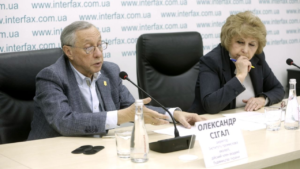
Climate change is already having practical consequences for Ukraine — from energy and agriculture to the condition of the Carpathian ecosystem and the prospects for winter tourism, experts from the Institute of Industrial Ecology and the Institute of Engineering Thermophysics of the National Academy of Sciences of Ukraine said. According to them, global warming in the Ukrainian region is manifesting itself more intensely than in a number of Western European countries, while Russia’s full-scale war is further increasing climate risks.
Corresponding Member of the National Academy of Sciences of Ukraine Nataliia Fialko stressed that the current climate crisis has already gone beyond the bounds of a purely scientific discussion and is directly affecting issues of security, energy and long-term state policy.
“In recent years, the threshold value of 1.5 degrees Celsius has already been reached. In 2023, this anomaly amounted to 1.54 degrees, in 2024 to 1.6, and in 2025 to 1.55. These are data from leading research centers and the World Meteorological Organization, which means humanity has already received a signal that global warming is moving toward its critical limit,” she said at a press conference at the Interfax-Ukraine agency on Thursday.
According to the scientist, the response to climate challenges must focus on decarbonization of the economy, energy efficiency and a transition to climate-neutral energy sources, including nuclear generation.
“The problem of climate security is directly linked to the decarbonization of the economy. And the latter, in turn, is determined by the transition to climate-neutral energy sources, and this concerns not only renewable energy, but also nuclear energy, which is very important for Ukraine. This problem is also linked to increasing energy efficiency overall and to the introduction of a circular economy,” Nataliia Fialko added.
In turn, Director of the Institute of Industrial Ecology and Full Member of the Academy of Construction of Ukraine Oleksandr Sihal noted that Ukraine already has domestic opportunities to reduce fossil fuel consumption, but this requires systematic modernization of heat supply infrastructure.
“If we look at the heating seasons in Ukraine over the past 20 years, we will see that they have already shortened by about 20%. That means we already need about 20% less fossil fuel even without additional measures. Then there is the block of energy efficiency, there is modernization of heating networks, there are individual heating substations, there is biomethane, the sun, the wind — all this makes it possible to significantly reduce the volumes of fossil fuel,” the scientist said.
The participants in the press conference paid special attention to the Carpathians, where, according to Oleksandr Sihal, climate change is already having a fully measurable effect. He noted that historical data, in particular Austrian observations, already record a significant temperature increase in the Carpathian region.
“According to Austrian data, since 1850 we have already seen a temperature increase of 2.4 degrees. If we interpolate this curve further, even without any acceleration of the process, then by 2050 we will have another 1.4–1.9 degrees of average increase. And this means not just a change in the average temperature, but an increase in imbalance — more very cold and very warm days and fewer stable moderate periods,” the expert added.

He emphasized that one of the most noticeable consequences of warming for the Carpathians has already been a reduction in the period of stable snow cover that can be used during the tourist season.
“If we are talking about our Carpathians, then already now the season when people can use snow for skiing holidays has shortened by 8–10 days. And if this process is not supported by artificial snow, this reduction will only continue to grow. We can already see that the snow disappears and then appears again, and these gaps have to be covered,” the scientist said.
At the same time, according to him, replacing natural snow with artificial snow will require significant water and electricity resources, which the country currently lacks under present conditions.
“To replace that same snow, 250–400 liters of water are needed for 1 cubic meter of snow, and in total, 3,000–4,000 cubic meters of water per hectare. In addition, the energy costs of producing artificial snow amount to 0.3–0.7 kilowatts per cubic meter, and if we calculate even minimal ski slopes, we are talking about millions of kilowatt-hours of electricity. In the situation Ukraine is currently in, we do not have such volumes of electricity, no matter how much money it might cost,” Oleksandr Sihal said.
According to the expert, this will inevitably affect the cost of recreation in the Carpathians as well.
“If we still want to preserve resorts in Ukraine, then we must be ready for the fact that for those who will отдыхать, this will mean additional costs. This may amount to between EUR100 and EUR800 for a vacation period of 10–20 days — in fact, this is how much will have to be paid to maintain such resort infrastructure. And if at some resorts, with the exception of Bukovel, which has sufficient water resources of its own, water also has to be transported, then all these costs will ultimately fall on the end consumer,” he stressed.
Nataliia Fialko also drew attention to the fact that for Ukraine the problem is even more acute than for some other European countries because of climate features and the consequences of the war.
“In Ukraine, global warming is taking place somewhat more intensely than in Western Europe, and this is primarily due to a drier climate. In addition, the situation is significantly affected by Russia’s full-scale invasion, which has led to a considerable increase in CO2 emissions. This is the so-called carbon footprint of war,” she said.

According to her, military actions have already become one of the main sources of additional climate pressure on Ukraine. In 2022, according to the scientist, military actions themselves, rather than energy or industry, became the main source of CO2 emissions, which caused emissions to rise by 23% immediately. Additional CO2 emissions from military actions in 2025 amounted to 77 million tonnes of CO2 equivalent, and for the period from February 2022 to February 2025 they totaled 175 million tonnes. The total related damage is estimated at $57 billion. The expert also outlined a broader list of risks that warming poses for states and societies.
“The main components of this problem include shortages of drinking water, food insecurity, soil degradation, competition for land, climate migration and energy vulnerability. In response, adaptive agriculture, international tools for resource management, energy decentralization and early warning systems are needed. And, what is especially important, armed forces and intelligence services must include climate forecasts in their strategic planning,” Fialko added.
Oleksandr Sihal expressed doubt about the possibility of quickly launching a separate state support program for ski resorts under wartime conditions and financial shortages, while at the same time naming the preservation of forests in the Carpathians as the first priority.
“The countries around us have similar problems, and the first piece of advice is not to cut down forests in the Carpathians. In fact, other countries are increasing forest cover, while Ukraine is cutting down century-old oaks and beeches. So we need to copy what is being done abroad and stop cutting down the Ukrainian Carpathians,” he concluded.
CARPATHIANS, CLIMATE CHANGE, NATALIIA FIALKO, OLEKSANDR SIHAL
Within the first competitions of the NEXT Romania-Ukraine cross-border communities development program for the period 2021-2027, 120 projects with a non-refundable value of EUR87 million have been submitted, according to the project’s press service.
The press service of the Romanian Ministry of Development, Public Works and Administration told Interfax-Ukraine that the submitted projects include 153 partners from Romania and 158 from Ukraine.
The Interreg NEXT Romania-Ukraine program has a budget of EUR54 million in grant funds, to which the national contribution will be added. Projects that will benefit border communities in Satu Mare, Maramures, Botosani, Suceava and Tulcea counties (Romania), as well as in Ivano-Frankivsk, Zakarpattya, Chernivtsi and Odessa regions (Ukraine) will be eligible for funding.
According to the press service, a call for standard projects (projects with an infrastructure component of at least EUR500,000) was announced in August 2023. EUR12.6 mln allocated for this competition will be used for investments in healthcare and education. Within the framework of the competition 49 projects were submitted, the grant value of which is EUR60 mln.
The Small Projects Competition was launched in September 2023. This competition has a budget of EUR14.5 million, which will be directed to measures on climate change prevention and control, biodiversity conservation, health, education and border management. Seventy-one projects were submitted, with a total value of EUR27 million in grant funds.
According to the press service of the Romanian Ministry of Development, Public Works and Administration, the most applications – 29 standard and 13 small – were submitted in the direction of ensuring equal access to health care and increasing the sustainability of health care systems, including primary health care, as well as promoting the transition from institutional to family-based care.
The second most popular focus area is educational. 20 standard and 17 small projects were designed to improve equitable access to inclusive and quality education, training and lifelong learning services through the development of accessible infrastructure.
15 small projects focused on improving the protection and conservation of nature, biodiversity and green infrastructure, including in urban areas; 13 small projects focused on disaster risk prevention, strengthening resilience through ecosystem approaches.
Border crossing management was addressed by 13 small projects submitted.
The projects will be subjected to an evaluation and selection procedure in the following period.At this stage, a detailed analysis of the submitted projects is underway and the results of the selection process will be presented tentatively in early summer, with contracts ideally signed by the first quarter of 2025, but “the actual duration of the process will also depend on the quality of the applications submitted and the number of clarifications required”.
All submitted projects will go through two stages of evaluation: eligibility and quality. Applications that pass all these stages will be subject to approval by the Monitoring Committee (a joint structure composed of members from both countries).
Funding will be awarded to projects that best meet the requirements of the Applicant’s Guidelines and that will actually contribute to community development in the border region.
Interreg NEXT, the EU’s cooperation programs with neighboring regions, comprises 184 regions with a population of 260 million people in 33 countries and is located along the EU’s external borders from the northern periphery to the Mediterranean region and from the Atlantic to the Black Sea basin.
Interreg NEXT cooperation programs for the period 2021-2027 include EUR1.1 billion from the European Regional Development Fund (ERDF), the Neighborhood, Development and International Cooperation Instrument (NDICI) and the Instrument for Pre-Accession (IPA).
CLIMATE CHANGE, cross-border communities, EDUCATION, HEALTH, Interreg NEXT

Switzerland will invest in public and private projects to reduce greenhouse gas emissions in various fields of activity of Ukraine: infrastructure, construction, transport, energy.
The relevant agreements were reached between Minister of the Environment of Switzerland Simonetta Sommaruga and Minister of Environmental Protection of Ukraine Ruslan Strilets during the Ukraine Recovery Conference in Lugano (Switzerland).
“We have made the first practical step for Ukraine to introduce market mechanisms of the climate agreement, create new climate financing channels in Ukraine and incentives for green development for Ukrainian business… I am convinced that the agreement between our governments is a good start for the ‘green’ post-war reconstruction of Ukraine and the achievement of climate goals under the Paris Agreement,” the minister said on Facebook on Monday.
Strilets clarified that Ukraine had pledged to provide Switzerland with verified results of reducing carbon emissions into the atmosphere in return for the investments received.
President of Ukraine Volodymyr Zelensky took part in the International Climate Ambition Summit, which took place online on December 12, the presidential press service reported.
“This year, the event was attended by more than 70 heads of state and government, who recorded short video appeals outlining the ‘new and ambitious’ commitments of their states under the Paris Climate Agreement,” a message posted on Sunday morning reads.
In his video address, Zelensky said that this year Ukraine was particularly affected by climate change: prolonged droughts destroyed crops in a number of regions, large-scale forest fires in the east and devastating floods in the west. “Every inhabitant of the planet already feels the breath of global warming and suffers losses due to a passive attitude to climate policy,” the President stressed.
According to him, Ukraine has consistently adhered to its commitments to effectively implement the Sustainable Development Goals – 2030 and international climate agreements.
“In preparation for the Conference of the Parties to the Paris Agreement in Glasgow, we are working on a second nationally determined contribution. On this basis, we consider the target for greenhouse gas emissions in 2030 in all sectors of Ukraine’s economy in the range from 36% to 42% compared to 1990, i.e. a reduction of 58-64%,” Zelensky said.
In addition to the new commitments under the Paris Agreement, Ukraine is also working to improve the mechanisms of state financial support for climate policy, the President informed.
“Ukraine also seeks to align its climate policy and legislation with the European Green Deal. We are stepping up cooperation with the EU in the areas of energy efficiency, development of hydrogen energy and renewable energy sources, fair transformation of the coal sector and development of a national greenhouse gas emission allowance trading system,” the President noted.
“Ukraine’s long-term goal is to achieve carbon neutrality. We will make every effort to minimize the time to achieve this goal,” he added.
Also, according to the Head of State, Ukraine continues the process of revising its Energy Strategy, which provides for the development of renewable energy and gradual replacement of fossil fuels, including coal.
“We have started preparing a framework strategy for adaptation to climate change in Ukraine until 2030. The document will coordinate the work of various authorities at the national and local levels. Ukraine is and will remain one of the active and responsible participants in the global process of combating climate change and protecting the environment,” the President stressed.
The International Climate Ambition Summit 2020 is dedicated to the fifth anniversary of the Paris Climate Agreement (2015) and preparations for the next UN Climate Change Conference (COP26), which will be held in Glasgow, UK, in November 2021.
The event will be chaired by British Prime Minister Boris Johnson, French President Emmanuel Macron, Italian Prime Minister Giuseppe Conte, Chilean President Sebastian Piñera and UN Secretary General Antonio Guterres.
Under Article 4 of the Paris Agreement, parties are required to report their Nationally Determined Contribution every five years, indicating progress relative to their current contribution, and reflecting the most likely ambition and respective capabilities in light of national circumstances. According to Ukraine’s first nationally determined contribution to the Paris Agreement, the country has committed itself not to exceed 60% in 2030 of its 1990 greenhouse gas emissions (or a 40% reduction since 1990, excluding the “Land Use, Land-Use Change and Forestry”).



