
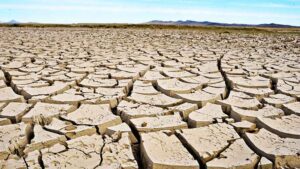
Approximately 60% of the EU and Britain this year are experiencing the effects of drought, which is exacerbated by abnormal heat, the Axios portal reported on Wednesday, citing the European Copernicus Atmospheric Monitoring Service.
“The drought, coupled with high temperatures, is leading to an increase in the risk of fires due to lack of rain and to the appearance of dead wood,” the service said in a statement.
At the same time, EU countries such as France, Spain, Italy and the Netherlands are facing water shortages. Such conditions have a negative impact on agriculture, energy and river navigation.
The UK’s main weather service said the south and east of England experienced their hottest July on record. Meteorologists expect the dry weather to last until October.
Employees of the Atmospheric Monitoring Service earlier, after analyzing data for the end of July, found that by the middle of the month up to 45% of the EU was in the drought zone, and 15% had a serious water shortage.
Also in July, service specialists predicted that dry weather conditions in the region would continue in August and September.
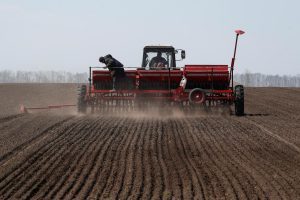
The losses of winter crops due to drought in Ukraine in the entire country are estimated at 234,000 ha, which is 2.6% of all areas with winter crops, the Ministry for Economic Development, Trade and Agriculture has told Interfax-Ukraine. According to the ministry, the most affected by the drought are winter rape crops – 103,000 ha, wheat – 74,000 ha, barley – 53,000 ha, and peas – 1,300 0 ha.
Potential crop losses in 2020/2021 agri-year for winter wheat are 216,650 tonnes, winter rape – 211,890 tonnes, winter barley – 150,820 tonnes, sugar beets – 50,030 tonnes, peas – 3,050 tonnes, winter rye – 539 tonnes.
At the same time, the Economy Ministry estimates the possible loss of revenue for winter rape at UAH 2.14 billion (19% of the possible income from crops), winter wheat – UAH 0.99 billion (3%), winter barley – UAH 0.63 billion (12%), and sugar beets – UAH 0.03 billion (2%).
“In March-April this year, there was rainfall deficit throughout Ukraine. As a result, spring air drought developed and deepened, which combined with soil drought in many areas of the southern regions,” the ministry said.



