
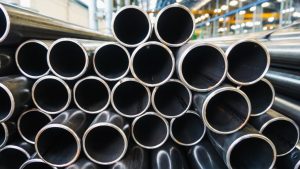
The Interdepartmental Commission on International Trade (ICMT) has completed a review of antidumping measures regarding the import of seamless stainless steel pipes to Ukraine from China, extending their effect for another five years.
According to a report in the Uriadovy Kurier newspaper published on December 19 of this year, the measures were revised in connection with their expiration.
Based on the results of the revision, the ICMT found that the level of anti-dumping measures applied was sufficient to prevent dumping of imports and causing damage to the national producer; the position of exporters and economic conditions are such that the possibility of new types of dumping that will harm domestic producers is not ruled out.
The current voluntary pricing commitments from foreign manufacturer/exporter Zhejiang Longda Stainless Steel Co., Ltd are sufficient to prevent dumping and damage.
“National interests require the continuation of anti-dumping measures regarding the import of seamless stainless steel pipes to Ukraine from China,” the commission said.
In this regard, the commission decided to complete the revision and extend the anti-dumping measures applied by its decision of November 27, 2014 for another five years. At the same time, extend the voluntary price commitment of Zhejiang Longda Stainless Steel Co. to stop dumping imports of seamless stainless steel pipes to Ukraine from China. The final anti-dumping measures should not be applied to this manufacturer/exporter, due to the fact that the voluntary obligation to stop dumping imports to Ukraine continues.
The decision of the commission made on December 14, 2020 came into force from the date of publication of this report (from December 19, 2020).
Antidumping duties on clinker and Portland cement from Russia, Belarus and Moldova introduced by Ukraine in the summer of 2019 served as an incentive to increase the load and production volumes of Ukrainian cement plants, market participants surveyed by the Interfax-Ukraine agency have said.
“We regard this step as positive, which allowed us to increase the load of enterprises and output of marketable products. Now our capacities are 90% loaded,” Mykola Kruts, the chairman of the board of PrJSC Ivano-Frankivskcement, told Interfax-Ukraine.
PrJSC Dyckerhoff Cement Ukraine agrees with his opinion. The company is witnessing the revival of market relations, the restoration of healthy competition and par prices for cement in the market, which creates conditions for further stable doing business.
“We consider the decision to impose duties on import of cement from the countries at dumping prices to be absolutely correct. This decision helped maintain a stable market position for Ukrainian producers, which, in turn, by developing their production, are able to satisfy the demand of all consumers in Ukraine. Otherwise, the dumping position of cement imported from Russia, Belarus, and Moldova could significantly worsen the financial results of PrJSC Dyckerhoff Cement Ukraine and lead to significant financial losses,” the company said.
In the eight months of 2019, the enterprise overfulfilled its plan for the growth of production volume by 17%, increasing the figure by 25% compared to the same period in 2018.
The growth of the company’s budget indicators this year is associated with cement supplies to various construction projects.
“In addition to deliveries to such a traditional sector as housing and commercial real estate construction, PrJSC Dyckerhoff Cement Ukraine also supplies cement for the construction of infrastructure facilities of national importance,” the company said.
In particular, the matter concerns the construction of a number of roads, a runway in Odesa, the reconstruction of the runway at Zaporizhia airport, the construction of wind power farms in Kherson and Mykolaiv regions, grain terminals, the development of berths in seaports, etc.
According to PrJSC HeidelbergCement Ukraine, in connection with the growth in cement sales, its production over the eight months of 2019 at Kryvy Rih plant rose by 14.7% compared to the same period in 2018 and amounted to 526,300 tonnes.
At the same time, the company notes that the production capacity is still low.
“Protection of Ukrainian producers against cement and clinker of Belarusian and Russian producers allowed to stabilize cement prices in the domestic market, but over the last three months, cement from Turkey aggressively entered the cement market, which, like Belarusian, is sold at low prices in the south and east of Ukraine. The state is obliged to protect domestic producers in the key sectors of the economy, this will allow enterprises to focus on the development of production, maintain jobs, improve work efficiency,” the company said.
According to HeidelbergCement Ukraine’s forecasts, cement production growth in Ukraine next year could reach 5-7%, provided that antidumping duties are maintained.
“The current political course of the country and the statements of the country’s leadership give hope for the development of the economy and, as a result, the construction market as a whole. As a result, we predict that the market growth in the next years will be 5-7%, which opens up the possibility of loading production capacities by 90-95%,” the company noted.
According to the company, there are currently ten cement plants operating in the Ukrainian market, the production capacities of which are 65% loaded, therefore each enterprise seeks to increase production, which significantly toughens competition.
“This year, the production capacities of PrJSC Dyckerhoff Cement Ukraine are 60% loaded of their design capacity. If there is demand in the market, the company is ready to increase production to the full utilization of design capacities,” the report says.



