

On June 12, the European Bank for Reconstruction and Development (EBRD) plans to approve a loan of up to EUR 15 million for Kharkiv to restore heat supply following critical damage in February 2026 to the city’s largest combined heat and power plant, CHPP-5.
According to the bank’s materials, the financing is planned to be used to purchase up to 22 small and medium-sized modular gas-fired boiler houses with cogeneration units, as well as five small cogeneration units for existing boiler houses.
The loan is part of a broader EUR32 million package, which also includes an investment grant from the European Union (EU) of up to EUR17 million.
Given the war risks, the EBRD loan is also expected to receive a partial EU guarantee to cover first-loss risk.
According to the EBRD’s estimates, the project will reduce greenhouse gas emissions by 19,100 metric tons of CO2 equivalent per year.
It is noted that the project is expected to restore access to basic heat supply services for a broad and vulnerable group of consumers, including 99,300 residents—more than 16,500 of whom are internally displaced persons (IDPs)—as well as 23 educational institutions and seven medical facilities.
According to the EBRD, as of early 2026, 212,000 IDPs were officially registered in Kharkiv.
The project is being implemented under the Resilience and Livelihoods Facility (RLF) program.
EBRD, EU, heat supply, KHARKIV, TPP-5
The European Bank for Reconstruction and Development (EBRD) and the European Union (EU) are expanding their support program for micro, small, and medium-sized enterprises (MSMEs) and larger companies in Ukraine, which will enable the mobilization of EUR2 billion in new financing through EBRD partner banks thanks to EUR315 million in additional EU support, the financial institution announced on its website.
The additional EU support is being implemented through the Ukraine Investment Framework (UIF) program and includes EUR200 million in guarantees, EUR105 million in grants, and EUR10 million in technical assistance.
As noted in the press release, the new package is expected to provide loans to at least 3,000 MSMEs and preserve approximately 180,000 jobs.
Funds will be provided through the EBRD’s partner financial institutions in Ukraine. According to the bank’s assessment, the expansion of the program should support businesses’ access to financing amid the war, particularly against the backdrop of rising borrowing costs, disrupted logistics, and companies’ need to replace or modernize damaged equipment.
Ukrainian companies will be able to receive investment incentives in the form of EU grants to cover 10% to 30% of the cost of critical capital investments, primarily in high-efficiency and “green” technologies.
At least 50% of these grant incentives will be directed toward priority categories of MSMEs: enterprises with assets damaged or destroyed as a result of the war, businesses in frontline zones, veteran-owned companies, enterprises supporting the reintegration of internally displaced persons and people with disabilities, micro-companies, startups, small farms, as well as businesses led by women and young people.
The program also provides for support to restore activity in Ukraine’s insurance market, specifically the development of solutions for insuring military risks. As part of a pilot project, insurance subsidies are planned to be provided to MSMEs.
Part of the expanded support will be implemented through the Enterprise Security Enhancement (ESE) mechanism, which the EBRD is rolling out on a pilot basis in collaboration with partner financial institutions in Ukraine. It allows banks to reduce the debt burden for borrowers whose assets have been damaged by the war.
To implement this mechanism, it is planned to use EUR 200 million in first-loss guarantees provided by the EU as part of the new phase of the program. Such coverage of credit risk associated with the loss of assets due to the war is intended to support lending for capital investments and the continuity of economic activity.
This support builds on the first phase of the Financial Inclusion Recovery Program, which confirmed significant demand from Ukrainian businesses for financing through partner banks.
As reported, in May the EBRD launched a pilot ESE donor mechanism in Ukraine to partially write off business debt on investment loans in the event of damage to financed assets resulting from hostilities: with PrivatBank—in the amount of EUR 6.8 million, and with Raiffeisen Bank—EUR 1.2 million.
In 2025, the EBRD allocated a record EUR2.9 billion in financing to Ukraine, including EUR1.2 billion through partner financial institutions, as well as EUR504 million under portfolio risk-sharing programs, which facilitated new lending of up to EUR1.6 billion.

The European Bank for Reconstruction and Development (EBRD) and the European Union (EU) are launching the “Ukrainian SME Recovery” program, which is expected to provide approximately EUR135 million in financing and advisory support for small and medium-sized enterprises, larger companies, and startups in Ukraine, the financial institution announced on its website.
EU support under the program is being implemented through the Ukraine Investment Framework (UIF) and amounts to EUR46 million, including EUR41 million in guarantees and approximately EUR5 million in technical assistance.
According to the announcement, the program provides for financing at least 15 investment projects by Ukrainian companies, as well as advisory support for up to 34 startups.
The first component of the program will be implemented through the EBRD’s Risk Sharing Framework (RSF) in collaboration with partner banks. EU guarantees will be used to cover the first-loss risks of the EBRD and partner banks on a parity basis.
According to the bank’s assessment, this will expand Ukrainian companies’ access to long-term financing, particularly for the restoration and expansion of production assets and capacity.
The second component involves expanding the EBRD’s Star Venture program in Ukraine, aimed at supporting high-potential startups and developing an innovative ecosystem.
Under this initiative, selected startups, accelerators, and venture capital firms will receive advisory support. The funding is intended to help early-stage companies cover operational and market development costs and enhance their readiness to attract commercial investment.
The EBRD is the largest institutional investor in Ukraine. Since the start of Russia’s full-scale invasion in February 2022, the bank has allocated nearly EUR10 billion to Ukraine.
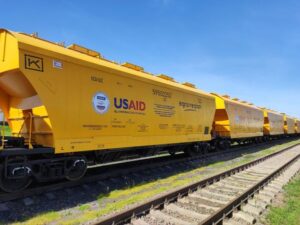
Agricultural holding IMK has purchased 75 grain trucks using a loan from the European Bank for Reconstruction and Development, the company’s CEO Oleksandr Verzhikhovsky announced during a speech at the Grain Ukraine 2026 international conference on Thursday in Kyiv.
“We have strengthened our road logistics component, secured $13 million in financing from the European Bank for Reconstruction and Development, and purchased 75 grain trucks,” Verzhikhovsky said.
The head of the agricultural holding noted that starting in 2023, the company has been investing approximately $10 million annually in the modernization of equipment and production. In particular, the greatest attention is being paid to logistics.
Given that the company conducts all its exports by rail through deep-water Black Sea ports, in 2024–2025 it implemented its own project to purchase 300 grain railcars. The company’s investment in this project amounted to $22 million.
“This was the right decision, as it currently yields annual savings of about $3–4 million,” emphasized the head of the agricultural holding.
A presentation on the AMK website with data for May of this year indicates that its logistics fleet includes 129 grain trucks, 300 grain railcars, 672 units of agricultural machinery, and 326 other vehicles.
The IMK agricultural holding is an integrated group of companies operating in the Sumy, Poltava, and Chernihiv regions (northern and central Ukraine) in the crop production, grain elevators, and warehousing segments. Land bank: 115,000 hectares; storage capacity: 554,000 tons; grain and oilseed production in 2025: 838,000 tons.
IMK’s net profit in 2025 increased by 24% to $67.5 million, while consolidated revenue decreased by 10% to $190.5 million.
The European Bank for Reconstruction and Development (EBRD) has lowered its forecast for Ukraine’s real gross domestic product growth in 2026 to 2.2% due to the protracted war, but notes that macroeconomic stability has been maintained thanks to external support.
“This is slightly lower than the 2.5% forecast published in February, but should hostilities ease and post-war reconstruction begin, the forecast for 2027 remains unchanged at 4.0%,” according to the EBRD’s “Regional Economic Prospects” (REP) report, published on Wednesday.
The bank emphasizes that Ukraine is maintaining macroeconomic stability even in the fifth year of Russia’s aggressive war thanks to significant external financing. The outlook continues to depend largely on the course of the war and the availability of external financial support.
“The main downside risk to the forecast is linked to the energy crisis caused by the conflict in the Middle East, which could significantly worsen Ukraine’s already unstable energy situation,” the report states.
The EBRD attributes the slowdown in economic growth to 1.8% in 2025 and the weak start this year to ongoing wartime constraints: labor shortages and persistent attacks on energy infrastructure have disrupted industrial activity and logistics, while broader supply chain issues have limited production.
The bank notes that inflation has also begun to rise again after slowing to 7.4% in January 2026 following a period of tighter monetary policy and relative exchange rate stability. Higher global energy prices linked to the conflict in the Middle East are adding new pressure, increasing costs for businesses and households and contributing to a resurgence of inflationary momentum.
According to the EBRD, fiscal support remains crucial. Ukraine’s budget deficit, excluding grants, reached 23.6% of GDP in 2025 and is projected to remain elevated at 19.3% of GDP in 2026, reflecting exceptionally high spending on defense and social services. These needs are financed largely through official external support, which continues to underpin macroeconomic stability. The allocated external financing of over EUR110 billion for 2026–27 is expected to mitigate short-term risks.
The Bank notes that it is Ukraine’s largest institutional investor and has significantly increased its support in response to the full-scale war: since its onset in February 2022, the EBRD has allocated nearly EUR10.0 billion to Ukraine.
As reported, the National Bank lowered its GDP growth forecast for this year to 1.3% from 1.8% in April.
The government’s forecast, included in the 2026 state budget, currently projects 2.4% growth, but Economy Minister Oleksiy Sobolev recently announced plans to revise it downward.
According to the State Statistics Service, Ukraine’s GDP growth slowed to 1.8% in 2025 from 2.9% in 2024 and 5.5% in 2023, following a 28.8% decline in 2022—the first year of full-scale Russian aggression.
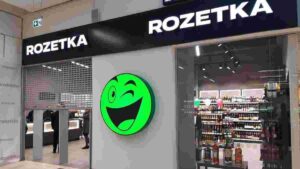
On April 17, the European Bank for Reconstruction and Development (EBRD) approved a EUR25 million long-term loan for the Rozetka corporate group, specifically EUR20 million for Rozetka.ua LLC in Ukraine and EUR5 million for Rozetka EU LLC in Poland, according to the financial institution’s materials.
As noted, EUR10 million of this amount is earmarked for financing the working capital of the group’s Ukrainian and Polish operations, and the bank may provide up to an additional EUR15 million for working capital and potential capital investments in Ukraine and Poland.
The project will receive partial first-loss risk coverage from the European Union under the Ukraine Investment Facility (UIF), which supports “green” investments in key economic sectors and promotes recovery during the war.
According to the bank’s assessment, the project will also contribute to the reintegration of veterans and other vulnerable groups, while the “green” component of the financing involves the purchase of energy-efficient household appliances.
The loan will provide the Rozetka Group with longer-term financing not available on the local market, support the early-stage development of its Polish operations, and help strengthen HR policies, skills development, and women’s participation in the company.
As reported with reference to YouControl, companies within the Rozetka corporate group generated a total of UAH 30.2 billion in revenue from January to September 2025, accounting for 76% of the total revenue of the 10 largest online retailers.
Rozetka was founded in 2005 in Kyiv by Vladislav and Irina Chechotkin. Later, a fund managed by Horizon Capital became a co-owner of the company. Currently, the company operates as a multi-category online marketplace and is developing a network of its own stores.



