

Swedish company H&M Hennes & Mauritz AB has published its 2025 annual sustainability report, in which it reported a further reduction in greenhouse gas emissions, an increase in the share of recycled and more sustainable materials, as well as investments in decarbonization and innovation.
As noted in the report, in 2025, 91% of the materials used by the company were recycled or more sustainable alternatives, with the share of recycled materials reaching 32%, exceeding the target of 30%.
According to the report, Scope 1 and 2 greenhouse gas emissions decreased by 41% compared to 2019, and Scope 3 emissions by 34.6%. Total investments in decarbonization and innovation amounted to 2.8 billion Swedish kronor.
H&M also reported that since 2022, the number of Category 1, 2, and 3 clothing suppliers using coal-fired boilers has decreased by 108. The company confirmed its goal of completely phasing out such equipment by 2026.
Freshwater use in 2025 was reduced by 22.8%, more than doubling the target. Meanwhile, the resale service via Sellpy and the group’s brands is already operating in 26 markets and accounts for 0.8% of revenue, having increased by 31% year-over-year.
H&M Group CEO Daniel Erver noted that the company continues to strengthen its customer offering while demonstrating that growth, profitability, and emissions reduction can go hand in hand. Leila Ertur, Director of Sustainability, in turn, stated that the group intends to continue decoupling business growth from resource consumption while supporting people and communities.
In addition, the H&M Group announced the 10th anniversary of its global framework agreement with IndustriALL and IF Metall, which, according to the company, protects the rights of over 1 million workers.
The full 2025 Annual and Sustainability Report is available on the H&M Group website.
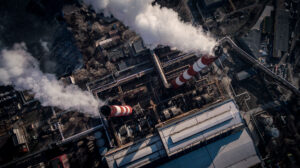
According to the updated draft of the Second Nationally Determined Contributions of Ukraine to the Paris Agreement (NDCs2), CO2 emissions from industrial enterprises of Ukraine will grow by 16% by 2030 from the level of 2019, Minister of Ecology and Natural Resources Roman Abramovsky has said in an exclusive interview with the Green Deal portal.
“According to our calculations, industrial emissions by 2030 will grow by 16% from the level of 2019. That is, they will not decrease. On the contrary, they will increase. However, in this way, the ambitions of key companies to increase the rate of industrial production were taken into account,” the minister said.
According to him, the sectoral goals of NDCs2 for the Ukrainian industry were coordinated with the Ministry of Economy, while noting that it was with this ministry that the most difficult negotiations were going on to agree on the indicators.
“The most difficult discussion was with the Ministry of Economy, since they are responsible for many sectors. At the same time, the new leadership of the Ministry of Economy, First Deputy Prime Minister Oleksiy Liubchenko should be commended, because immediately after his appointment, we met and I explained to him all our forecasts. He immediately appointed a person responsible for NDCs2, and on the second day our team held a briefing for the new managers, “Abramovsky said.
In addition, as the minister said, the Ministry of Ecology also held difficult negotiations with the Ministry of Energy and NPC Ukrenergo, as a result of which the ministry was forced to increase emission standards for the energy sector.
“For example, if initially we modeled an indicator of 34 million tonnes of CO2 emissions in 2030 in the energy sector, then after consultations we came to the conclusion that it would be more correct to envisage 48 million tonnes in 2030, based on the provisions of the System Adequacy Report,” Abramovsky said.



