
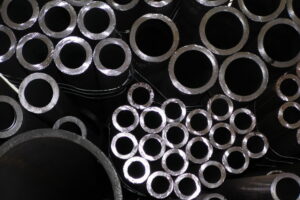
In January-February 2024, Ukrainian metallurgical enterprises increased their exports of steel products by 3.7% to $152.383 million. In February, they were exported for $88.056 million.
According to statistics released by the State Customs Service, imports of metal products increased by 33.4% to $144.769 million. In February, these products were imported for $72.123 million.
As reported earlier, in 2023, Ukraine’s steelmaking companies reduced revenues from exports of ferrous metals by 41.59% compared to 2022, to $2 billion 647.722 million, with ferrous metals accounting for 7.32% of total revenues from exports of goods in this period, while in 2022 the share was 10.26%. At the same time, in 2023, Ukraine increased imports of similar products by 37% to $1 billion 307.046 million.
In addition, last year, Ukraine reduced exports of metal products by 16.6% year-on-year to $877.916 million. At the same time, imports of metal products increased by 40.3% to $902.565 million during this period.
In 2022, Ukraine decreased revenues from ferrous metal exports by 67.5% compared to 2021, to $4 billion 533.088 million. During this period, ferrous metals accounted for 10.26% of total revenues from exports of goods, compared to 20.49% in 2021. At the same time, in 2022, Ukraine reduced imports of similar products by 38.3% to $954.387 million.
In addition, in 2022, Ukraine reduced exports of metal products by 18.6% to $1 billion 52.512 million. Imports of metal products fell by 42.9% to $643.162 million over the year.

In January-February of this year, Ukrainian steelmakers increased revenues from exports of ferrous metals by 46.3% year-on-year to $522.519 million.
According to statistics released by the State Customs Service (SCS) on Wednesday, ferrous metals accounted for 7.67% of total export revenues during this period, compared to 5.53% in January-February 2023.
In February, revenues from exports of ferrous metals amounted to $248.443 million.
At the same time, Ukraine increased imports of similar products by 35.6% to $221.529 million in January-February this year. In February, the country imported products worth $112.114 million.
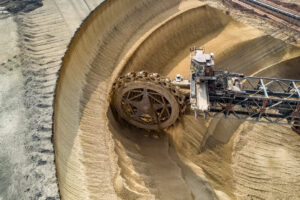
PrJSC United Mining and Chemical Company (UMCC), which has taken over management of Vilnohirsk Mining and Metallurgical Plant (VGMK, Dnipro region) and Irshansk Mining and Processing Plant (IGOK, Zhytomyr region), has started selling titanium raw materials to Italy, Spain, Germany and is systematically expanding its exports.
According to the company, despite the difficulties and risks of wartime, it shipped more than 102 thousand tons of products in 2023. The planned supply volumes for 2024 are 200 thousand tons.
Yegor Perelygin, First Deputy Chairman of the Board of UMCC, quoted in the information, noted that due to effective approaches and communication with potential buyers, the company signed contracts for the supply of approximately 80 thousand tons in the fourth quarter of 2023 and the first quarter of 2024.
“We were able to attract a series of subscriptions for finished products from stable market players and open new ways to supply world-class end users. We have integrated the coordination and logistics management functions in the commercial unit, become more flexible and focused on an individual approach to strategic customers. As a result, we have opened the UMCC brand to well-known end users in Italy, Spain and Germany,” he explained.
Mr. Perelygin added that by the end of the second quarter of this year, UMCC’s rutile and zircon may become absolutely regular and key components in the raw material portfolios of major processors in Italy, Spain and Germany.
At the same time, companies in the United States and the Czech Republic remain strategic partners for UMCC’s ilmenite concentrate. We are also launching export deliveries of Irshansky GOK’s ilmenite to one of the largest end users in North America. The company plans to sell about 60 thousand tons in the near future. The company emphasizes that the supply chain and end users of these products are strictly controlled by the company and law enforcement agencies.
“Our success is due to our large team. These are more than 4,000 professionals who work in the NONstop mode. Together, we have made a good start for 2024 and are moving step by step towards our strategic goal of producing value-added products and significantly curtailing the aggressor’s influence in the markets of critical minerals and strategic materials,” summarized Perelygin.
The United Mining and Chemical Company started its actual operations in August 2014, when the Ukrainian government decided to transfer the property complexes of Vilnohirsk Mining and Metallurgical Plant (VGMK, Dnipropetrovska oblast) and Irshansk Mining and Processing Plant (IGOK, Zhytomyrska oblast) to its management. Previously, these plants were leased to Firtash’s structures. Then the company was transformed into a PJSC and then into a PrJSC.
In August 2016, the government included UMCC in the list of companies to be privatized in 2017. Its deadline was postponed several times, and the tender was disrupted twice.
UMCC used to sell its products to more than 30 countries and was one of the world’s largest producers of titanium raw materials, accounting for 4% of the global market. The company mines titanium ore.
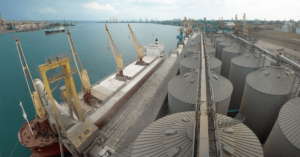
“As of March 2024, Kernel, one of the largest Ukrainian agro-industrial groups, has returned to pre-war volumes of agricultural exports by sea, said Yuriy Kizlevych, Head of the Transshipment and Fleet Department of the agricultural holding, during the online conference of the Center for Economic Strategies “Challenges at Sea and Border. What is the future of Ukraine’s foreign trade?”.
“We are investing in infrastructure. As of today, we have really returned to pre-war export volumes. During the full-scale invasion, we continued to invest in port terminals. We now own a certain cluster of terminals, both for grain and vegetable oil transshipment,” he said.
According to Mr. Kizlevych, Kernel handles not only its own agricultural products but also provides this service to other operators, which has a positive impact on the domestic market and exports.
The head of Kernel’s transshipment and fleet department noted that the agricultural holding sees prospects for increasing exports via the Black Sea sea corridor.
He also said that 70% of Kernel’s exports are to non-European destinations, including Asia, the Middle East, North Africa, and only then to Western Europe.
Speaking about the cost of logistics, Kizlevych stated that since the beginning of the war, it has had to be divided into two components: domestic and maritime. All domestic market operators have problems with the former, in particular with regard to facilities where infrastructure has been damaged.
“However, thanks to the fruitful cooperation between business and the state, we see that the best ways to solve problematic infrastructure issues are being found. Inland logistics is changing very dynamically, taking into account the existing export channels. We see that this process has become more planned and manageable, comparable to the pre-war level,” he said.
Describing Ukraine’s maritime logistics, Kizlevych confirmed the impact of the military bonus factor on the total cost of export transportation.
“Of course, there is a factor of the military premium that must be paid to shipowners for the call of ships (to the Ukrainian part of the Black Sea – IF-U). Fleet freight has become more expensive. If we look at the “grain corridor”, its first Ukrainian version, we can state huge losses in port dues for the downtime of the large-capacity fleet. These are millions, tens of millions of losses,” said the Head of Transshipment and Fleet Department of Kernel.
At the same time, he emphasized that market participants see positive dynamics in the reduction of insurance rates, which is a positive signal and gives hope for a more stable functioning of Ukraine’s sea routes in 2024.
Before the war, Kernel Agro Holding was the world’s largest producer of sunflower oil (approximately 7% of global production) and a major exporter (approximately 12%). It is one of the largest producers and sellers of bottled oil in Ukraine. In addition, it is engaged in the cultivation and sale of agricultural products.
Kernel’s net profit for FY2023 amounted to $299 million, while the company ended the previous year with a net loss of $41 million. The agricultural holding’s revenue for FY2023 decreased by 35% to $3.455 billion, but EBITDA increased 2.5 times to $544 million.
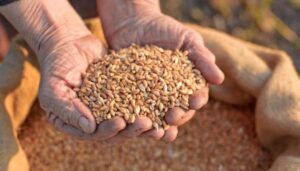
In 2023/24 marketing year, Ukraine exported 31.887 mln tonnes of grains and pulses, down 6.8% compared to the previous year, the press service of the Ministry of Agrarian Policy and Food reported, citing the operational data of the State Customs Service.
According to the press service, 2.217 mln tons of grains and pulses were shipped this month, which is 11.4% more than last year.
According to the report, since the beginning of the current season, Ukraine has exported 12.761 million tons of wheat (989 thousand tons were shipped to foreign markets in March); barley – 1.782 million tons (159 thousand tons); rye – 1 thousand tons (0); corn – 17.059 million tons (1.064 million tons).
Total exports of Ukrainian flour as of March 13 are also lower than last year and are estimated at 75.7 thousand tons (1.7 thousand tons in March), including 71.9 thousand tons of wheat (1.6 thousand tons).
Ukraine’s exports of goods in January-February 2024 increased by 4.6% y-o-y, from $6.5 billion to $6.8 billion, while imports decreased by 1%, from $10.1 billion to $10 billion, the State Customs Service reported on Friday.
According to its post on Telegram, in the first two months of 2024, trade turnover increased by 2% compared to two months of 2023, to $16.8 billion.
In January, the State Customs Service reported a 9.7% increase in exports from $3.1 billion to $3.4 billion and a 6.3% increase in imports from $4.8 billion to $5.1 billion. Taking into account these data, in February, exports remained at the level of February last year – $3.4 billion, while imports decreased by 7.5% to $4.9 billion.
The agency noted that taxable imports in January-February amounted to $8.8 billion, or 88% of total imports, and the tax burden per 1 kg was $0.47/kg, which is 5% more than in the same period in 2023.
According to the State Customs Service, the largest imports to Ukraine in the first two months of this year were from China – $2 billion, Poland – $1.1 billion, and Germany – $769 million.
Ukraine exported the most to Poland – $649 million, Spain – $624 million, and China – $504 million.
As stated in the report, 67% of the total volume of goods imported in January-February 2024 was machinery, equipment and transport – $3.5 billion (UAH 25.3 billion was paid to the budget during customs clearance, which is 31% of customs revenues), chemical products – $1.8 billion (UAH 12.8 billion was paid to the budget, or 16% of customs revenues) and fuel and energy products – $1.3 billion (UAH 20 billion was paid, or 24% of revenues).
The top three most exported goods from Ukraine were food products – $4.5 billion, metals and metal products – $726 million, and mineral products – $587 million.
According to the report, in the first two months of 2024, UAH 47.96 million was paid to the budget during customs clearance of exports of goods subject to export duties.



