
The expansion of Ukrainian companies into foreign markets increases the importance of conducting preliminary checks on potential buyers and distributors. The risks are particularly high when working with a new counterparty on deferred payment terms, Dun & Bradstreet analysts note.
One of the tools for such checks is Dun & Bradstreet’s (D&B) international business information databases, which make it possible to identify a company, verify its registration data, ownership structure, financial indicators, operating history and associated risks.
When entering a new market, Ukrainian companies often focus primarily on finding a buyer and agreeing on commercial terms, while checking the buyer’s solvency remains a secondary task.
“Receiving an order does not yet mean receiving the money. For an exporter, a situation is particularly dangerous when the first large shipment is made to a new partner with deferred payment. Before signing such a contract, it is necessary to understand whether the company actually exists, how long it has been operating, what its financial indicators are, who its owner is and how high the credit risk associated with this counterparty is,” said Maksym Urakin, Director of Development and Marketing at Interfax-Ukraine, Head of the D&B-Interfax-Ukraine business unit, PhD in Economics.
Dun & Bradstreet has a global database containing information on hundreds of millions of companies. A unique nine-digit D-U-N-S Number is used to identify businesses, making it possible to distinguish between legal entities with similar names and link companies within corporate groups.
For a Ukrainian exporter, such a check is particularly relevant when working with companies that are offering a large contract for the first time, requesting a significant payment deferral or acting as intermediaries between the manufacturer and the end buyer.
Depending on the country and the availability of information, a D&B business report may contain registration details, information about executives and owners, financial statements, information on corporate relationships, credit ratings and other indicators used for risk assessment.
“The cost of a check is almost always incomparable with the potential loss from a single unpaid export shipment. International business information should be viewed not as an additional reference, but as one of the elements of the decision-making procedure regarding the credit limit, the amount of prepayment and the terms of the contract,” Maksym Urakin believes.
At the same time, negative information about a potential partner does not necessarily mean that the transaction should be rejected. It may serve as a basis for changing its terms — increasing the prepayment, reducing the size of the first shipment, using a bank guarantee, trade credit insurance or shortening the deferred payment period.
Dun & Bradstreet is an international provider of business data and analytical solutions whose history began in 1841. The company provides tools for business identification, counterparty verification, assessment of credit and commercial risks, compliance, supply chain management and work with corporate data.
The official representative of Dun & Bradstreet in Ukraine is the Interfax-Ukraine news agency. The specialized D&B-Interfax-Ukraine unit helps Ukrainian companies work with international business data, verify foreign partners and obtain a D-U-N-S Number.
Questions can be submitted through the specialized D&B resource — dnb.ua, by email at Urakin@interfax.kyiv.ua or by phone at +38 (044) 270-65-74.
COUNTERPARTY, D&B, DUN & BRADSTREET, EXPORT, UKRAINE, URAKIN
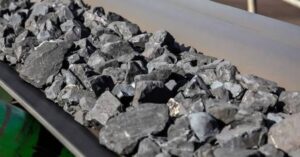
In August of this year, Ukraine increased its manganese ore exports by 30% compared to the previous month—to 3,511 thousand metric tons from 2,701 thousand metric tons.
According to statistics released by the State Customs Service (SCS), a total of 28,158 thousand metric tons of manganese ore were exported over the first eight months of this year, compared to 8,014 thousand metric tons during the same period last year.
In July of this year, Ukraine increased its manganese ore exports by 14.9% compared to the previous month—to 2,701 thousand metric tons from 2,350 thousand metric tons; in June, exports rose by 36.6% compared to May—to 2,350 thousand metric tons from 1,720 thousand metric tons; in May, it reduced exports by a factor of 3.1 compared to April—to 1,720 metric tons from 5,319 metric tons; in April, it increased exports by a factor of 2.8 compared to March—to 5,319 metric tons from 1,932 metric tons; in March, exports fell by a factor of 3.1 compared to the previous month—to 1,932 thousand metric tons from 6,072 thousand metric tons—and by a factor of 2.4 compared to January, when 4,553 thousand metric tons were exported.
In monetary terms, exports of this raw material amounted to $4.843 million in January–August (for the first 8 months of 2025 – $1.329 million).
In January–August 2026, Ukraine imported 23,099 thousand metric tons of ore worth $3.578 million, whereas there were no imports last year.
As previously reported, Ukraine reduced its manganese ore exports by 50.4% in 2025 compared to the same period last year—to 22,281 thousand metric tons—but stepped up shipments in August–December. While shipments totaled 2,977 thousand metric tons over the first seven months of 2025, exports more than doubled in August, when 5,037 thousand metric tons were shipped; in September, they amounted to 1,725 thousand metric tons; in October—3,993 thousand metric tons; in November—3,860 thousand metric tons, and in December—4,689 thousand metric tons.
In monetary terms, exports for the entire year 2025 fell by 45.2% compared to 2024—to $3,599 million. The majority of exports went to Slovakia (99.22% of shipments in monetary terms) and Poland (0.78%). Over the course of the year, the country imported 37,006 thousand metric tons from Ghana worth $5.546 million. All shipments took place in November. In 2024, 84,293 thousand metric tons of ore worth $18.302 million were imported.
The Pokrovsk Mining and Processing Plant (PGZK, formerly the Ordzhonikidze Mining and Processing Plant) and the Marganetsk Mining and Processing Plant (MGZK, both located in Dnipropetrovsk Oblast), which are part of the “Privat” Group, ceased the extraction and processing of raw manganese ore in late October–early November 2023, while the NZF and ZZF plants halted the smelting of ferroalloys. In the summer of 2024, the ferroalloy plants resumed production.
PGZK and MGZK did not produce any output in 2024, whereas in 2023, PGZK produced 160.31 thousand metric tons of manganese concentrate, while MGZK was idle.
In 2025, PGZK produced 63.9 thousand metric tons of manganese concentrate worth 342.138 million UAH and sold 25.4 thousand metric tons worth 216.309 million UAH. In 2026, the plant plans to increase manganese concentrate production by 3.44 times compared to the previous year—to 220 thousand metric tons.
In Ukraine, manganese ore is mined and processed by the Pokrovsk and Marganets Mining and Processing Plants.
The consumers of manganese ore are ferroalloy plants.
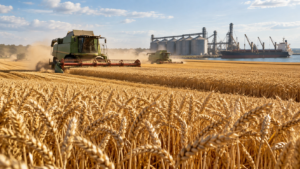
Global wheat production in the 2026/27 marketing year will total 822.43 million metric tons, which is 3.13 million metric tons higher than the U.S. Department of Agriculture’s August forecast, according to the Experts Club information and analytical center.
According to the September USDA report, one of the main factors behind the revision was an improvement in the crop outlook in Australia. The forecast for the country was raised by 3 million tonnes at once — from 28 million tonnes to 31 million tonnes thanks to favorable weather conditions.
For Canada, the production forecast was increased by 1 million tonnes — to 36 million tonnes, and for Ukraine — by 0.6 million tonnes, to 26 million tonnes. At the same time, the forecast for Kazakhstan was reduced by 1 million tonnes — to 15 million tonnes, and for Russia — by 0.5 million tonnes, to 88 million tonnes.
Despite the increase in production, the forecast for global wheat trade was reduced by approximately 0.9 million tonnes — to 211.77 million tonnes.
USDA cut its estimates for Russia’s exports from 46 million tonnes to 43 million tonnes, Ukraine’s — from 13.5 million tonnes to 12.5 million tonnes, as well as Kazakhstan’s. The decline is partially offset by increased exports from Australia, Canada and Argentina.
The U.S. agency explained the deterioration in the outlook for Russian and Ukrainian exports by weak August shipments amid the fact that the war in the Black Sea region is complicating logistics.
Global wheat consumption is forecast at 826.75 million tonnes, while ending stocks were increased by approximately 3 million tonnes — to 276.29 million tonnes. The main increase in stocks is expected in Russia, Australia and Ukraine.
Primary source — USDA World Agricultural Supply and Demand Estimates dated September 11, 2026: WASDE-675, September 2026

The purchase price of sunflower seeds for domestic processing in Ukraine rose by $23 over the week—to $483 per metric ton on a CPT mill basis—while rapeseed prices rose by $5, to $485 per metric ton, according to brokerage firm Spike Brokers in its weekly market review.
According to the brokers, the rise in the purchase price of sunflower seeds was the strongest movement in the Ukrainian oilseed market. Over the week, the price of sunflower seeds on a CPT mill basis increased by 5%. The review does not contain data on changes in the export price of sunflower seeds.
Export prices for rapeseed remained unchanged over the week. On a CPT port basis, they stood at $520 per metric ton, and on an FCA Chop basis, at $555 per metric ton. The review did not provide data on changes in export prices for sunflower seeds.
Soybean prices at major Ukrainian delivery points remained unchanged. GMO soybeans were priced at $410 per metric ton CPT port, $450 FCA Chop, and $400 CPT mill; non-GMO soybeans were priced at $430 CPT port and $475 FCA Chop.
In August, Ukraine exported 147.1 thousand metric tons of sunflower oil, 110 thousand metric tons of sunflower meal, and 0.7 thousand metric tons of sunflower seeds.
Exports of rapeseed in August totaled 292.6 thousand metric tons, while rapeseed oil exports totaled 95.4 thousand metric tons. Rapeseed accounted for about 75% of the total tonnage of these two items.
During the month, Ukraine also exported 29.1 thousand metric tons of soybeans, 36.6 thousand metric tons of soybean oil, and 77.2 thousand metric tons of soybean meal. Oil and meal accounted for nearly 80% of the total export volume of these three soybean products.

Ferrexpo, a mining and ore processing company with its main assets in Ukraine, announced the resumption of production at its facilities in Ukraine.
“We are pleased to resume production in Ukraine, and I would like to thank our team, which has once again demonstrated its dedication and determination by ensuring the resumption of operations over the weekend,” said Ferrexpo’s interim CEO, Lucio Genovese.
According to a press release, following the raising of $100 million, which was announced on September 4, 2026, the company took the necessary steps over the weekend, and production was resumed using one pellet production line.
Given the numerous documented incidents of attacks on ports and ships in the Black Sea, the company plans to focus on exporting products to customers in Europe, according to a Ferrexpo stock exchange announcement on Monday.
As reported in early August, Ferrexpo suspended production in Ukraine amid the constant threat of Russian attacks in and around Ukrainian ports in order to preserve working capital.
As of June 30, 2026, the group’s net cash position (excluding lease obligations) stood at approximately $21 million, compared to $25 million as of March 31, 2026, and $47 million as of December 31, 2025.
Ferrexpo owns a 100% stake in Yeristovsky GOK LLC, a 99.9% stake in Bilanovsky GOK LLC, and 100% of the shares in Poltava GOK PJSC.
The London Stock Exchange (LSE) suspended trading in Ferrexpo shares in May due to the company’s inability to publish its annual financial statements on time.

The Ukrainian flour milling company “DykankaMlyn” has completed the latest phase of its production modernization in partnership with the Swiss technology company Bühler, installing an automated system for micro-dosing ingredients into flour.
The new equipment allows for the automatic addition of dry gluten, vitamins, and other micro-components based on the actual flow of flour. This enables the company to produce products with specified characteristics and expands its capacity to fulfill export orders.
The system consists of flow scales, two micro-dosing units, and an integrated control system. The flow scales continuously measure the volume of flour, after which the automated system calculates the required amount of ingredients. The operator sets the desired addition percentage, and the subsequent dosing is adjusted automatically.
The equipment was installed without shutting down the mill. The mechanical work took about two to three days, while the electrical connection and commissioning took about a week.
“Our collaboration with Bühler began many years ago with roller sharpening and technical consulting. Then came the optical sorter, followed by two inline whiteness meters and an automatic moistening system. When the question of the next stage of modernization arose, we already had our own experience working with Bühler equipment and understood what results we expected,” noted Volodymyr Lenets, head of “DykankaMlyn.”
A unique feature of the project was that the Bühler equipment was integrated into an existing mill from another manufacturer. This approach allows the company to modernize individual process units in stages, without having to completely overhaul production, and to spread capital expenditures across several phases.
According to Andriy Sharan, CEO of Bühler Ukraine, the “DykankaMlyn” project demonstrates the ability to integrate modern technological solutions into existing production lines and gradually increase the company’s level of automation.
One of the practical applications of the new system will be adjusting the gluten content in flour to meet the requirements of specific customers. For the baking and confectionery industries, stable protein and gluten levels are key characteristics of raw materials, as they directly affect the dough’s processing properties.
Another area of application is the production of fortified flour with added vitamin and mineral complexes. Such products may be in demand in foreign markets, as in a number of countries, the fortification of flour with certain vitamins and minerals is mandated by national legislation or food program standards.
Automated dosing allows manufacturers to control the accuracy of ingredient addition and their uniform distribution in the finished product, which is important for confirming compliance with export requirements.
“Microdosing can solve a production challenge while also serving as a commercial tool. If a company can demonstrate the accuracy and uniformity of its product, this strengthens its position in negotiations with buyers and opens up more opportunities to operate in export markets,” Sharan noted.
“DykankaMlyn” specializes in the production of wheat flour and semolina. The company’s products are sold in Ukraine and exported. The production facility operates its own laboratory to monitor the quality of grain and finished products.
Bühler is a Swiss technology group and one of the world’s leading manufacturers of equipment and integrated solutions for the grain processing and food industries. In Ukraine, the company collaborates with flour mills, grain processing plants, and food manufacturers.



