
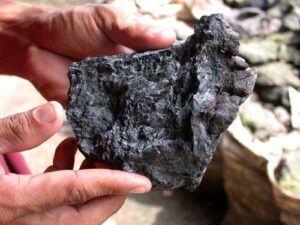
From January through July 2026, Ukraine exported 24,647 thousand metric tons of manganese ore, which is already 10.6% more than the volume shipped in all of 2025, when 22,281 thousand metric tons were sent abroad.
According to data from the State Customs Service of Ukraine, in monetary terms, exports for the seven-month period totaled $4.227 million, compared to $3.599 million for all of last year. Thus, foreign exchange earnings have already exceeded the 2025 figure by approximately 17.4%.
Compared to January–July of last year, manganese ore exports have increased more than eightfold. In the first seven months of 2025, Ukraine exported only 2,977 thousand metric tons of ore worth $491 thousand, whereas this year, the volume of shipments reached 24,647 thousand metric tons, with revenue totaling $4.227 million.
Slovakia remains the main market for Ukrainian manganese ore in 2026, accounting for 77.79% of export revenue. Shipments to Georgia accounted for another 22.21%.
In July, Ukraine exported 2,701 thousand metric tons of manganese ore, which is 14.9% more than in June (2,350 thousand metric tons). Thus, exports have been growing for the second consecutive month: in June, growth stood at 36.6% compared to May.
However, monthly trends since the beginning of the year have remained quite volatile. In January, Ukraine exported 4,553 thousand metric tons of ore; in February, approximately 6,072 thousand metric tons; in March, the volume fell to 1,932 thousand metric tons; in April, it rose to 5,319 thousand metric tons; and in May, it fell again to 1,720 thousand metric tons.
In 2025, however, manganese ore exports fell by 50.4% compared to 2024—to 22,281 thousand metric tons.
However, starting in August of last year, exports picked up significantly: 5,037 thousand metric tons were exported in August, 3,993 thousand metric tons in October, 3,860 thousand metric tons in November, and 4,689 thousand metric tons in December.
Ukraine has its own raw material base of manganese ores. The main enterprises involved in their mining and processing are the Pokrovsk and Marganets Mining and Processing Plants in the Dnipropetrovsk region.
EXPORT, MANGANESE, MINING AND PROCESSING PLANT, ORE, SLOVAKIA

D&B Hoovers helps Ukrainian exporters find potential buyers, importers and distributors abroad and verify them before negotiations begin.
Ukrainian manufacturers entering the markets of the European Union, the United States, the Middle East and Asia often begin their search for foreign buyers through trade fairs, recommendations, open directories or personal contacts. However, this approach does not always make it possible to assess the actual scale of the market and quickly distinguish promising companies from inactive or unreliable counterparties.
One of the tools for systematically searching for clients abroad is the international business data platform D&B Hoovers. It makes it possible to compile lists of potential buyers, importers, distributors and corporate customers by country, region, industry, company size, sales volume, number of employees and other parameters.
In particular, a Ukrainian furniture manufacturer can find distributors in Germany, Poland or Romania, an agricultural company can find food importers, and an IT business can find corporate customers of a certain size and profile. D&B Hoovers also contains information about executives and individuals who may influence purchasing decisions.
“A Ukrainian exporter often begins searching for partners through trade fairs, personal contacts or open online directories. Business data makes it possible to turn this into a systematic process: first compile a list of potential buyers, then verify each of them and only after that spend resources on negotiations,” said Maksym Urakin, Director of Development and Marketing at Interfax-Ukraine, Head of the D&B–Interfax-Ukraine business unit and Candidate of Economic Sciences.
According to him, the search for buyers abroad should consist of at least two stages. At the first stage, the company identifies its target market and compiles a list of potential clients. At the second stage, it verifies the legal status, scale of operations, corporate links, financial stability and business activity of each candidate.
For an effective search, a Ukrainian exporter must define the profile of the desired client in advance. Important criteria may include the country, type of activity, annual turnover, number of employees, presence of its own retail network, import experience and affiliation with an international corporate group.
This approach helps avoid the mass distribution of identical commercial proposals and allows efforts to be focused on companies that may genuinely be interested in Ukrainian products. Additional reasons for making contact may include the expansion of a potential buyer’s business, a change in management, the launch of a new business area or the conclusion of major deals.
Dun & Bradstreet is an international business data and analytics company founded in 1841. Its solutions are used for finding clients, identifying businesses, verifying counterparties, assessing credit and commercial risks, compliance and supply chain management. D&B Hoovers is the company’s solution for prospecting potential clients and sales intelligence.
The Interfax-Ukraine News Agency is the official representative of Dun & Bradstreet in the Ukrainian market. The specialized D&B–Interfax-Ukraine unit provides Ukrainian companies with access to international business data, helps them find and verify foreign partners, obtain a D-U-N-S Number and assess commercial risks. The agency has operated in the Ukrainian political and economic information market since 1992.
Inquiries can be submitted through the specialized D&B resource, dnb.ua, or by telephone at +38 (044) 270-65-74.

Poltava Medical Glass Plant JSC (PMGP, Poltava) saw its net profit decline by 19% in 2025 compared to 2024—to 105.564 million UAH, and for the January–June 2026 period, by 30.5% compared to the same period in 2025, to 45.204 million UAH.
As the company reported in the NSSMC’s disclosure system, its net sales revenue in 2025 decreased by 3.52% compared to 2024—to 364.281 million UAH, while in the first half of 2026, revenue grew by 31.76% compared to the same period in 2025, reaching 231.01 million UAH.
According to the company, the main export markets outside Ukraine in 2025 were Kazakhstan, where products worth 51.503 million UAH were shipped; Georgia (3.732 million UAH); Turkey (3.233 million UAH); and Moldova (1.258 million UAH). In total, products worth 61.369 million UAH were exported during this period, which is 2.29% more than the previous year.
In the first three months of this year, the plant manufactured 89,488 million ampoules and shipped 150.923 million units worth 107.4 million UAH. Specifically, in January–March, ampoules were exported to Kazakhstan, Georgia, Turkey, Moldova, and Uzbekistan. The volume of exports increased by 32%.
The company generated 5.402 million UAH from the sale of oxygen and nitrogen.
The cost of goods sold amounted to 70.333 million UAH; the company’s revenue from core and operating activities for the first quarter of 2026 totaled 120.232 million UAH, with net profit at 21.154 million UAH.
As previously reported, in July 2025, Oleksandr Nekrasov, who owned nearly 53.7% of PZMS’s shares, gifted this stake to his relative, Leonid Oleksandrovych Nekrasov, who had previously held more than 6% of the company’s shares; following the gift, his stake exceeded 59.7% of the company’s authorized capital.
Oleksandr, Leonid, and Konstantin Oleksandrovych Nekrasov, in particular, are co-owners of the pharmaceutical manufacturer “Lubnyfarm.”
According to information on its website, the Poltava Medical Glass Plant is Ukraine’s leading manufacturer of ampoules for pharmaceuticals.
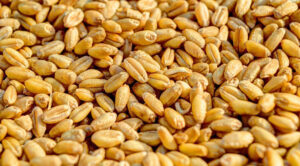
The Ministry of Agriculture and Forestry of the Republic of Turkey will tighten phytosanitary controls on the import, export, re-export, and transit of plants and plant products, including wheat, effective August 4, 2026, according to the State Service of Ukraine for Food Safety and Consumer Protection (Derzhprodsposhchivsluzhba).
The tightening of requirements is related to Turkey’s adoption of a new Plant Quarantine Regulation, which repeals the previous Quarantine Regulation.
“Since wheat imported into the Republic of Turkey serves as a host plant for harmful organisms such as Tilletia barclayana, Tilletia indica, Tilletia caries, Tilletia controversa, and Tilletia laevis (Tilletia foetida), the Republic of Turkey has strengthened controls to detect these harmful organisms in wheat shipments,” the statement said.
If these pests are detected, Ukrainian exporters will be denied a phytosanitary certificate pursuant to Article 46 of Ukraine’s Law “On Plant Quarantine.”

PJSC “Centravis Production Ukraine” (Centravis Production Ukraine, Nikopol, Dnipropetrovsk Oblast), a subsidiary of Centravis Ltd., reported a 6.6% increase in production for January–June of this year—from 6,770 metric tons to 7,220 metric tons;
According to a press release on Monday, exports in monetary terms increased by nearly 15%—from 2.56 billion UAH to 2.94 billion UAH; the amount of taxes paid rose by nearly 11% to 361.5 million UAH.
“The first half of the year was another challenging period for us, one that put the entire team to the test. First and foremost, this was due to the security situation in Nikopol, where our main production facilities are located. The situation remains consistently difficult, and so far there is no reason to expect a significant improvement in the near future,” said the company’s CEO, Yuriy Atanasov.
According to him, in June, the EU—one of the company’s key markets—decided to significantly restrict opportunities for exporting Ukrainian steel products. Specifically, the EU set a quota of 6,524 metric tons for Ukrainian seamless stainless steel pipes, even though Ukraine exported 11,306 metric tons last year. “In effect, a single regulatory decision has closed off nearly half of the European market for us. The consequences of this decision could be extremely painful for both the company and the Ukrainian economy,” the CEO stated.
He added that the new trade restrictions could significantly impact Centravis’s production figures in the second half of the year. The market for seamless stainless steel pipes is quite conservative, and finding and attracting new customers in other regions takes time. One consequence of the new trade restrictions was the company’s decision to mothball its production facility in Uzhhorod—which is largely geared toward EU customers—starting September 1.
At the same time, the company plans to continue diversifying its supply geography by stepping up its efforts in the U.S., Latin American, and Middle Eastern markets, where Centravis has sales offices.
As previously reported, Centravis increased its pipe production by 6% in Q1 2026—from 3,210 metric tons in the first quarter of 2025 to 3,400 metric tons in the first quarter of 2026. Export volumes grew even more—by 10%, from 1.24 billion UAH to 1.37 billion UAH. The company also increased its tax payments to budgets at various levels.
In the first three months of 2026, “Centravis” paid 170.6 million UAH in taxes, which is 19% more than during the same period last year.
In 2025, the company produced 13.77 thousand metric tons of products. Almost the entire volume is exported to foreign markets. The company’s main markets remain Europe, the United States, and the Middle East.
Centravis’s production facilities are located in Nikopol and Uzhhorod. The company also has sales offices in the United States, Germany, Italy, Switzerland, Poland, and the United Arab Emirates.
Centravis was founded in 2000 and ranks among the top ten largest manufacturers of seamless stainless steel pipes in the world. Its main production facilities are located in Nikopol (Dnipropetrovsk Oblast). In 2023, the company opened a branch in Uzhhorod.
The Centravis Ltd. holding company was established on the basis of CJSC “Nikopol Stainless Steel Pipe Plant” and the service and trading companies of LLC “Production and Commercial Enterprise ‘YUVIS’.” Its shareholders are members of the Atanasov family. Centravis Ltd. owns 100% of the shares in Centravis Production Ukraine PJSC.
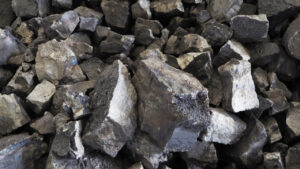
In January–June of this year, Ukraine’s ferroalloy exports decreased by 80.5% in volume terms compared to the same period last year—to 15,212 thousand metric tons from 54,771 thousand metric tons.
According to statistics released by the State Customs Service (SCS), 6,432 thousand metric tons of ferroalloys were exported in June, 4,851 thousand metric tons in May, 2,755 thousand metric tons in April, 337 metric tons in March, 72 metric tons in February, and 765 metric tons in January.
In monetary terms, ferroalloy exports for January–June fell by 70.2% to $18.220 million. The main export destinations were Poland (56.82% in monetary terms), Turkey (13.80%), and Romania (9.39%).
In addition, during the first six months of the year, Ukraine imported 13,097 thousand metric tons of these products—a 36.8% decrease compared to January–June 2025. In monetary terms, imports fell by 36.9% to $25.553 million. Imports came primarily from Kazakhstan (23.21%), India (13.61%), and France (11.52%).
As previously reported, the Pokrovsk Mining and Processing Plant (PGZK, formerly the Ordzhonikidze Mining and Processing Plant) and the Marganetsk Mining and Processing Plant (MGZK, both located in Dnipropetrovsk Oblast), which are part of the Privat Group, ceased the extraction and processing of raw manganese ore in late October–early November 2023, while the
NZF and ZZF plants halted ferroalloy smelting. In the summer of 2024, the ferroalloy plants resumed production at a minimal level.
Since January 19, 2026, due to problems with electricity supply and high electricity prices, NZF has been idle, while ZZF is operating at a minimal level.
In 2025, ferroalloy plants increased their exports of ferroalloys by 21.4% in volume terms compared to 2024—to 93,841 thousand metric tons—while revenue rose by 19% to $105.441 million. The main export destinations were Poland (28.69% of shipments in monetary terms), Turkey (21.62%), and Algeria (21.48%).
In 2025, Ukraine imported 38,434 thousand metric tons of this product—a 53.3% decrease compared to 2024. In monetary terms, imports fell by 47.5% to $73.839 million. Imports came primarily from Norway (16.11%), Kazakhstan (15.89%), and France (12.56%).
Prior to the nationalization of the financial institution, PrivatBank managed the operations of ZZF, NZF, the Stakhanov Ferroalloy Plant (located at NKT), and the Pokrovsk and Marganetsk Mining and Processing Plants. The Nikopol Ferroalloy Plant is controlled by the EastOne Group, formed in the fall of 2007 as a result of the restructuring of the Interpipe Group, as well as by the Privat Group.
EXPORT, FERROALLOY, IMPORT, POLAND, ДМС



