
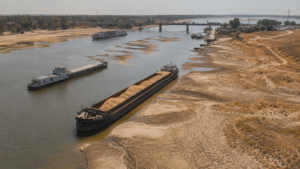
Extreme heat and a prolonged drought have led to a sharp drop in the water level of the Danube in Romania, according to the Experts Club information and analysis centre. In the area around the port of Beșet, the movement of cargo, passenger and cruise ships has virtually ground to a halt, and operators are being forced to reduce their cargo loads or seek alternative routes.
According to Romania’s National Institute of Hydrology and Water Management, on July 18 the water discharge at the point where the Danube enters the country near Baziaș fell to 1.7 thousand cubic metres per second. This is approximately 64% below the long-term average for July, which is 4.7 thousand cubic metres per second. The forecast for the period through July 25 assumes that the discharge will remain within the range of 1.65–1.8 thousand cubic metres per second.
On July 19, the Lower Danube Administration recorded readings below the conventional zero level of the gauging stations along a significant part of the Romanian section of the river. In Bechet, the reading was minus 65 cm, in Calafat minus 140 cm, in Giurgiu minus 128 cm, and in Cernavodă minus 173 cm. These values do not indicate a negative depth, but they do demonstrate an extremely low water level relative to the benchmarks used at the gauging stations.
The most difficult situation developed near Bechet. Vessels loaded with grain are unable to depart, while ferry services between Romania’s Bechet and Bulgaria’s Oryahovo were temporarily suspended. Trucks and passenger cars have to use other border crossings, which increases the distance, delivery time and burden on road bridges across the Danube.
The problems have also affected the tourism sector. Several cruise ships travelling from Budapest towards the Danube Delta were unable to continue their journey. Tour operators began transporting passengers by bus and changing travel programmes, including redirecting tourists to Bucharest. The suspension or reduction of cruise routes may reduce the revenues of port cities, hotels, restaurants and tour companies along the entire river.
Low water levels are already affecting Romanian agriculture. In some areas, the Danube’s level has fallen below the minimum mark required for pumping stations to operate, leaving some fields without irrigation. This increases the risk of lower harvests and a further rise in farmers’ costs.
Consequences for All Danube Countries
If the low water level persists or spreads to other sections of the river, the consequences will be felt by all ten countries through which the Danube flows directly: Germany, Austria, Slovakia, Hungary, Croatia, Serbia, Bulgaria, Romania, Moldova and Ukraine. The Danube is the backbone of a major European transport corridor linking the industrial regions of Central Europe with the port of Constanța and the Black Sea.
For Germany and Austria, the main risk will be disruption to through freight transport along the Rhine–Main–Danube system. Vessels will be forced to carry smaller loads, while some shipments may shift to rail and road transport. This increases the cost of delivering raw materials, fuel and industrial products. The cruise sectors of Vienna, Linz, Passau and other cities may also face route cancellations or reductions.
Slovakia and Hungary risk experiencing delays in deliveries through the ports of Bratislava, Komárno and Budapest. For Hungary, an additional problem will be a reduction in cruise traffic between Budapest and the Lower Danube. If low water levels persist, the cost of transporting grain, petroleum products, metals and mineral raw materials may rise.
For Croatia and Serbia, the reduction in fairway depth means possible restrictions on the operations of the ports of Vukovar, Novi Sad, Pančevo, Smederevo and Prahovo. Serbian exporters of grain, fertilisers and metallurgical products may have to divide cargoes among a larger number of vessels or redirect them to rail transport. Imports of petroleum products and industrial raw materials may also become more expensive.
Bulgaria and Romania are already experiencing direct consequences in the form of the suspension of the Oryahovo–Bechet ferry, restrictions on freight traffic and irrigation problems. A further decline in the water level could complicate the operations of the river ports of Ruse, Lom, Vidin, Galați, Brăila and Constanța, as well as increase the burden on bridges and land border checkpoints.
For Moldova, the risks are associated with the operation of the port of Giurgiulești and access to the Lower Danube. A reduction in vessels’ permitted draught may lead to smaller shipment volumes per consignment, higher fuel import costs and more expensive exports of agricultural products.
For Ukraine, low water levels pose a threat to the operation of the ports of Reni, Izmail and Ust-Dunaisk. Shallow depths may reduce the loading capacity of barges and sea-going vessels, increase the cost of transporting grain, metal, containers and other products, and complicate traffic between Ukrainian ports, Constanța and Central Europe.
According to the Danube Commission, a significant share of river transport consists of grain, food and animal feed cargoes, iron ore, petroleum products, fertilisers and metal products. Therefore, prolonged low water levels may affect not only transport companies but also prices in agriculture, metallurgy, energy and the food industry throughout the region.
In April 2026, the Danube Commission warned that periods of low water and sharp fluctuations in hydrological conditions were becoming a permanent factor changing the operating conditions of river transport. European countries will have to deepen and maintain the fairway more actively, improve the exchange of navigation data and develop railway routes for the rapid redirection of cargo.
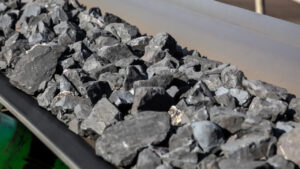
In June of this year, Ukraine increased its manganese ore exports by 36.6% compared to the previous month—from 1,720 thousand metric tons to 2,350 thousand metric tons.
According to statistics released by the State Customs Service (SCS), a total of 21,946 thousand metric tons of manganese ore were exported during the first six months of this year, whereas exports during the same period last year amounted to 2,218 thousand metric tons, valued at $366 thousand.
At the same time, Ukraine reduced its manganese ore exports in May of this year by a factor of 3.1 compared to April—to 1,720 thousand metric tons from 5,319 thousand metric tons; in April, exports increased by a factor of 2.8 compared to March—to 5,319 thousand metric tons from 1,932 thousand metric tons; in March, exports fell by a factor of 3.1 compared to the previous month—to 1,932 thousand metric tons from 6,072 thousand metric tons—and by a factor of 2.4 compared to January, when 4,553 thousand metric tons were exported.
In monetary terms, $3.729 million worth of this raw material was exported in January–June (for the first six months of 2025 – $366 thousand). Exports were shipped to Slovakia (74.83% of shipments in monetary terms) and Georgia (25.17%).
In January–June of this year, Ukraine imported 5 metric tons of manganese ore from China worth $3,000, whereas there were no imports last year.
As previously reported, Ukraine reduced its manganese ore exports by 50.4% in 2025 compared to the same period last year—to 22,281 metric tons—but ramped up shipments in August–December. While shipments totaled 2,977 thousand metric tons over the first seven months of 2025, exports more than doubled in August, when 5,037 thousand metric tons were shipped; in September, they amounted to 1,725 thousand metric tons; in October, 3,993 thousand metric tons; in November—3,860 thousand metric tons, and in December—4,689 thousand metric tons.
In monetary terms, exports for the entire year of 2025 fell by 45.2% compared to 2024—to $3,599 million. The bulk of exports went to Slovakia (99.22% of shipments in monetary terms) and Poland (0.78%). Over the course of the year, the country imported 37,006 thousand metric tons from Ghana, valued at $5.546 million. All shipments took place in November. In 2024, 84,293 thousand metric tons of ore were imported, valued at $18.302 million.
The Pokrovsk Mining and Processing Plant (PGZK, formerly the Ordzhonikidze Mining and Processing Plant) and the Marganetsk Mining and Processing Plant (MGZK, both located in Dnipropetrovsk Oblast), which are part of the Privat Group, ceased the extraction and processing of raw manganese ore in late October–early November 2023, while the NZF and ZZF plants halted ferroalloy smelting. In the summer of 2024, the ferroalloy plants resumed production.
PGZK and MGZK did not produce any output in 2024, whereas in 2023, PGZK produced 160.31 thousand metric tons of manganese concentrate, and MGZK was idle.
In 2025, PGZK produced 63.9 thousand metric tons of manganese concentrate worth 342.138 million UAH and sold 25.4 thousand metric tons for 216.309 million UAH. In 2026, the plant plans to increase manganese concentrate production by a factor of 3.44 compared to the previous year—to 220 thousand metric tons.
In Ukraine, manganese ore is mined and processed by the Pokrovsk and Marganets Mining and Processing Plants.
The consumers of manganese ore are ferroalloy enterprises.
EXPORT, MANGANESE, MINING AND PROCESSING PLANT, ORE, SLOVAKIA
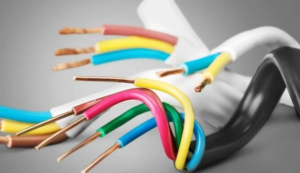
The value of Ukraine’s exports of insulated wires and cables (including fiber-optic cables) in January–June 2026 increased by 2% compared to the same period in 2025, reaching $741.2 million.
According to statistics from the State Customs Service (SCS), Germany remained the largest importer of Ukrainian products, as it was last year; shipments to Germany decreased by 3% to $245.3 million, and its share of total exports of these products fell by 1.7 percentage points to 33%.
As in the first half of last year, the top three importers also included Hungary—$124.8 million (last year: $118.1 million)—and Poland—$121.8 million ($111.3 million).
According to statistics, exports of these products in June fell by 3% compared to June 2025 but rose by 3.3% compared to May of this year, reaching $128.3 million.
At the same time, according to the State Customs Service, imports of wires and cables into Ukraine increased by 24.5% in the first half of the year, reaching $354.2 million.
The largest suppliers of wires and cables to Ukraine were China ($101.6 million), Hungary ($87.8 million), and Poland ($47.3 million), whereas last year imports from Hungary totaled $78.9 million, from China – $55.6 million, and from Poland – $41.1 million.
As previously reported, according to the State Customs Service, in 2025 Ukraine increased its exports of insulated wires and cables by 10.6% compared to 2024—to $1.41 billion—and imports by 24.3%—to $590.7 million.

Starting July 1, 2026, Ukraine will begin accepting applications through the State Agrarian Registry (DAR) for participation in the open rapeseed export program, according to a press release from the Ministry of Economy, Environment, and Agriculture.
“The launch of the open export program for soybeans and rapeseed is another step toward creating transparent and clear rules for the agricultural sector. We have digitized the process as much as possible so that producers can quickly submit an application through the SAR, and the government has an effective tool for administering exports,” the press service quoted Taras Vysotsky, Deputy Minister of Economy, Environment, and Agriculture, as saying.
As noted in the announcement, legal entities and individual entrepreneurs who are agricultural producers may participate in the program. Applications will be submitted exclusively through the DAR system.
For rapeseed, applications will be accepted from July 1 of this year through April 1 of next year; for soybeans, from September 1 through June 1 of next year.
The program sets a maximum export volume of 5 metric tons of rapeseed per hectare of farmland and 3.5 metric tons of soybeans per hectare. During the application period, producers will have the right to adjust information regarding their planned or actual harvest once.
According to Vysotsky, the mechanism provides for maximum automation of the process without additional bureaucratic procedures or the need to obtain opinions from the Chamber of Commerce and Industry.
As previously reported, in May 2026, the Cabinet of Ministers amended the procedure for confirming the right of agricultural producers and agricultural cooperatives to be exempt from export duties when exporting their own soybeans and rapeseed. The new mechanism provides for automatic verification through the State Agrarian Register instead of obtaining opinions from the Chamber of Commerce and Industry.
agricultural producer, EXPORT, RAPESEED, SOYBEANS, State Agrarian Register

JSC “Ukrposhta” has signed an agreement with Etsy, one of the world’s largest marketplaces, thereby becoming its official partner, the company’s CEO, Ihor Smilianskyi, announced on Monday.
“Today we completed what we started during our visit to the U.S.: Ukrposhta has signed an agreement with one of the world’s largest marketplaces—Etsy,” Smiliansky wrote on Telegram.
According to him, following the signing, the national postal operator has become Etsy’s verified partner worldwide on behalf of Ukraine.
It is noted that more than 2 million Ukrainian products are sold on Etsy.
The signed agreement provides for a more convenient shipping process for customers; specifically, from now on, shipping and label data will be automatically added during checkout in both the Ukrposhta account and on Etsy.
Among other things, the agreement enables full IT integration between “Ukrposhta” and Etsy, which ultimately makes it possible to sell to any country in the world simultaneously.
‘Ukrposhta’ also clarified that the national postal operator will handle all customs duty calculations (in the U.S. and the EU).
“Thank you to our partners for their trust! This was no simple agreement, and this is the first time a major logistics company in Ukraine has achieved this status,” emphasized the CEO of “Ukrposhta.”
Etsy is an international marketplace specializing in the sale of handmade items, vintage goods, jewelry, and other products.
The state-owned Ukrposhta’s total profit for January–April amounted to 106.3 million UAH, with EBITDA of 122.9 million UAH. The company’s equity reached 2.3 billion UAH without additional budgetary funding.
In January–March 2026, the company reported a net loss of 204.8 million UAH, which is 1.1 million UAH, or 0.5%, higher than in the same period of 2025, while its revenue grew by 1.1% to 13 billion 118.42 billion UAH.

The Ostchem nitrogen holding company, which brings together Group DF’s nitrogen business enterprises, has resumed seaborne exports of urea for the first time in seven years, Group DF’s press service reported on Wednesday.
“Ukraine has resumed seaborne exports of urea: for the first time in seven years, products from Ukrainian chemical manufacturers were shipped via sea,” the company emphasized.
According to the statement, a shipment of products manufactured by the Ostchem Group was exported through the port of Chornomorsk to international buyers in the Mediterranean region.
The total volume of the shipment was approximately 21,000 metric tons. The main export destinations were Italy and Turkey.
Among the buyers of Ukrainian urea were the U.S.-based Nitron Group and the South Korean Samsung C&T Corporation.
Group DF noted that the resumption of maritime exports occurred against the backdrop of a gradual stabilization of logistics chains and growing interest from international traders in Ukrainian products. A portion of Ostchem’s products also continues to be sold to European industrial consumers via land-based logistics routes.
The company is also in negotiations regarding new export shipments with a number of international traders and industrial consumers.
As previously reported, in April 2026, the plants of the Ostchem nitrogen holding began production of a new nitrogen fertilizer—AMS30 ammonium nitrate.
Ostchem is the nitrogen holding company of Dmitry Firtash’s Group DF, which brings together the largest producers of mineral fertilizers in Ukraine. Since 2011, it has included “Rivneazot” and Cherkasy-based “Azot,” as well as Severodonetsk-based “Azot” and “Styrol,” which are currently inactive and located in occupied territories.



