
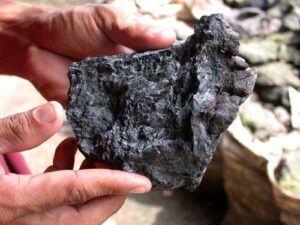
From January through July 2026, Ukraine exported 24,647 thousand metric tons of manganese ore, which is already 10.6% more than the volume shipped in all of 2025, when 22,281 thousand metric tons were sent abroad.
According to data from the State Customs Service of Ukraine, in monetary terms, exports for the seven-month period totaled $4.227 million, compared to $3.599 million for all of last year. Thus, foreign exchange earnings have already exceeded the 2025 figure by approximately 17.4%.
Compared to January–July of last year, manganese ore exports have increased more than eightfold. In the first seven months of 2025, Ukraine exported only 2,977 thousand metric tons of ore worth $491 thousand, whereas this year, the volume of shipments reached 24,647 thousand metric tons, with revenue totaling $4.227 million.
Slovakia remains the main market for Ukrainian manganese ore in 2026, accounting for 77.79% of export revenue. Shipments to Georgia accounted for another 22.21%.
In July, Ukraine exported 2,701 thousand metric tons of manganese ore, which is 14.9% more than in June (2,350 thousand metric tons). Thus, exports have been growing for the second consecutive month: in June, growth stood at 36.6% compared to May.
However, monthly trends since the beginning of the year have remained quite volatile. In January, Ukraine exported 4,553 thousand metric tons of ore; in February, approximately 6,072 thousand metric tons; in March, the volume fell to 1,932 thousand metric tons; in April, it rose to 5,319 thousand metric tons; and in May, it fell again to 1,720 thousand metric tons.
In 2025, however, manganese ore exports fell by 50.4% compared to 2024—to 22,281 thousand metric tons.
However, starting in August of last year, exports picked up significantly: 5,037 thousand metric tons were exported in August, 3,993 thousand metric tons in October, 3,860 thousand metric tons in November, and 4,689 thousand metric tons in December.
Ukraine has its own raw material base of manganese ores. The main enterprises involved in their mining and processing are the Pokrovsk and Marganets Mining and Processing Plants in the Dnipropetrovsk region.
EXPORT, MANGANESE, MINING AND PROCESSING PLANT, ORE, SLOVAKIA
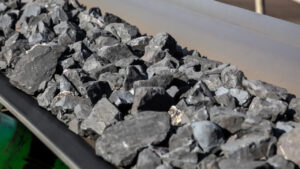
In June of this year, Ukraine increased its manganese ore exports by 36.6% compared to the previous month—from 1,720 thousand metric tons to 2,350 thousand metric tons.
According to statistics released by the State Customs Service (SCS), a total of 21,946 thousand metric tons of manganese ore were exported during the first six months of this year, whereas exports during the same period last year amounted to 2,218 thousand metric tons, valued at $366 thousand.
At the same time, Ukraine reduced its manganese ore exports in May of this year by a factor of 3.1 compared to April—to 1,720 thousand metric tons from 5,319 thousand metric tons; in April, exports increased by a factor of 2.8 compared to March—to 5,319 thousand metric tons from 1,932 thousand metric tons; in March, exports fell by a factor of 3.1 compared to the previous month—to 1,932 thousand metric tons from 6,072 thousand metric tons—and by a factor of 2.4 compared to January, when 4,553 thousand metric tons were exported.
In monetary terms, $3.729 million worth of this raw material was exported in January–June (for the first six months of 2025 – $366 thousand). Exports were shipped to Slovakia (74.83% of shipments in monetary terms) and Georgia (25.17%).
In January–June of this year, Ukraine imported 5 metric tons of manganese ore from China worth $3,000, whereas there were no imports last year.
As previously reported, Ukraine reduced its manganese ore exports by 50.4% in 2025 compared to the same period last year—to 22,281 metric tons—but ramped up shipments in August–December. While shipments totaled 2,977 thousand metric tons over the first seven months of 2025, exports more than doubled in August, when 5,037 thousand metric tons were shipped; in September, they amounted to 1,725 thousand metric tons; in October, 3,993 thousand metric tons; in November—3,860 thousand metric tons, and in December—4,689 thousand metric tons.
In monetary terms, exports for the entire year of 2025 fell by 45.2% compared to 2024—to $3,599 million. The bulk of exports went to Slovakia (99.22% of shipments in monetary terms) and Poland (0.78%). Over the course of the year, the country imported 37,006 thousand metric tons from Ghana, valued at $5.546 million. All shipments took place in November. In 2024, 84,293 thousand metric tons of ore were imported, valued at $18.302 million.
The Pokrovsk Mining and Processing Plant (PGZK, formerly the Ordzhonikidze Mining and Processing Plant) and the Marganetsk Mining and Processing Plant (MGZK, both located in Dnipropetrovsk Oblast), which are part of the Privat Group, ceased the extraction and processing of raw manganese ore in late October–early November 2023, while the NZF and ZZF plants halted ferroalloy smelting. In the summer of 2024, the ferroalloy plants resumed production.
PGZK and MGZK did not produce any output in 2024, whereas in 2023, PGZK produced 160.31 thousand metric tons of manganese concentrate, and MGZK was idle.
In 2025, PGZK produced 63.9 thousand metric tons of manganese concentrate worth 342.138 million UAH and sold 25.4 thousand metric tons for 216.309 million UAH. In 2026, the plant plans to increase manganese concentrate production by a factor of 3.44 compared to the previous year—to 220 thousand metric tons.
In Ukraine, manganese ore is mined and processed by the Pokrovsk and Marganets Mining and Processing Plants.
The consumers of manganese ore are ferroalloy enterprises.
EXPORT, MANGANESE, MINING AND PROCESSING PLANT, ORE, SLOVAKIA

In September, the Ivan Franko National Academic Drama Theater in Ivano-Frankivsk will present the musical “Hutsulka Ksenia” in Slovakia for the first time; the tour was organized to mark the 35th anniversary of Ukraine’s independence.
Performances will take place on September 11 at 6:00 p.m. in Prešov at the Divadlo Jonáša Záborského and on September 12 at 6:00 p.m. in Bratislava at the new building of the Slovak National Theater. The Divadlo Jonáša Záborského program lists the performance of “Huculka Kseňa” for September 11 at 6:00 p.m. on the main stage, while the Slovak National Theater has confirmed a guest performance by the Ivano-Frankivsk Drama Theater on September 12 from 6:00 p.m. to 9:00 p.m.
“Huculka Ksenia” is one of the most famous productions in contemporary Ukrainian theater. The play has had over 200 sold-out performances and attracted thousands of viewers, according to the Slovak National Theater’s announcement of the Bratislava performance.
The production is directed by Rostyslav Derzhypilsky, People’s Artist of Ukraine and laureate of the Taras Shevchenko National Prize of Ukraine. The music by Yaroslav Barnych is performed in a contemporary orchestral arrangement, conducted by Bohdan Tkachuk, Honored Artist of Ukraine.
The production combines live music, choreography, costumes inspired by Hutsul culture, set design, and a laser show. The lead roles are played by Oleksiy Hnatkovsky, Pavlo Kilnytskyi, Myroslava Polatayko, Yuriy Vykhovanets, Yana Ivasyuk, Oleg Panas, Lilia Abramyuk, Nadiya Levchenko, and Olesia Pasichnyak.
The organizers note that the tour in Slovakia aims to present Ukrainian musical classics, Hutsul traditions, and a contemporary stage interpretation of Ukrainian culture to the Ukrainian community and Slovak audiences.
In Prešov, the performance will take place at the Divadlo Jonáša Záborského at Námestie legionárov 6. In Bratislava, the performance will be hosted by the Slovak National Theater at Pribinova 17.
The Ivan Franko National Academic Drama Theater in Ivano-Frankivsk is one of Ukraine’s leading theaters, with a repertoire that combines classical works, contemporary drama, and large-scale musical theater productions.
BRATISLAVA, Ksenia Hutsulka, musical, Prešov, SLOVAKIA, Theater, TOUR
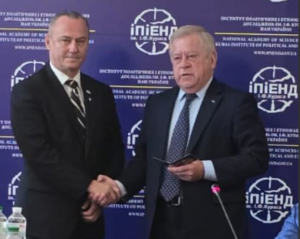
Eduard Burash, Transcarpathia’s Ambassador to Slovakia, has become an advisor to Anatoliy Kinakh, President of the Ukrainian Union of Industrialists and Entrepreneurs (USPP), on issues of trade, economic, and investment cooperation between Ukraine and the Slovak Republic, Eduard Burash himself told Open4Business.
Burash is actively involved in organizing humanitarian aid for the Zakarpattia region and other regions of Ukraine.
In his new capacity as advisor to the USPP president, Burash has already participated in a meeting of the Council on the Reconstruction of Ukraine, which operates as part of the global organization of world leaders Lives Amplified. The meeting took place at the I.F. Kuras Institute of Political and Ethno-National Studies.
Eduard Burash has been involved in the development of Ukrainian-Slovak cooperation for many years. He is the ambassador of Zakarpattia to Slovakia; previously, he served as an advisor to the Prime Minister of Slovakia on cross-border cooperation with Ukraine, an advisor to the Slovak Ombudsman on child protection, and the authorized representative of the city of Košice for the development of cross-border cooperation with Uzhhorod and Zakarpattia Oblast. Burash also heads the FEMAN association and has been a long-time organizer of the Days of Ukraine in Košice. In addition, for over 10 years he has been the organizer of the Days of Ukraine in
Košice, which have featured meetings, conferences, and events involving Ukrainian and Slovak entrepreneurs.
The Ukrainian Union of Industrialists and Entrepreneurs is a nationwide public organization that brings together representatives of business, industry, entrepreneurial structures, and employers. The organization is headed by former Prime Minister of Ukraine Anatoliy Kinakh.
ADVISOR, AMBASSADOR, PRESIDENT, SLOVAKIA, Transcarpathia, UUIE, Едуард Бураш
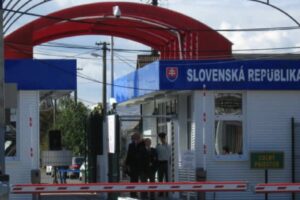
Slovakia has reopened border crossings with Ukraine that had previously been closed due to a massive airstrike on border regions, DennikN reports.
“Border crossings with Ukraine are open again in both directions; according to police, the situation remains calm for now,” the report states.
Border processing resumed at 5:47 p.m. Kyiv time. According to police, the crossings had been temporarily closed on the Ukrainian side.
As previously reported, the Slovak side closed all border checkpoints on the border with Ukraine on Wednesday, according to Slovakia’s Financial Administration.
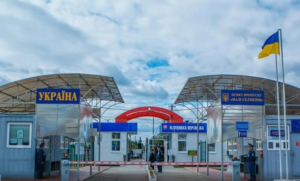
On Wednesday, the Slovak authorities closed all border checkpoints on the border with Ukraine, according to the Slovak Financial Administration.
“For security reasons, all checkpoints on the border with Ukraine are closed starting today at 3:00 p.m. (4:00 p.m. Kyiv time) until further notice,” the statement said.



