

As a result of the introduction of a zero quota on the export of ferrous metal scrap effective January 1 of this year, the scrap collection industry is losing its potential, reducing raw material procurement, and being forced to lay off employees, stated the head of the Ukrainian Association of Secondary Metals (UAVtormet) Volodymyr Bubley said this at a press conference held at the Interfax-Ukraine press center on Tuesday, titled “Ban on scrap exports: economic consequences for the market and the state.”
According to him, the ban on scrap metal exports—without balancing consumption and procurement of this raw material—has essentially had a negative impact on the operations of scrap metal procurement companies. At the same time, steel production in Ukraine has fallen: in January-February 2026, compared to the same period in 2025, steel production decreased by 13.3%—from 1.183 million tons to 1.026 million tons.
At the same time, the purchase of ferrous metal scrap by metallurgical enterprises decreased significantly—by 31.7%, from 257,800 tons to 176,000 tons. Meanwhile, procurement fell by 41.1%—from 313,600 tons to 184,800 tons.
“Previously, scrap exports accounted for 20–25%. We felt more comfortable operating in the domestic market. We are still operating there now, and we want to continue working in Ukraine,” said Bubley, emphasizing that the price of scrap in the EU is more attractive and has reached 300–330 euros per ton.
“The state loses 12 million euros every month due to the export ban. It loses 200 million hryvnias in taxes. Meanwhile, steelmakers are 112% supplied with scrap,” the head of UAVtormet cited his data.
According to his estimates, Ukraine will produce 7.4 million tons of steel in 2026, which will require 1.5 million tons of scrap—the industry can supply up to 2 million tons of scrap.
Serhiy Vovk, CEO of Ukrmet-Invest LLC, noted that the scrap metal collected by companies is not being purchased by steel mills; his company’s scrap metal stockpile has currently reached 13,000 tons. “Export is the only way for the industry to survive,” the CEO believes.
Vladislav Kleshchynskyi, CEO of the Ukrmet Group of Companies, added that the ban was imposed due to an alleged scrap metal shortage.
“But there is no shortage. Steel mills purchase 30–50% at most. So it’s impossible to call this a shortage. Right now, the scrap market in Ukraine is a market of metallurgical enterprises that dictate prices. We have already cut our staff by 50%, 35 divisions are operating at 20% of their capacity, and we have shut down our entire export infrastructure,” the CEO stated.
Mykola Klimovich, Director of Mirten LLC, clarified that in 2022–2026, the scrap market will be in surplus, and scrap exports were an opportunity to sell it.
According to experts, following the government’s ban on scrap exports, the procurement sector is in a “severe recession” with a trend toward further reductions in procurement.
Earlier, Bubley stated that the export ban automatically affected not only procurement volumes but also domestic prices, as reduced competition allowed steelmakers to act as monopolists in the domestic market. Thus, the cost of one ton of scrap at procurement sites has halved: from 8,000 UAH/t to 4,000 UAH/t.
Under these conditions, companies engaged in scrap procurement are forced to reduce their workforce. In January–February 2026, compared to the same period last year, the number of employees in the industry decreased significantly. In just the first two months, companies in our industry were forced to lay off about 2,000 employees, reported the head of UAVtormet.
“The trend is grim: almost every day we receive reports from companies about a complete shutdown of operations or significant staff reductions. According to our forecasts, 4,000 workers will be laid off in the industry by May,” Bubley predicted earlier.
According to UAVtormet’s research, due to the export ban, the state is losing approximately 200–250 million UAH in taxes each month. A separate category of losses is foreign exchange revenue: approximately 25 million euros have already been lost.
As reported, Ukrainian companies reduced exports of ferrous metal scrap by 77.3% in January–February of this year compared to the same period last year—to 9,309 thousand tons from 40,980 thousand tons. According to statistics from the State Customs Service (SCS), there were no exports in February; 9,309 thousand tons were exported in January, and a record 68,520 thousand tons of scrap were exported in December 2025.
In 2025, Ukraine’s scrap metal processing enterprises increased exports of ferrous metal scrap by 45.3% compared to the previous year—to 448,685 thousand tons from 293,190 thousand tons.
Due to the sharp increase in exports of strategic raw materials from Ukraine, the Ministry of Economy initiated the introduction of a licensing and quota system for scrap exports, setting a zero quota. The government temporarily imposed a zero export quota for 2026 on the export of ferrous metal scrap.
Scrap collection companies in Ukraine increased exports of ferrous metal scrap by 60.7% in 2024 compared to 2023—to 293,190 thousand tons from 182,465 thousand tons. In monetary terms, scrap exports for the year rose by 73.2%—to $91.311 million from $52.723 million.
Sources: https://interfax.com.ua/news/press-announcement/1153229.html; https://uavtormet.com/en/na-mezhi-katastrofy-zagotivlya-bruhtu-chornyh-metaliv-vpala-na-40/

In January-February of this year, Ukrainian enterprises reduced their consumption of rolled metal products by 11.01% compared to the same period last year, to 495,500 tons.
According to a press release from the Ukrmetallurgprom association on Thursday, 246,900 tons, or 49.83% of the domestic market for rolled metal consumption, were imported during this period.
According to Ukrmetallurgprom, in January-February 2026, metallurgical enterprises produced 796.7 thousand tons of rolled metal (83.2% compared to the same period in 2025), of which, according to the State Customs Service of Ukraine, about 548.1 thousand tons, or 68.8%, were exported. In January-February 2025, the share of exports was 63.5% (607.6 thousand tons with a total production of rolled metal products of 957.0 thousand tons).
The share of semi-finished products in export deliveries in January-February 2026 is 33.90%, which coincides with the indicator for the two months of 2025 (33.21%). The share of flat products in export deliveries in January-February 2026 significantly exceeds the figure for January-February 2025 (58.58% and 47.78%, respectively). The share of long products is significantly lower than in January-February 2025 (7.52% in 2026 versus 19.01% in 2025).
The structure of imports in January-February 2026 is characterized by a noticeable dominance of flat products over long products (53.54% and 30.21%, respectively), However, in January-February 2025, the dominance of flat rolled products over long products was significantly greater (82.55% and 14.42%, respectively).
In January-February 2026, the domestic market capacity was 495.5 thousand tons of rolled metal, of which 246.9 thousand tons, or 49.83%, were imports. In January-February 2025, the domestic market capacity was 556.8 thousand tons, of which 207.4 thousand tons, or 37.25%, were imported. Thus, in January-February 2026, there was an 11.01% decrease in the capacity of the domestic market compared to January 2025, with a simultaneous 12.58% increase in the share of imports,” the press release states.
According to the State Customs Service, the main export markets for Ukrainian rolled metal in January-February 2026 are the countries of the European Union (75.8%), other European countries (12.7%), and the CIS (6.4%).
Among metallurgical importers in January-February 2026, other European countries ranked first (44.9%), followed by Asian countries (24.6%) and the EU-27 countries (17.3%).
As reported, Ukraine’s rolled metal market in 2025 increased by 21.73% compared to the previous year, to 4 million 1.6 thousand tons. During this period, 1 million 603.6 thousand tons were imported, or 40.07% of the domestic rolled metal consumption market.
In 2024, Ukraine’s rolled metal market decreased by 6.26% compared to the previous year, to 3 million 288.4 thousand tons, while in 2023 it increased 2.19 times compared to 2022, to 3 million 505.6 thousand tons.

The Tea&Food division of Biosphere Corporation, represented by the Graff and Ritz Barton brands, increased its production and sales by 2.5 times compared to the previous year, according to the company’s press service.
According to the report, sales volume increased from 1.4 million packs in 2024 to 3.5 million packs in 2025. Monthly turnover at the end of the year exceeded UAH 35 million, and the Graff brand entered the top 4 tea brands in Ukraine in terms of sales volume in retail chains. The company’s share of the domestic tea market is estimated at 5%.
“The growth of our tea business was driven by a strong marketing strategy and the development of relationships with major retail chains. The next step in our development is international expansion,” said Andriy Zdesenko, founder and CEO of Biosphere Corporation.
CupSoul CEO Iryna Broslavtseva emphasized the brand’s readiness to compete in foreign markets.
“The quality of our tea has been recognized not only by Ukrainian consumers, but also by numerous awards, including international ones. This proves that we are creating a European-quality product in Ukraine that can be competitive in foreign markets,” the press service quoted Broslavtseva as saying.
CupSoul, which is responsible for the tea division within the corporation, added that at the end of 2025, it began exporting Graff tea to Spain. During 2026, it plans to enter the Canadian market and further expand in Europe, particularly in Germany, Poland, and the Czech Republic, where the trademark has already been registered.
Despite a rocket attack on the production complex in Dnipro in the spring of 2025, which damaged the workshop and destroyed raw material stocks, the company resumed production within a month. Currently, the tea range includes 124 items. Over the past year, the brand has received a number of professional awards, including the Red Dot Award for packaging design and bronze awards at the Effie Awards Ukraine.
Biosphere Corporation is a leading manufacturer and distributor of household and personal hygiene products in Ukraine and one of the leaders in Eastern Europe and Central Asia. Its production facilities consist of six modern factories in Ukraine and two in Europe. Its portfolio of 25 brands includes Freken BOK, Smile, Novita, Lady Cotton, PRO service, Alufix, Vortex, Graff, and others, with about 2,000 SKUs. According to the release, Biosphere products are represented in more than 25 countries and over 100 retail chains, including METRO, Auchan, Spar, Billa, Carrefour, Albert, and Hofer.
The founder and CEO of the corporation is Andriy Zdesenko.
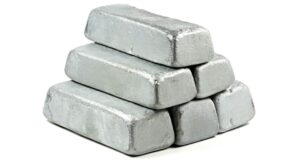
In January-February 2026, imports of tin and tin products increased by 18.8% to $727 thousand (in February – $559 thousand).
Exports of tin and tin products in January-February 2026 amounted to $248,000 (in February – $23,000), while in January-February 2025 they amounted to $5,000.
In 2025, imports of tin and tin products increased by 36.5% to $4.352 million.
Exports of tin and tin products amounted to $241,000, compared to $389,000 in the 12 months of 2024.
Tin is mainly used as a safe, non-toxic, corrosion-resistant coating in its pure form or in alloys with other metals. The main industrial applications of tin are in white tinplate (tinned iron) for the manufacture of food containers, in solders for electronics, in domestic piping, in bearing alloys, and in coatings made of tin and its alloys. The most important tin alloy is bronze (with copper).

Ukrainian manufacturer of passive fire protection systems Kovlar Group is expanding its presence in the Moldovan market and expects to make this direction one of the first stable export channels for its products.
According to the company, it has been supplying fire protection products for engineering communications to Moldova for the past two years. Kovlar Group notes that there is virtually no domestic production of passive fire protection materials on the Moldovan market, so local partners are showing interest in Ukrainian systems.
The company specifies that regular technical meetings are held with Moldovan specialists to introduce the products, during which issues of fire protection system design, national regulatory requirements, and features of material application are discussed. According to preliminary agreements, the Moldovan side plans to purchase a significant part of Ammokote products.
The presence of Ammokote products on the Moldovan market is also confirmed by open specialized resources: in particular, the specialized platform Antikor.md features Ammokote products for fire protection of engineering communications with technical documentation and certificates.
Kovlar Group LLC was founded in 2015 in Kyiv and is the largest manufacturer of passive fire protection products in Ukraine. According to OpenDataBot, the company’s authorized capital is UAH 1.2 million, and its ultimate beneficiaries are Kostyantyn Kalafat (40%), Andrii Ozeychuk (35%), and Liubov Vakhitova (25%). The company’s revenue for 2024 amounted to UAH 91.37 million, which is twice as much as a year earlier, and its net profit was UAH 13.4 million, which is 1.7 times higher than in 2023. In the first quarter of 2025, the company’s revenue amounted to UAH 13.5 million, with a net profit of UAH 1.983 million.
Imports of goods to Ukraine in January-February 2026 amounted to $14.8 billion in monetary terms, while in the same period last year they amounted to $11.3 billion, which is 31% less, according to data from the press service of the State Customs Service of Ukraine (SCS).
According to a publication on the agency’s Telegram channel, in the first two months of 2026, goods worth $6.5 billion were exported from Ukraine, which is almost unchanged compared to the same period in 2025 ($6.3 billion).
“At the same time, taxable imports amounted to $5.2 billion, which is 78% of the total volume of imported goods. The tax burden per 1 kg of taxable imports in January-February 2026 was $0.54/kg,” the report says.
The largest imports to Ukraine came from China ($4 billion), Poland ($1.4 billion), and Turkey ($1.1 billion).
The largest exports from Ukraine went to Poland ($713 million), Turkey ($563 million), and Italy ($428 million).
Of the total volume of goods imported in January-February 2026, 71% of the categories were machinery, equipment, and transport – $6 billion (with customs clearance, 32.9 billion UAH, or 26% of customs payments, was paid to the budget), fuel and energy products – $2.6 billion (49.7 billion hryvnia, or 39% of customs payments, paid to the budget), chemical industry products – $2 million (15.9 billion hryvnia, or 12% of revenues, paid).
The top three most exported goods from Ukraine were food products – $4 billion, metals and metal products – $589 million, and machinery, equipment, and transport – $532 million.
“In January-February 2026, during customs clearance of exports of goods subject to export duties, UAH 318.5 million was paid to the budget,” the State Customs Service summarized.



