
Credit rating agency Fitch Ratings expects consolidation in the global life insurance sector to continue, although the pace and structure of transactions will vary by region, according to the Reinsurance News website
Fitch Ratings explains that the flow of deals is driven by insurers’ ongoing efforts to strengthen balance sheets, improve operational efficiency, and allocate capital to acquisitions that can enhance long-term value.
“Although geopolitical tensions, fluctuations in economic conditions, financing constraints, and heightened regulatory oversight in certain markets may affect pricing and transaction timelines, Fitch Ratings does not expect these factors to significantly disrupt the broad trend toward consolidation,” the report notes.
It is also noted that, according to Fitch, consolidation structures vary significantly across different jurisdictions. In Germany, activity is primarily focused on the acquisition of closed or legacy portfolios, with a small number of specialized run-off platforms actively operating, and approximately €25 billion in portfolios expected to become available for transfer in 2026.
In the UK, the market is increasingly shifting toward pension risk transfer (PRT), where defined-benefit pension plan liabilities and related assets are transferred to insurers. Fitch expects the volume of PRTs in the UK to grow to £45–50 billion in 2026, up from £38 billion in 2025, driven by sustained demand from pension schemes seeking to reduce risks, and insurers’ interest in scaling up these operations.
A similar picture is observed in the Netherlands, where approximately €10 billion in pension liabilities is expected to be transferred in 2026. In contrast, in markets such as France and several other European jurisdictions, PRT activity is limited due to structural differences in pension systems.
In the U.S., consolidation is characterized by a combination of reinsurance with intensive asset utilization and active mergers and acquisitions, including block transfers and full-scale company sales, whereas in the Asia-Pacific region, consolidation tends to be more selective, and Japan lacks a national PRT system.
Fitch notes that its assessment of insurers involved in consolidation takes into account how they manage growth while controlling the impact of investment, counterparty, regulatory, management, and operational risks.
International rating agency Fitch Ratings has upgraded Ukraine’s long-term foreign currency issuer default rating (IDR) to “CCC” from ‘RD’ (“Restricted Default”) following progress in restructuring GDP warrants.
“The upgrade reflects our assessment of the normalization of Ukraine’s relations with most of its external commercial creditors,” the agency said in a statement.
Earlier, on December 18, it was announced that 99% of investors supported the exchange of GDP warrants for Eurobonds, and together with the restructuring of sovereign and state-guaranteed debt in August 2024, Ukraine, according to Fitch’s estimates, restructured 94% of its commercial external public debt and state-guaranteed debt.
It is noted that under the terms of the exchange, Ukraine will convert almost the entire outstanding nominal amount of GDP warrants ($2.6 billion) into a new class of C bonds maturing in 2032 at a ratio of 1.34 for an amount of approximately $3 billion 497.67 million (and a small portion into B bonds issued during last year’s Eurobond restructuring with maturities in 2030 and 2034 in the amount of $16.91 million each). At the same time, in early June, Ukraine missed a payment on these warrants in the amount of $665 million.
Fitch also noted the European Union’s (EU) approval of a new EUR90 billion loan for Ukraine, which is to be repaid only if reparations are received from Russia. According to the agency, this will cover financing needs for more than a year and reduce short-term debt sustainability risks.
At the same time, Fitch noted that the “CCC” rating reflects significant credit risks due to the war and its macroeconomic and fiscal consequences, although these risks are partially offset by a manageable repayment profile in the near term, significant foreign exchange reserves, and EU support.

On Saturday night Kyiv time, international rating agency Fitch Ratings confirmed Ukraine’s long-term foreign currency issuer default rating (IDR) at “restricted default” (RD).
“Fitch believes that Ukraine is still in the process of broader restructuring, with its GDP warrants only becoming defaulted after the May 31 payment date. The long-term foreign currency IDR will remain at RD until Ukraine normalizes its relations with the vast majority of its external commercial creditors,” the agency said in a statement on its website.
Fitch recalls that following last year’s restructuring of outstanding sovereign Eurobonds and state-guaranteed debt of Ukravtodor and Ukrenergo a preliminary agreement was reached on the restructuring of their state-guaranteed Eurobonds worth $825 million (with payments suspended from November 9, 2024), which should be completed by July.
At the same time, Ukraine and the holders of GDP warrants (for a notional amount of $2.6 billion) have not been able to reach an agreement on restructuring, and Cargill’s $0.7 billion external commercial loan, payments on which have been suspended since September 3, 2024, has also not yet been restructured.
The agency also confirmed the national currency ECAI at ‘CCC+’, reflecting Ukraine’s continued servicing of its national currency debt. Only a small share (1.1% as of May 2025) is held by non-residents, while the majority is held by
the National Bank of Ukraine and domestic (mainly state-owned) banks, and this ownership structure limits the benefits for the country from debt restructuring in local currency, creating potential fiscal costs (including bank recapitalization).
Regarding the Ukrainian-Russian ceasefire talks, Fitch mentioned the first bilateral meeting in Istanbul in three years but noted that it did not lead to any breakthrough.
“The US administration’s stated goal of ending the war could lead to a negotiated ceasefire, but a peace agreement is unlikely due to the difficult-to-reconcile positions of both sides,” the agency said.
It added that the agreement on mineral extraction between the US and Ukraine had eased diplomatic tensions, but the potential economic benefits, as well as the extent to which it could link US economic interests to Ukraine’s strategic security goals, remained highly uncertain.
As for the fiscal deficit, Fitch pointed to its reduction to 17.2% of GDP in 2024 thanks to high revenue performance despite the economic slowdown, and forecast an increase in the deficit to 19.3% of GDP in 2025.
“High spending pressures will persist even after the end of the war, as Ukraine is likely to maintain a significant military presence,” the agency said, noting that Ukraine will need $524 billion in reconstruction over the next decade, which is about 2.8 times Ukraine’s nominal GDP in 2024.
The publication emphasizes that Ukraine’s financing needs this year will be comfortably met, leaving additional liquidity buffers for next year: net foreign financing will reach $55 billion compared to an average of $25 billion per year in 2022-24, mainly due to advance receipts from frozen Russian assets. At the same time, uncertainty regarding financing for 2026 and beyond remains high. Fitch expects domestic borrowing to increase in 2026 thanks to a relatively stable banking sector and low domestic financing this year.
Slovakia plans to allocate EUR 84 million in loans and grants for the restoration of the infrastructure of NEC Ukrenergo. Slovakia is ready to allocate about EUR 84 million in loans and grants for the implementation of projects to restore and develop the infrastructure of NEC Ukrenergo. The company announced this on Friday, citing investment director Oleg Pavlenko. “In particular, we are talking about the construction of a new high-voltage line in a region that has been severely affected by Russian shelling, the construction of a new Ukrenergo substation, and the reconstruction of an existing one,” he said.According to Pavlenko, the implementation of each of these initiatives is very important for the system operator, as these measures will significantly strengthen the stability of the Ukrainian energy system. Ukrenergo executives discussed the implementation of joint projects and the possible participation of Slovak businesses in the restoration of Ukraine’s energy sector with representatives of the Slovak government. In particular, they discussed attracting infrastructure investments under the European program to support Ukraine, Ukraine Facility. The implementation of projects to restore Ukraine’s energy infrastructure with the support of Slovak partners will be administered by the Export-Import Bank of the Slovak Republic and the Slovak Development Agency with the assistance of the country’s government.Fitch confirms Ukraine’s “restricted default” rating On Saturday night, the international rating agency Fitch Ratings confirmed Ukraine’s long-term foreign currency issuer default rating (IDR) at “restricted default” (RD). “Fitch believes that Ukraine is still in the process of broader restructuring, with its GDP warrants only becoming defaulted after the May 31 payment date. The long-term foreign currency IDR will remain at RD until Ukraine normalizes its relations with the vast majority of its external commercial creditors,” the agency said in a statement on its website.Fitch recalls that following last year’s restructuring of outstanding sovereign Eurobonds and state-guaranteed debt of Ukravtodor and Ukrenergo reached a preliminary agreement on the restructuring of its state-guaranteed Eurobonds worth $825 million (with payments suspended from November 9, 2024), which should be completed by July.At the same time, Ukraine and the holders of GDP warrants (for a notional amount of $2.6 billion) have not been able to reach an agreement on restructuring, and Cargill’s external commercial loan of $0.7 billion, payments on which have been suspended since September 3, 2024, has also not yet been restructured.The agency also affirmed the national currency IDR at ‘CCC+’, reflecting Ukraine’s continued servicing of its domestic debt.
Only a small share (1.1% as of May 2025) is held by non-residents, while the majority is held by the National Bank of Ukraine and domestic (mainly state-owned) banks, and this ownership structure limits the benefits for the country from debt restructuring in national currency, creating potential fiscal costs (including bank recapitalization). Regarding the Ukrainian-Russian ceasefire talks, Fitch recalled the first bilateral meeting in Istanbul in three years, but noted that it did not lead to any breakthrough.The US administration’s stated goal of ending the war could lead to a ceasefire through negotiations, but a peace agreement is unlikely due to the difficult positions of both sides,” the agency said.It added that the agreement on mineral extraction between the US and Ukraine has eased diplomatic tensions, but the potential economic benefits, as well as the extent to which it can link US economic interests to Ukraine’s strategic security goals, remain highly uncertain.As for the fiscal deficit, Fitch pointed to its reduction to 17.2% of GDP in 2024 thanks to high revenue performance despite the economic slowdown, and forecast an increase in the deficit to 19.3% of GDP in 2025.High pressure on spending will remain even after the end of the war, as Ukraine is likely to maintain significant military forces,” the agency believes, also recalling the need for $524 billion in reconstruction over the next decade, which is approximately 2.8 times Ukraine’s nominal GDP in 2024.The publication notes that Ukraine’s financing needs this year will be comfortably met, leaving additional liquidity buffers for next year: net foreign financing will reach $55 billion, compared to an average of $25 billion per year in 2022-24, mainly thanks to advance receipts from frozen Russian assets. At the same time, uncertainty regarding financing for 2026 and beyond remains high. Fitch expects domestic borrowing to increase in 2026 thanks to a relatively stable banking sector and low domestic financing this year.
International rating agency Fitch Ratings has affirmed Ukraine’s long-term foreign currency Issuer Default Rating (IDR) (LTFC) at ‘Restricted Default’ (RD) pending the completion of the restructuring of obligations for which Ukraine has already suspended payments or announced that it will suspend them in the future.
“Ukraine’s LTFC IDR will remain ‘RD’ until Fitch makes a determination that the exchange has been completed and normalized with a substantial majority of external commercial creditors,” the agency said in a statement on its website.
Fitch recalled that Ukraine continues the process of restructuring its external commercial debt. Following the successful completion of the Eurobond swap in September 2024, the government ordered to temporarily suspend payments on Cargill’s $0.7bn external commercial loan from September 3, 2024, Ukrenergo’s $825m state-guaranteed Eurobonds from November 9, 2024 and GDP-guarantees from May 31, 2025.
In addition, the agency affirmed the IDR on local loans of “CCC+”. “The higher local currency IDRs reflect Ukraine’s continued servicing of local currency debt as part of the ongoing external commercial debt restructuring process, which confirms our expectation of preferential treatment for local currency debt,” Fitch explained.
It pointed out that the structure of the government bond debt – only 1.3% held by non-residents with an overwhelming share held by the NBU and domestic banks, mostly state-owned – limits Ukraine’s benefits from any restructuring, as it creates potential fiscal costs (including bank recapitalization) and risks to the stability of the financial sector, hindering the development of the domestic debt market.
Fitch expects the war to continue through 2025 within the current broad parameters. “Despite some Russian territorial gains since late 2023, Western military support and strong resolve should allow Ukraine to avoid significant additional territorial losses,” the agency says.
It suggests that the new US administration’s stated goal of ending the war could lead to an agreed ceasefire, but a peace deal is unlikely due to the difficult concessions that would be required from both sides. The parameters of an agreed ceasefire, including security guarantees for Ukraine and territory that would remain under Russian control, remain uncertain, Fitch added.
It estimates that the government budget deficit will remain high at 19.1-19.2% of GDP in 2024-2025, despite recently approved tax increases, due to high defense spending and expected reductions in foreign grants. Significant fiscal consolidation will be limited by the continuation of the war as well as reconstruction costs in the event of a prolonged ceasefire, which is likely to maintain high dependence on foreign financing.
Fitch forecasts Ukraine’s debt to rise to 90.8% of GDP in 2024 from 84.4% in 2023, with 77% of external debt highly concessional and 74% denominated in USD. The agency adds that uncertainty over near-term external financing has eased as the G7 is likely to provide around $50bn in loans backed by proceeds from frozen Russian sovereign assets.
Fitch also expects the current account deficit to widen to 8.4% of GDP in 2024 and 13.6% of GDP in 2025, as capacity constraints (e.g. labor and energy) will restrain export growth. Rising consumer spending, military imports, easing currency restrictions and projected lower subsidies will outweigh the projected decline in imports of services from Ukrainians abroad, the agency added. It estimates that official financing will cover external borrowing needs, with international reserves rising to $42bn in 2024 from $40.5bn in 2023. Fitch also forecasts inflation to average 9.3% in 2025, up from 6.2% in 2024, as rapid wage growth amid labor shortages and skills mismatches could keep price pressures on domestic demand. At the same time, growth will slow to 2.9% in 2025 from 4% in 2024 due to persistent labor and energy shortages. “A durable and credible ceasefire could significantly boost the country’s growth prospects in 2025-2026,” the agency noted.
Fitch downgraded Ukraine’s credit rating to “Restricted Default” from “C” on Tuesday, citing the expiration of the 2026 Eurobond repayment grace period, Reuters reported.
Ukraine defaulted on its bonds after a law came into effect allowing it to suspend foreign debt payments until October 1. Earlier this month, Ukraine began the process of getting bondholders’ consent to restructure $20 billion worth of international bonds.
Ukraine has been pushing hard since Russia’s invasion to restructure its wartime debt as part of efforts to regain access to international capital markets.
Fitch maintained Ukraine’s local currency (LC) debt rating at ‘CCC-‘ as it expects LC debt to be excluded from a restructuring deal with external commercial creditors.
Rating agency S&P Global also downgraded Ukraine to “selective” default from August 2.
Fitch does not usually assign outlooks to countries rated CCC+ or lower.
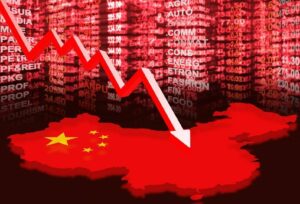
International rating agencies S&P Global and Fitch have downgraded their outlooks for China’s residential real estate market.
real estate, despite Beijing’s announced package of measures to support it.
S&P forecasts a 15% decline in housing sales in China this year, while earlier it expected a 5% decline. According to the agency’s forecast, published on Thursday, the volume of sales of residential real estate in the country will total less than 10 trillion yuan ($1.4 trillion) this year, about half the peak level recorded in 2021.
Fitch this week also worsened its forecast for home sales in the PRC: the agency now expects sales to fall by 15-20% this year, rather than the 5-10% previously estimated.
The lowered forecasts show that rating agencies are not confident in the success of a large-scale package of market support measures, the launch of which the Chinese authorities announced in May. In particular, it includes the abolition of the lower limit on mortgage rates, as well as lowering down payment requirements for real estate buyers using mortgages. In addition, Beijing urged authorities in cities with a surplus stock of ready-made houses to buy back properties at reasonable prices for later use as affordable housing.
Prices of new buildings in China’s major cities fell for the 11th straight month in May. According to a report by China’s State Statistics Office (SSO), the cost of new housing in the country’s 70 largest cities fell 3.9% year-on-year last month, the most since June 2015.
Real estate accounts for about 78% of Chinese residents’ wealth, Bloomberg notes.



