

The Embassy of the Republic of Uzbekistan in Ukraine announces that the Salt Processors Forum will take place in Nukus from September 25 to 27, 2026.
The event will serve as a platform for discussing the prospects for the development of the salt mining and chemical industries, establishing business contacts, and learning about investment opportunities in the Republic of Uzbekistan.
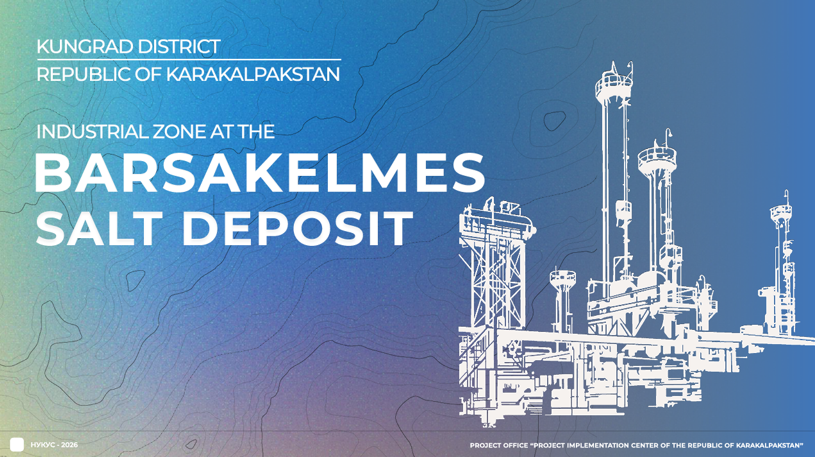
Special attention during the forum will be given to the potential of the “Kungrad Salt Free Zone” special industrial zone, where favorable conditions have been created for foreign investors and domestic entrepreneurs to implement projects in the fields of salt extraction, deep processing of salt, and the production of chemical products.
Business representatives, investors, industry companies, relevant associations, and other interested organizations are invited to participate.
If you are interested in participating, please contact the Embassy of the Republic of Uzbekistan in Ukraine by email: embassy@uzbekistan.org.ua

On May 20, Lviv will host the “City Development Strategy: Me, You, Society” forum, dedicated to the future of urban development, new approaches to planning and construction, and partnerships between government, business, the architectural community, and society.
The event will bring together representatives of city authorities, developers, architects, urban planners, the business community, and the media. Confirmed participants include AVR Development, ZELEMIN, KUDIN architects, A7 architects, and other companies and professional teams working in the field of urban development.
The forum’s program includes a press conference on “Lviv’s Development: Key Priorities, Tools, and Partnerships,” a presentation session, a panel discussion titled “City Development: New Approaches to Planning and Construction,” as well as networking and informal discussions among participants.
Invited to participate in the forum are Lviv’s Chief Architect Anton Kolomeitsev, CEO of AVR Development and former Chief Architect of Lviv Julian Chaplinsky, founder of ZELEMIN Andriy Pavliv, Chief Architect of Uzhhorod Oleg Borshovsky, representatives of KUDIN architects Viktor Kudin and Olga Ryabova, Bogdan Goy, chief architect of A7 architects projects; Serhiy Zhuk, CEO and co-founder of HBD; Pavlo Gudymov, curator and founder of the “Ya Gallery” art center; Roman Romanets, co-founder of AVR Development; and Oleksandr Maksymov, CEO of Solmix Lighting and the LOFU brand, as well as a lighting designer.
The organizers note that the forum is intended to serve as a platform for an open discussion about what Lviv should look like in the future, how to balance the interests of residents, businesses, and city authorities, and what solutions can create a high-quality, modern, and comfortable urban environment.
Forum program:
5:00–5:20 PM – guest registration, welcome networking
5:20–5:30 PM – official opening
5:30–6:00 PM – press conference “Lviv’s Development: Key Priorities, Tools, and Partnerships”
6:00–6:15 PM – presentation session
6:15–7:45 PM – panel discussion “City Development: New Approaches to Planning and Construction”
7:45–8:00 PM – networking, reception, jazz performance
Registration for the forum is available at: https://forms.gle/AaizLN47CxhXjmBe7
Additional information: +38 044 461 91 28.
Interfax-Ukraine is the official media partner of the forum.
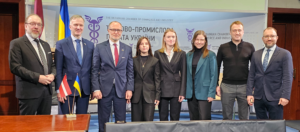
Latvia and relevant Ukrainian business and defense associations are deepening their cooperation in the defense industry sector. This was announced during the Latvian-Ukrainian Defense Forum 2026, which took place on March 23 in Kyiv at the premises of the Ukrainian Chamber of Commerce and Industry. The event culminated in the signing of a memorandum of understanding between the Latvian Ministry of Defense and a number of Ukrainian organizations, which provides for long-term cooperation, technology exchange, and state support for Ukrainian companies planning to enter or expand their operations in the Latvian market.
The forum was attended by government officials, diplomats, business representatives, and industry associations from both countries. The event was opened by Gennadiy Chizhikov, President of the Ukrainian Chamber of Commerce and Industry; Andris Spruds, Minister of Defense of Latvia; Serhiy Boev, Deputy Minister of Defense of Ukraine; and Andrejs Pildegovičs, Ambassador of Latvia to Ukraine. As the organizers noted, the forum was aimed not only at providing political confirmation of support for Ukraine but also at establishing practical mechanisms for cooperation between manufacturers, investors, and government institutions of the two countries.

On the Ukrainian side, the Ukrainian Council of Arms Manufacturers, the National Association of Defense Industries of Ukraine, the Federation of Employers of Ukraine, and “Technological Forces of Ukraine” joined the agreements. According to the Latvian side, the document is intended to serve as a tool for building a joint defense industry ecosystem that will combine the combat experience of Ukrainian manufacturers with Latvia’s technological and institutional potential. The Latvian Ministry of Defense emphasized that the memorandum provides for targeted state support for Ukrainian companies planning to launch or expand their operations in Latvia.
“The combat experience of the Ukrainian defense industry and Latvia’s technological potential are a powerful combination for joint development. The memorandum is not merely declarative but practical in nature and is intended to serve as a platform for creating innovative solutions that will strengthen the security of both countries and the capabilities of their armed forces,” noted Latvian Defense Minister Andris Spruds.
The Latvian Ministry of Defense also emphasized that the country aims to become a stable base for Ukrainian companies in Europe, while simultaneously developing its own industrial potential.
Gennadiy Chizhikov, President of the Ukrainian Chamber of Commerce and Industry, for his part, emphasized that deepening cooperation in the defense sector “strengthens our countries and industries.”
“The implementation of the agreements will take place with the participation of the Latvian Investment and Development Agency, as well as the Latvian Ministry of Economy and Ministry of Defense. This involves, in particular, promoting Ukrainian business in the Latvian market and supporting the development of a broader defense industry ecosystem,” he added.
The practical part of the forum included a bilateral business session and a panel discussion featuring Oleksandr Kamyshin, Advisor to the President of Ukraine on Strategic Issues; Vadym Yunyk, co-founder of Baltic Forces Hub; Ihor Fedirko, CEO of the Ukrainian Defense Industry Council; representatives of the Federation of Employers of Ukraine, Latvian business organizations, LIAA, DAIF Latvia, the Latvian Embassy in Ukraine, and private companies in the defense and technology sectors. This composition of participants indicates that the parties are striving to translate political support into concrete production, investment, and cooperation decisions.
Further confirmation of the practical nature of the visit came from the fact that the Latvian Investment and Development Agency had announced as early as the beginning of March a trade mission of Latvian defense and security companies to Kyiv for March 23–25, coinciding with the working visit of the Latvian Minister of Defense. The program included direct contacts with representatives of the Ukrainian defense sector and B2B meetings with potential partners. The forum in Kyiv thus became part of a broader effort to institutionalize Latvian-Ukrainian cooperation in the defense industry against the backdrop of the war and the growing role of this sector in the economies of European countries.
The event was organized by the Latvian Ministry of Defense, the Latvian Investment and Development Agency, and the Latvian Embassy in Ukraine, while the Ukrainian Chamber of Commerce and Industry served as a co-organizer, and the Ukraine Facility Platform acted as a partner for the forum. Given the content of the signed agreements, this is no longer merely a matter of Latvia’s political solidarity with Ukraine, but an attempt to establish a sustainable bilateral cooperation mechanism.
Interfax-Ukraine is the forum’s media partner.

On December 4, Kyiv hosted the Petroleum&LPG Ukraine 2025 forum, a long-standing meeting place for operators in the Ukrainian petroleum products market. The conference brought together 280 delegates from 120 companies in the fuel sector, representatives of government agencies, and companies. The forum was organized by the A-95 Consulting Group.
One of the main topics of the conference was international cooperation. Representatives of the Ministry of Energy of Ukraine, Naftogaz of Ukraine, Ukrnafta, and the Polish energy company ORLEN S.A. took part in the discussion. As noted by Robert Kwiatkowski, Director of Strategy and Strategic Transformation at ORLEN S.A., Ukraine is a strategic direction for the company’s current activities and development.
“We understand that if we do not help Ukraine, it could be our biggest mistake,” said the Polish top manager.
ORLEN is currently the largest supplier of light petroleum products to Ukraine: according to the A-95 Consulting Group, in 2023-2025, gasoline supplies increased threefold, and diesel fuel supplies increased one and a half times. The company is also a major supplier of road bitumen, lubricants, and petrochemical products.
Serhiy Koretsky, Chairman of the Board of Naftogaz of Ukraine, spoke very highly of the company’s cooperation with the Polish concern.
“ORLEN has become so deeply integrated into the Ukrainian market that sooner or later, the company will likely acquire its own assets in Ukraine,” said the head of Naftogaz, who is actively developing cooperation with the Polish concern in LNG imports and other areas.
According to Deputy Minister of Energy Mykola Kolisnyk, integration into the EU is a guarantee of long-term development of the Ukrainian fuel market. He noted that the transition of the Ukrainian fuel market to EU standards requires the introduction of high environmental standards and modern approaches to the processing of petroleum product waste.
A separate session was devoted to tax discipline, attended by a large delegation of leading officials from the State Tax Service, headed by Acting Chair Lesya Karnaukh. She gave preference to public communication with forum participants, who had a unique opportunity to ask any questions. The greatest interest was in the mechanism for companies to be included in the list of “risky” ones, as well as the tax authorities’ approaches to tax payment standards.
“Without interaction with the market, which strives for fair conditions, we will not be able to work effectively. We are not a punitive body; our goal is to fairly determine tax liabilities,” Lesya Karnaukh said following the discussion.
In turn, A-95 estimated that in 2023-2025, the payment of operating taxes by the largest gas station chains would increase more than twofold, by almost UAH 10 billion.
Other topics of in-depth discussion at Petroleum&LPG Ukraine 2025 included post-war development of maritime and railway infrastructure, creation of petroleum product reserves, development of the bioethanol industry and use of alcohol-containing gasoline, electromobility, and expansion of non-fuel activities at gas stations.
“The fuel market remains the most resilient energy sector thanks to the comprehensive restructuring of the geography and logistics of supplies in 2022. Despite constant shelling and losses, companies in this market are a reliable support for consumers and the state, ensuring stable fuel supplies and paying taxes that are growing year after year,” said the event moderator, Director of the A-95 Consulting Group, Serhiy Kuyun.
The conference partners were traditionally the largest market operators: ORLEN S.A., JSC Ukrnafta, OKKO, UNIMOT S.A. (Poland), UPG, Kemexon (Switzerland), JSC Energo Trade, Western Fuel and Energy Company, AGTG (Switzerland).
The Petroleum&LPG Ukraine 2025 forum has been held annually by the A-95 Consulting Group since 2023. From 2009 to 2019, the company held the Petroleum Ukraine conference, and from 2010 to 2020, the LPG Ukraine conference.
In 2022, the annual Petroleum Ukraine forum was also launched in Warsaw. Warsaw, which is one of the largest events in Eastern Europe dedicated to the motor fuel market.
Interfax-Ukraine is an information partner.
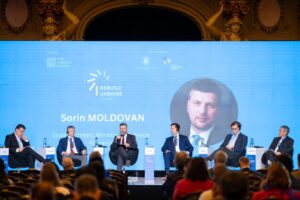
Participants in the panel discussion “Security Perspectives for 2026: Possible Developments” at the Ukraine Recovery Forum in Bucharest concluded that 2026 is shaping up to be a potential strategic turning point for Euro-Atlantic security against the backdrop of the ongoing war in Ukraine, the vulnerability of transatlantic ties, and growing pressure on the EU to strengthen its defense capabilities and strategic autonomy.
The discussion was moderated by Antena 3 CNN journalist Radu Tudor. The panel included Sorin Moldovan, State Secretary of the Romanian Ministry of National Defense; Vadym Halaychuk, First Deputy Chairman of the Verkhovna Rada Committee on EU Integration; Paul Coyer, Professor at the Institute of World Politics (USA), Nico Lange, Senior Research Fellow at the Munich Security Conference, and Shigeo Mutsushika, Executive Director of the Kazankai Foundation and Honorary Professor at Shizuoka University (Japan).
According to the speakers, Europe’s security environment in 2026 will be determined by a combination of several factors: the Russian Federation’s ongoing full-scale invasion of Ukraine, the fragmentation of transatlantic unity, and growing competition between major powers, including the use of hybrid instruments. Against this backdrop, Europe, in their opinion, should play a “more mature strategic role” – not only in the defense sphere, but also in industrial and energy policy.
“European states can no longer take security for granted – they need their own capabilities that will complement, not replace, the transatlantic partnership,” Lange said.
The participants paid particular attention to the stability of the Black Sea region and the resilience of NATO’s eastern flank, which were identified as key pillars of the European security architecture. It was emphasized that maintaining and strengthening support for Ukraine—military, economic, and political—will remain a decisive factor in deterring Russia and preventing further destabilization of neighboring regions. In this context, particular attention was paid to the risks associated with hybrid threats – cyberattacks, sabotage against critical infrastructure, and information operations.
Following the discussion, the panel concluded that structural changes in the security environment require deeper coordination between European states, accelerated investment in critical capabilities, and the adaptation of defense doctrines to new operational realities. Continued support for Ukraine, active use of Western economic and legal instruments—including the possible use of frozen Russian assets—and strengthening of the transatlantic partnership were identified as necessary prerequisites for maintaining regional stability and establishing a sustainable European security order.
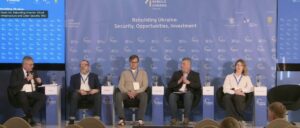
At the Rebuilding Ukraine: Security, Opportunities, Investments forum in Bucharest, participants in a panel discussion on the role of the private sector in Ukraine’s reconstruction emphasized that attracting private capital is critical for the implementation of large-scale projects, but its participation is impossible without effective mechanisms for financing, insurance, and reducing investment risks.
The panel “Private Sector – A Key Actor in the Reconstruction of Ukraine. Financing and Insurance Instruments” was moderated by Victor Srayer, managing partner of Otto Broker (Romania). The discussion was joined by Volodymyr Tsabal, secretary of the Verkhovna Rada Committee on Budget, and Susan E. Walton, senior advisor on new markets – global risks and sustainability (USA) Susan E. Walton, CEO of BCR – Romanian Commercial Bank Sergiu Manea, Director of Legal and External Relations at Vodafone Romania Alexandra Olaru, and JBIC Regional Head for EMEA, Resident Executive Officer of the Japan Bank for International Cooperation Takayuki Sato.
Participants noted that the private sector, both Ukrainian and foreign, faces a double challenge. Ukrainian companies have limited access to debt financing due to high interest rates, war risks, and domestic capital market constraints. Foreign investors, in turn, are forced to take into account political and military risks, as well as regulatory peculiarities of working in Ukraine.
The main solutions identified were the use of blended financing instruments, the involvement of international financial organizations to cover part of the risks, and the creation of a guaranteed framework by the state and partners that makes projects “bankable” for commercial structures. “For private capital to enter the reconstruction process, investors need to clearly see which risks are assumed by the state and international financial institutions, and which are assumed by themselves. Without this, projects either do not start or remain at the conceptual level,” Manea noted.
Special attention was paid to the role of political and military risk insurance, as well as the importance of transparent information and local partner networks. According to the speakers, successful project implementation requires strategic coordination between government agencies, donors, and private businesses, particularly in terms of selecting priority projects, structuring agreements, and monitoring their implementation.
The panel participants also emphasized that reconstruction is impossible without reliable digital and energy infrastructure. The experience of neighboring countries that have undergone large-scale infrastructure programs can be used to implement practical solutions in Ukraine. “Private capital, combined with government support and good governance, can significantly accelerate post-war recovery. The state’s task is to create predictable rules of the game and an institutional environment that will make this possible,” Walton concluded.
Following the discussion, participants concluded that the private sector has significant potential in rebuilding Ukraine, but that realizing this potential depends on the availability of financial instruments, effective insurance protection mechanisms, and coordinated action between public and private actors.
The forum “Rebuilding Ukraine: Security, Opportunities, Investments” is being held on December 11-12 in Bucharest under the auspices of the Romanian Ministry of Foreign Affairs and the Ukrainian Ministry of Foreign Affairs and is organized by the New Strategy Center. According to the organizers, more than 30 panel discussions and parallel sessions are planned over two days with the participation of representatives of governments, international organizations, the private sector, financial institutions, and experts from Europe, North America, and Asia. The topics of the panels cover security and defense, infrastructure, financing and investment, green energy, digitalization, human capital, and cross-border cooperation.



