

The official exchange rate of the national currency may weaken to the level of 40.00-40.50 UAH/$1 in the summer, said Nikita Mishakov, head of interbank operations at PrivatBank, while OTP Bank predicts that the hryvnia will not fall below 40.20 UAH/$1 in the summer.
“But I do not think that the National Bank, having substantially replenished foreign exchange reserves, will allow a rapid devaluation. Although the NBU plans to devalue the hryvnia gradually. As far as I remember, they promised to devalue up to 10% this year,” he said in a comment to Interfax-Ukraine.
Mishakov believes that the package of currency restrictions easing announced by the NBU on May 3 will put some pressure on the national currency starting from the end of last week or this week.
“My personal opinion is that I see the exchange rate in June at around 40.00 UAH/$1, 40.50 UAH/$1, maybe. But I think that over time, as the harvest season begins, with exports threatened, I think it will adjust to 39.50 UAH/$1,” the head of the interbank operations department shared his expectations.
Mishakov noted that, in his opinion, the exchange rate corridor will be within the current level, close to 40.00 UAH/$1, with fluctuations in both directions of about 50 kopecks.
“Liberalization will result in the need to increase the NBU’s foreign exchange interventions to maintain the stability of the hryvnia exchange rate, but this will not cause additional threats to macro-financial stability,” said Inna Provotar, head of management accounting and business analysis at OTP Bank.
“Exchange rate fluctuations are possible, but within acceptable limits. In summer, we do not expect the official exchange rate to exceed 40.2 UAH/$1. At the same time, there is a high probability that the rate will rise to 40.7 UAH/$1 by the end of the year. That is, to the level that the Ministry of Finance of Ukraine has included in the budget for 2024,” she said.
Sergiy Kolodiy, Chief Macroeconomic Analysis Officer at Raiffeisen Bank, noted that the package of currency restrictions easing will increase the structural deficit in the interbank market in the short term, but at the same time improve the business environment and solve problems with servicing external loans. The announced currency liberalization measures may increase the inflow of foreign currency in the medium term, the banker believes.
However, unlike his colleagues who expect the national currency to devalue, Kolodiy admits that the foreign exchange market will see a seasonal strengthening of the hryvnia due to the central bank’s wide scope for intervention, given the rather high level of international reserves.
“The NBU has enough reserves to cover the structural deficit and will use them for this purpose. Therefore, we will not be surprised by the slow seasonal revaluation of the hryvnia as a clear signal to the market about the ability to maintain currency stability,” he emphasized.
The banker also said that, according to Raiffeisen Bank’s estimates, currency liberalization was included in the regulator’s January macroeconomic forecast, which corresponded to an additional $5.6 billion of currency outflow.
“The estimate of $5.5 billion recently announced by the regulator’s representatives is very close to our calculations,” he summarized.
“Currency easing is aimed at revitalizing and stimulating business, which should ultimately lead to an increase in business activity and, consequently, GDP. The dynamics of the exchange rate will continue to depend on the assistance of international partners, the situation at the front, business activity and public sentiment,” informed Serhii Kucheriavyi, Director of Liquidity and Securities Control Department of Kredobank.
All the bankers emphasized that the level of international reserves is sufficient for a more “soft” monetary policy and do not see any significant risks to exchange rate stability.
As reported, on May 3, the NBU announced the largest package of currency restrictions easing for businesses since the beginning of the full-scale war, which includes the abolition of all currency restrictions on imports of works and services, the ability of businesses to repatriate “new” dividends, and the ability to transfer funds abroad under leasing and rent.
In addition, new steps in currency liberalization include easing restrictions on the repayment of new foreign loans and interest on “old” foreign loans, as well as easing restrictions on the transfer of foreign currency from representative offices to their parent companies.
On May 7, the Cabinet of Ministers of Ukraine repealed Resolution No. 153, which restricted payments for imports of goods and services, and on May 8, the official hryvnia exchange rate began to gradually decline.
In total, it weakened by 37 kopeks over the past week, including a 17 kopek drop to 39.7206 UAH/$1 last Friday. In the cash market, the dollar also rose in price last week: by about 12 kopecks to 39.95 UAH/$1, including 6 kopecks on Friday.
The National Bank’s net sales of dollars increased to $533.4 million from $507.8 million last week.
In April, Ukraine’s international reserves decreased by 3.1%, or $1.4 billion, to $42 billion 399.5 million. On April 25, the NBU raised its forecast for reserves at the end of this year to $43.4 billion from $40.4 billion and to $44.3 billion from $42.1 billion at the end of next year.

The reference exchange rate of the hryvnia to the US dollar on the interbank foreign exchange market as of 12:00 a.m. on March 7, 2024.
Indicator 06.03.2024 07.03.2024 07.03.2024 Change, %.
Reference hryvnia to US dollar (UAH/$) 38.3099 38.1029 -0.54

The average rate of new hryvnia deposits for the corporate sector decreased by 0.9 pp (percentage points) for the second month in a row to 12.5% in September, while for households it remained at around 12.25% per annum after the first decline of 0.5 pp in August for 14 months.
According to the NBU on its website, the yield on foreign currency deposits for individuals also remained unchanged in September at around 1.15% p.a., while the yield on corporate deposits decreased by an average of 0.15 percentage points to 0.58% p.a.
Interbank lending rates, as indicated by the National Bank, fell by 1 percentage point to 17.2% per annum in September, including overnight rates by 0.3 percentage points to 16.4% per annum.
As for the volume of deposits, the gap between corporate and retail deposits continued to narrow in September: while corporate deposits decreased by UAH 12.1 billion, or 1.1%, to UAH 1 trillion 116.3 billion, retail deposits increased by UAH 22.9 billion, or 2.4%, to UAH 999.4 billion.
Households increased their deposits both in hryvnia by 2.5% to UAH 663.7 billion and in foreign currency by 2% to the equivalent of UAH 335.7 billion, while in September, corporate deposits in foreign currency decreased by 5.4% to UAH 340.2 billion, while in hryvnia they increased by 0.8% to UAH 776.1 billion.
The total loan portfolio, which returned to slow growth in July, added another UAH 4.9 billion in September to reach UAH 975.0 billion.
The growth was driven by hryvnia loans to the corporate sector, which increased by 1.9% to UAH 509.6 billion, while foreign currency loans decreased by 1.4% to the equivalent of UAH 230.8 billion.
In September, consumer loans decreased both in national currency by 0.3% to UAH 202.4 billion and in foreign currency by 0.4% to the equivalent of UAH 12.5 billion.
As reported, on September 15, the NBU cut the discount rate from 22% to 20% per annum, while reducing the rate on three-month deposit certificates from 22% to 20%, while the rate on overnight deposit certificates decreased from 18% to 16%.
Inflation in Ukraine in annual terms slowed to 7.1% in September from 8.6% in August and 11.3% in July.
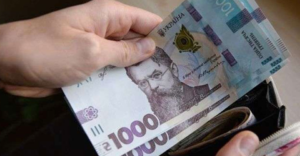
The International Monetary Fund (IMF) supports the decision of the National Bank of Ukraine to switch from a fixed exchange rate regime to a managed flexibility regime starting October 3, and believes that this will further support the stability of the economy and the foreign exchange market, said Natan Epstein, Deputy Head of the IMF Mission to Ukraine.
“The ability to manage the exchange rate in a way that minimizes fluctuations seemed to us to be an important step forward,” he said at a briefing in Kyiv on Wednesday.
Epstein reminded that as part of the program, the NBU in late June approved a strategy supported by the Fund to normalize its monetary and exchange rate policies, which includes a relaxation of exchange controls, as well as a gradual increase in exchange rate flexibility and, ultimately, a return to the inflation targeting system.
According to the deputy head of the mission, the conditions necessary for abandoning the fixed exchange rate have been met, primarily a decline in inflation, a stronger position of international reserves, and stability in the foreign exchange market.
In general, Epstein noted the trust that the NBU managed to gain in managing monetary and foreign exchange policy during the war.
The IMF representatives also expressed satisfaction with the existing dialog between the NBU and the Ministry of Finance and its results, which do not call into question the independence of the central bank.

The average rate of new hryvnia deposits for households in December was 10.6% per annum, which is by 0.6 percentage points (p.p.) higher than in November and by 4.9 p.p. than in May, when the historical minimum was reached.
According to the information from the National Bank of Ukraine (NBU) on its website, the rate on deposits in the national currency increased by 3.5 p.p. over 2022.
At the same time, the rate on loans in hryvnia to households in December remained at the level of November – 35.1% per annum, and for the year its growth was only 1.4 percentage points.
The rate on foreign currency deposits, which reached a historical low of 0.4% per annum in April, decreased from 0.7% to 0.6% in December, which may be associated with deposits for the purchase of foreign currency, the rate on which, as a rule, is close to zero.
As for the corporate sector, the rate on new hryvnia deposits in December increased by 0.8 p.p. – to 10.4%, while on foreign currency deposits it decreased by 0.1 p.p. – to 1.4% per annum.
The average rate of UAH loans to the corporate sector in December decreased by 0.7 p.p. – to 20.1%, whereas on foreign currency loans – by 0.2 p.p., to 5.2%.
During the year, hryvnia loans for corporate sector went up by 11 p.p., while currency loans went up by 1.1 p.p.
As earlier reported, on June 3, the NBU raised its key rate from 10% to 25%, in order to improve the attractiveness of the hryvnia, reduce pressure on international reserves and combat inflation, which totaled 26.6% for the year.
The National Bank expects that banks will also increase rates on deposits, and the Ministry of Finance – on OVGZ, while the increase in interest rates on loans will not be so significant. Since October, the Ministry of Finance raised rates on bonds with maturities of five to 24 months to 14-19.5% per annum, while in the secondary market they reach 20% per annum and higher.
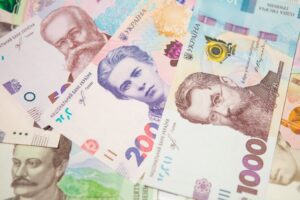
The transition from a fixed to a floating exchange rate with a temporary limitation of daily exchange rate fluctuations within a narrow range is proposed by UC Berkeley economics professor Yuriy Horodnichenko in an article on the analytical platform Vox Ukraine.
“Because of the nature of a fixed exchange rate, potential price distortions and imbalances accumulate over time, and the economy eventually reaches a tipping point where an exchange rate adjustment is needed again. Consequently, another exchange rate correction during a protracted war will almost certainly happen,” he explained the need to abandon this regime.
According to Gorodnichenko, among the imbalances already visible are an increase in the real exchange rate, a gap between the official and cash exchange rates, a lack of attention to the euro (since the EU is Ukraine’s main trading partner) and the political postponement of necessary exchange rate adjustments.
“Given the high sensitivity of inflation expectations to the exchange rate in Ukraine, a free floating exchange rate could entail excessive macroeconomic volatility. Indeed, the hryvnia fluctuated sharply during 2014-2015 after the first Russian invasion. We need an intermediate solution,” said the economist.
In his opinion, limiting daily fluctuations in the exchange rate (for example, 0.1% on any day) could be an acceptable intermediate solution. Among the advantages of this option Gorodnychenko mentioned operational freedom of the central bank, the absence of sharp macroeconomic adjustments and shocks, the NBU’s management of the euro-hryvnia exchange rate during Ukraine’s accession to the EU.
He added that such a regime does not mean a mandatory devaluation of the hryvnia. “The experience of the hryvnia during the COVID-19 crisis highlights how useful this is for Ukraine: after the hryvnia weakened during the first days of the crisis, it eventually strengthened as demand for Ukrainian products remained high. Due to such flexibility the Ukrainian economy felt relatively well in 2020-2021,” reminded the economist.
Gorodnychenko stressed that this policy alone cannot solve all problems, such as the broken mechanism of monetary transmission, and to achieve the desired results it will need to be supplemented by other measures, particularly restricting capital flows, the alignment of interest rates on deposit certificates of the NBU and government bonds.
The economist pointed out that there are other options for intermediate solutions, but they are, in his opinion, less preferable.



