

Kyivstar, Ukraine’s largest mobile operator, increased its EBITDA by 28.5% in the first quarter of 2026 to UAH 7.5 billion, while revenue rose by 31.3% to UAH 13.9 billion, according to the company’s quarterly report released on Wednesday.
“We continue to strengthen our long-term market leadership thanks to the successful integration of Uklon and Tabletki, the innovative Starlink connectivity, and investments in our network and energy independence,” Kyivstar CEO and President Oleksandr Komarov is quoted as saying in the document.
He noted that given this momentum, the company has raised its financial forecasts for 2026 and now expects revenue growth in hryvnia of 18–21% (previously 15–18%) and EBITDA growth of 14–17% (previously 12–15%).
In dollars, Kyivstar now estimates revenue growth this year at 11–14% (previously 8–11%) and EBITDA growth at 7–10% (previously 5–8%), while in the first quarter, revenue in dollars rose by 26.6% to $323 million, and EBITDA by 23.5% to $173 million.
The company’s net profit for January–March of this year jumped by 93.2% in dollars—to $85 million (in hryvnias—by 99.1%), and earnings per share amounted to $0.37.
It is noted that revenue from digital platforms for January-March 2026 increased nearly 3.6-fold to $67 million (in hryvnia, 3.7-fold to 2.9 billion UAH), and the digital business’s share of EBITDA amounted to $29 million.
The number of Kyivstar’s multiplay customers grew by 31.6% in the first quarter of 2026—to 8.1 million, representing 39.6% of the total number of active mobile customers over the course of a single month.
Kyivstar’s total number of customers in the first quarter of 2026 decreased by 3% to 22 million, while the number of broadband subscribers increased to 1.2 million, thanks to the integration of approximately 52,000 customers following the successful acquisition of the internet provider Shtorm.
ARPU (Average Revenue Per User) for the first quarter of 2026 increased by 14.1% to $3.8 (in hryvnia, by 18.4% to 166.5 UAH).
The average number of minutes a subscriber uses per month (Mobile MoU) increased by 2.3% to 297.
The report also states that the total number of monthly active digital users for the quarter grew from 20.8 million to 28.4 million. Specifically, Uklon and Tabletki had 5.1 million and 6.3 million users, respectively; Helsi saw an increase from 4.8 million to 4.9 million; KyivstarTV rose from 3.1 million to 3.4 million; and
MyKyivstar grew from 7.8 million to 8.7 million.
The online taxi service Uklon, which was consolidated into Kyivstar’s financial statements in April 2025, generated UAH 1.425 billion in revenue, or $32.9 million, in the first quarter of 2026. Its EBITDA amounted to UAH 538.9 million, or $12.4 million. The number of rides in the first quarter of 2026 was 43.7 million, and deliveries totaled 1.5 million.
It is noted that the Helsi medical information system had 87,000 paid subscribers as of the end of the first quarter of 2026, compared to 57,000 at the end of 2025; its revenue amounted to UAH 93 million, compared to UAH 68 million in the first quarter of 2025. The service’s clients have access to 1,700 public and private clinics and nearly 41,000 medical professionals.
The Tabeltki.ua service generated revenue of 233.9 million UAH, or $5.3 million, in February–March 2026. EBITDA amounted to UAH 195.8 million, or $4.5 million; the gross merchandise value (GMV) for orders placed through the platform was UAH 11.2 billion, and the total number of orders reached 30.6 million.
In the first quarter of 2026, the Kyivstar TV platform increased the number of user sessions by 11.7% to 931 million, and revenue reached UAH 453 million compared to UAH 89 million in the first quarter of 2025. “These results were driven by a strong content offering, including the Kyivstar TV Originals crime drama series
‘Tikha Nava,’ which has been the platform’s most popular show since its launch and helped attract new customers,” the report explains.
Kyivstar.Tech contributed an additional UAH 715 million in the first quarter of this year compared to UAH 632 million in the first quarter of the previous year, with the number of active contracts growing by 31% to 2,200. The growth was primarily driven by the cloud service, which increased from UAH 105 million to UAH 192 million.
Thus, the total share of the digital business in Kyivstar’s revenue rose to 20.9% from 7.4% in the first quarter of 2025.
It is noted that capital expenditures, excluding license fees, amounted to UAH 2.9 billion, or $67 million, or 20.9% of revenue, compared to $51 million in the first quarter of 2025. Capital expenditure intensity for 2026 is expected to be within the range of 21%–24% of revenue (previously 23%–26%).
At the end of the quarter, the company had $353 million in free cash flow against gross debt of $487 million, while at the beginning of the quarter these figures stood at $456 million and $478 million, respectively. Free cash flow from operating activities amounted to $161 million for the quarter, compared to $128 million in the first quarter of 2025.
It is also noted that the market capitalization of Kyivstar Group, which is listed on the Nasdaq stock exchange, stood at $3.214 billion as of May 11.
Kyivstar noted that the Group has expanded its cooperation with SpaceX to include the resale of Starlink high-speed internet services for businesses. The number of customers who have already used Direct to Cell technology has exceeded 5 million, and the launch of Light Data is scheduled for later in 2026.
Also during the reporting period, Ukrainians chose the name “Syayvo” for the national language model that Kyivstar is developing jointly with the Ministry of Digital Transformation.
As reported, Kyivstar increased its EBITDA by 30% in 2025—to UAH 27 billion—amid a 30.3% rise in revenue—to UAH 48.2 billion, including a 23.1% increase in EBITDA in the fourth quarter of last year—to UAH 7.2 billion—on the back of a 30.1% rise in revenue—to UAH 13.5 billion.

Kyivstar, Ukraine’s largest telecommunications operator, has been granted the right to officially sell Starlink services in Ukraine to support Ukrainian businesses, according to a company statement.
The agreement allows for the official supply of Starlink high-speed internet kits and services to large corporations, medium-sized businesses, and manufacturing enterprises.
Starlink will also be available to the country’s public institutions, including schools, universities, hospitals, clinics, and other facilities.
“This enhances the resilience and efficiency of Ukrainian companies. In addition, we plan to develop joint offerings that will combine Starlink services with Kyivstar’s core telecom services, creating comprehensive solutions for businesses with high reliability and support,” Kyivstar’s Director of New Business Development, Ilya Polshakov, is quoted as saying in the release.
Customers will be able to obtain all necessary financial documents from the mobile operator as an authorized Starlink distributor in Ukraine and pay for all transactions in hryvnia.
Starlink is a global satellite network with thousands of satellites in low Earth orbit that provides broadband internet access. The service delivers high-speed internet to remote regions and locations requiring additional connectivity options.
In November 2025, Kyivstar launched free messaging using Starlink Direct to Cell (D2C) technology, which is already used by nearly 5 million customers out of a total subscriber base of 22.4 million. This year, Kyivstar plans to expand the service to other messaging apps and real-time multimedia sharing.
As of the end of 2025, Kyivstar served 22.4 million mobile subscribers and 1.2 million “Home Internet” subscribers. In 2025, the company increased its EBITDA by 30% to UAH 27 billion, with revenue growing by 30.3% to UAH 48.2 billion; including a 23.1% increase in EBITDA in the fourth quarter of last year—to UAH 7.2 billion—on the back of a 30.1% rise in revenue—to UAH 13.5 billion.
Kyivstar Group Ltd (Nasdaq: KYIV), the parent company of Ukraine’s largest telecommunications operator Kyivstar JSC, and its largest shareholder, the VEON Group (Nasdaq: VEON), announced the completion of a multi-year $1.3 billion investment program in Ukraine, while the initial plan was to invest $1 billion between 2023 and 2027.
“We have invested in the network, energy resilience, and digital platforms that serve millions of people and businesses every day. The implementation of $1.3 billion in investments for our country reflects the dedication of our teams and our confidence in Ukraine’s digital future,” Kyivstar CEO Alexander Komarov said in a press release on Wednesday.
According to him, the investments included further expansion and modernization of mobile coverage, the rollout of Starlink Mobile direct-to-device satellite connectivity, accelerated deployment of high-speed fixed-line connectivity via the Kyivstar network, and significant investments in backup power and energy resilience to ensure service continuity during outages.
At the same time, Kyivstar raised capital to expand its digital ecosystem through strategic acquisitions, which included Uklon—a leading Ukrainian ride-hailing and delivery platform; Tabletki.ua—one of the country’s most widely used digital healthcare platforms for searching, comparing, and ordering medications nationwide; and SUNVIN 11, which owns solar power plants and marked Kyivstar’s first investment in renewable energy and a strategic step toward enhancing energy resilience.
As reported, the companies initially announced a three-year commitment of $600 million in 2023, and later expanded it to a five-year program worth $1 billion, covering connectivity, digital services, energy resilience, strategic acquisitions, and social contributions.
As of the end of 2025, Kyivstar served 22.4 million mobile subscribers and 1.2 million “Home Internet” subscribers.
In 2025, Kyivstar increased its EBITDA by 30% to UAH 27 billion, driven by a 30.3% rise in revenue to UAH 48.2 billion; including in the fourth quarter of last year, when EBITDA increased by 23.1% to UAH 7.2 billion, driven by a 30.1% rise in revenue to UAH 13.5 billion.
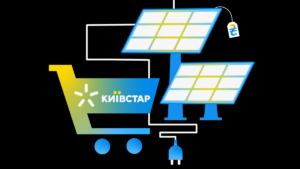
“Kyivstar,” Ukraine’s largest telecommunications operator, which acquired a 12.947 MW solar power plant operator in the Zhytomyr region for $3 million late last year, plans to acquire six more solar power plant operators in the Lviv region: EnergoPostach-Plus LLC, Lightful, Sunlight Generation, Ternovitsa Solar, Energy Space, and Ternovitsa Solar Plus.
According to a statement from the Antimonopoly Committee of Ukraine, it granted Kyivstar PJSC the relevant approval on Thursday.
As previously reported by the Interfax-Ukraine agency, the AMCU had already granted permission to purchase these solar power plants in July 2021, but at that time the potential buyer was the French company Total Eren S.A. (a subsidiary of Total).
At that time, the project involved more than 100 MW of installed capacity: “Energy Space” (5.94 GW and 5.797 GW), “Ternovitsa Solar” (13.023 GW and 15.537 GW), “Ternovitsa Solar Plus” (12.382 GW and 15.537 GW), “Sunlight Generation” (5.94 GWp and 5.797 GWp), “EnergoPostach-Plus” (5.94 GWp and 5.797 GWp), and “Lightful” (5.94 GWp and 5.79 GWp).
According to data from YouControl, the main beneficiary of “Energy Space” and “Ternovitsa Solar Plus” is Vsevolod Trofimenko, a member of the family that owns the Multiplex cinema chain, “Ternovitsa Solar,” “Sunlight Generation,” “Energopostach-Plus,” and ‘Lightful’—Ivan Torsky, who was the CEO of the development holding “TKS.”
On March 13, during the presentation of the group’s annual report, Kyivstar CEO and President Oleksandr Komarov noted that the first solar power plant acquired at the end of last year generates electricity equivalent to 4% of Kyivstar’s annual electricity consumption.
According to him, such investments serve as a hedge against energy costs, which represent one of the company’s largest recurring expenses. They align with the strategy to support Ukraine’s recovery and energy independence, while also meeting the needs of digital services.
“Expanding our presence in the energy sector is a natural hedge against rising prices in the coming periods,” CFO Boris Dolgushin added at the time.
In 2025, Kyivstar Group increased its EBITDA by 30% to UAH 27 billion, with revenue growing by 30.3% to UAH 48.2 billion; including a 23.1% increase in EBITDA to UAH 7.2 billion in the fourth quarter of last year, with revenue growing by 30.1% to UAH 13.5 billion.
The number of full-time employees at the Kyivstar Group increased by 5.9%, or 291, to 5,183 in 2025, with the majority—68%—working at Kyivstar, the largest telecommunications operator, according to the group’s annual report.
According to the report, Kyivstar increased its workforce by 5.8%, or 193 employees, to 3,518 last year, while Kyivstar. Tech increased its workforce by 11.2% to 624, Helsi by 17.4% to 270, and only Uklon’s headcount remained unchanged at 768 people.
“The total number of our employees as of December 31, 2025, exceeds the number at the start of the war, and we have not lost a single key employee as a result of the war, despite the fact that 95% of our employees are located in Ukraine,” the report states.
According to the report, the group saw a 4.6% increase in full-time employees in 2024, or 217 people, including a 3.1% increase at Kyivstar, or 100 people.
It is noted that 20.7% of employees work in the network, 18% in call centers, 14.7% in commercial functions, 12.2% in digital functions, 7.6% in finance, 1% in HR, 0.8% in legal, 0.3% in compliance, and 21.4% are engaged in other support functions.
“We have developed internal procedures to manage the risk of mobilization of critical employees and are constantly analyzing the workload on staff to ensure uninterrupted operations,” the report states.
The group reported that since the start of the war in February 2022, it has paid employees 842 million UAH in emergency aid and is also offering 77% of employees the option to work in hybrid and remote modes.
It is also noted that the group had a relatively low voluntary turnover rate at the end of last year (calculated as the number of employees who resigned voluntarily relative to the total number of employees), with the exception of the call center, which relies heavily on seasonal workers—6.5%, which is only 0.5 percentage points higher than at the end of 2024 and 2023.
The report also notes that 218 employees are members of the Trade Union Committee of the primary trade union organization, and negotiations on concluding a collective agreement were suspended due to the war and are expected to resume after the end of martial law.
“We believe that relations with our employees are generally good,” the group concludes.
As reported, Kyivstar served approximately 22.4 million mobile subscribers and over 1.2 million fixed-line subscribers as of the end of 2025. The company is wholly owned by Kyivstar Group Ltd, whose shares are traded on the U.S. Nasdaq stock exchange and whose majority owner, in turn, is the telecommunications holding company VEON with an 83.6% stake.
In 2025, the Kyivstar Group increased its EBITDA by 30% to UAH 27 billion, with revenue growing by 30.3% to UAH 48.2 billion; including in the fourth quarter of last year, when EBITDA increased by 23.1% to UAH 7.2 billion, with revenue growing by 30.1% to UAH 13.5 billion.
Kyivstar, Ukraine’s largest telecommunications operator, paid over 13.67 billion UAH in taxes and fees to the state budget in 2025, a 12% increase from the previous year, according to a press release issued by the company on Wednesday.
According to the release, over the four years of full-scale war, the company’s total tax contributions exceeded 46.5 billion UAH, cementing Kyivstar’s status as the largest taxpayer in Ukraine’s telecom industry.
Previously, the company reported paying 12.3 billion UAH in taxes and fees for 2024 and 10.8 billion UAH for 2023.
According to data from the YouControl system, Kyivstar increased its revenue by 19.6% last year—to 43.81 billion UAH—while its net profit rose by 8.6%—to 12.31 billion UAH.
The Kyivstar Group’s annual consolidated financial statements, published recently, also noted that in 2025, income taxes increased by $10 million, or 15.6%, to $74 million.
“This increase was driven by higher taxable income for the year ended December 31, 2025, including approximately $18 million in taxable income related to the acquisition of Uklon,” the report stated.
“It is important for us to remain a reliable partner of the state: significant tax revenues, investments in the network, and strengthening its energy independence are our contribution to economic stability and uninterrupted connectivity for millions of people,” Kyivstar President Oleksandr Komarov is quoted as saying in the release.
The company also noted that since 2022, it has invested over 4.6 billion UAH in the procurement and maintenance of backup power equipment, and has allocated a total of 40.1 billion UAH in capital investments during this period toward infrastructure restoration, modernization, and the development of digital capabilities.
In addition, Kyivstar reported that last year it allocated 1.7 billion UAH to support the Armed Forces, subscribers, and the implementation of social projects, bringing the total amount allocated for these purposes since the start of the war to over 4.4 billion UAH.
It is noted that in 2025, the company launched a new charitable initiative—supporting pediatric intensive care units at the UNBROKEN Center based at the First Medical Association of Lviv, to which it allocated 15 million UAH.
As reported, as of the end of 2025, Kyivstar served approximately 22.4 million mobile subscribers and over 1.2 million fixed-line subscribers. The company is wholly owned by Kyivstar Group Ltd, whose shares are traded on the U.S. Nasdaq stock exchange and whose majority owner, in turn, is the telecommunications holding company VEON with an 83.6% stake.
In 2025, the Kyivstar Group increased its EBITDA by 30% to UAH 27 billion, with revenue growing by 30.3% to UAH 48.2 billion; including in the fourth quarter of last year, when EBITDA increased by 23.1% to UAH 7.2 billion, with revenue growing by 30.1% to UAH 13.5 billion.



