

Ukraine should establish a training center for its own experts at the International Criminal Court (ICC), according to Oleksiy Shevchuk, a partner at Barristers LLC.
“Ukraine must provide systematic expertise and professionals capable of working effectively within the ICC’s structure. Ukraine should establish a training center for experts to work in international judicial bodies, primarily the ICC, as international criminal law will be one of the defining areas of 21st-century politics,” he told Interfax-Ukraine.
As Shevchuk noted, the ICC currently needs a wide range of experts who can support its operations.
“There are positions for OSINT coordinators, language analysts, financial experts, evidence management specialists, and even cyber intelligence specialists. The Court is a massive organization. And for it to function, dozens of highly qualified specialists in various fields are needed. Unfortunately, there are very few such people in Ukraine. If we can find 10 people ready to start working in The Hague tomorrow—that would be an optimistic forecast,” he said.
At the same time, Shevchuk noted that Ukraine has a strong tradition of ECHR practice, but the ICC is a different world; it has a different procedural logic, a different role for evidence, and a different mechanism for gathering information.
“The Court requires practical skills in international criminal proceedings, an understanding of military operations, and language proficiency at the level of technical translation of international terminology. It is a highly specialized environment,” he added.
Commenting on steps toward establishing a training center for ICC specialists, Shevchuk said that such a center should have several areas of focus: a program for training practicing lawyers (investigators, prosecutors, attorneys), a program for training technical and analytical staff (OSINT specialists, evidence managers, translators, data auditors, etc.), and a program for language and ethics training adapted to The Hague standards.
“We have a strong academic base in Ukraine, but researchers also need a team capable of integrating into the court’s practical work tomorrow. Canada established the Canadian Centre for International Justice, which trains lawyers and analysts specifically for international tribunals. Ukraine needs something similar—a partnership between universities, government agencies, and the ICC itself. This could be a joint initiative of the Ministry of Justice, the Ministry of Foreign Affairs, academic institutions, and civil society organizations,” said Shevchuk.
“In the coming decades, the focus will definitely shift toward The Hague—and Ukraine needs real experts, not just symbolic ones. This is not a matter of prestige, but of competence: either we train our own specialists, or others will do it for us,” the lawyer concluded.
Barristers, ICC, LAWYER, specialist, training center, ШЕВЧУК

The Council of Prosecutors of Ukraine justifies the appointment of lawyer Oleksiy Shevchuk as a member of the Competition Commission for the competition for administrative positions in the Specialized Anti-Corruption Prosecutor’s Office (SAP) as the only candidate from among those who participated in the selection process and met the requirements of the law after one of the three participants refused to work in the competition commission.
“Within the established deadline, the Council of Prosecutors of Ukraine received documents from four persons: three representatives of the prosecutorial community and one lawyer… All four candidates were admitted to participate in the selection process and underwent the relevant interviews… On December 9, 2025, the Council of Prosecutors of Ukraine reviewed the submitted documents at its meeting and decided to submit proposals to the Prosecutor General to appoint three employees of the prosecutor’s office to the Selection Committee. The relevant decision was published on the website of the Council of Prosecutors of Ukraine on the same day,” according to an explanation published on the Council of Prosecutors’ website on Monday.
However, one of the proposed candidates subsequently submitted a request to be removed from the list of candidates at his own request. It is reported that on December 18, the Council of Prosecutors granted his request and informed the Prosecutor General of this decision, who appointed Shevchuk as a member of the Competition Commission.
“Given the insufficient number of candidates proposed by the Prosecutors’ Council of Ukraine, and in order to comply with the requirements of paragraph four of part three of Article 29-1 of the Law of Ukraine ”On the Prosecutor’s Office” in a timely manner, the Prosecutor General appointed lawyer A. Shevchuk, the only candidate among those who participated in the competition and met the requirements of the law, as a member of the Competition Commission,” the statement said.
It is also noted that the powers of a member of the Competition Commission may be terminated early only in the event of a personal application for termination of powers, inability to participate in meetings for more than one month due to health reasons, a proposal by the Competition Commission to terminate the powers of its member ahead of schedule in cases provided for by the commission’s regulations, the entry into force of a court conviction, recognition of a person as incapacitated or missing, or his death.
The Council of Prosecutors noted that at the moment, the full composition of the commission has not been formed, as three candidates from international and foreign organizations, who must be proposed in accordance with the decision of the Cabinet of Ministers of Ukraine, have not yet been determined.
As reported, after Shevchuk was appointed a member of the competition commission, which is to select the deputy head of the SAP, he announced a “wave of information attacks, mudslinging, and provocations” against him by a number of activists, which he linked to the fact that he was Ilya Kiva’s lawyer at the time when Kiva held the position of head of the Ministry of Internal Affairs department and was responsible for combating drug trafficking. Shevchuk also reported that on March 7, he was mobilized and is working for the army and the front as a soldier.
“I am aware that some journalists have obtained information about our clients in violation of procedure. Manipulation and distortion of facts will not go unanswered – either in court or within the Commission on Journalistic Ethics. The relevant lawsuits have already been filed, and work in this direction will continue,” he said.
Source: https://rpu.gp.gov.ua/ua/rada_news.html?_m=publications&_c=view&_t=rec&id=410485
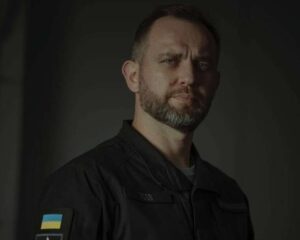
Brigadier General Dmytro Usov, Secretary of the Coordination Headquarters for the Treatment of Prisoners of War under the Cabinet of Ministers, has joined the competition commission of the All-Ukrainian legal competition of student law-making initiatives “New Ukraine through the eyes of young lawyers,” according to the Ukrainian Bar Association (UBA).
According to the organizers, this gives contest participants the opportunity to receive feedback from a specialist who is directly involved in implementing the state’s strategic objectives in wartime.
Usov is a personnel officer and brigadier general who, during the full-scale war, is directly responsible for organizing and implementing prisoner exchanges. With his participation, thousands of Ukrainian defenders and civilians have been returned home. Previously, he held the position of deputy head of the Main Intelligence Directorate of the Ministry of Defense of Ukraine.
The competition for student law-making initiatives, “New Ukraine through the Eyes of Young Lawyers,” was established by the Vadym Hetman Kyiv National Economic University with the assistance of the National Bar Association of Ukraine and aims to involve young lawyers in shaping a vision of international legal security guarantees for Ukraine after the end of the war.
As part of the competition, participants prepare legal papers aimed at developing practical law-making initiatives, particularly in the areas of public administration, security, digitalization, human rights protection, and the functioning of the rule of law. The competition involves the preparation of a legal student paper on the creation of a draft international legal agreement on security for Ukraine.
The competition committee is headed by Eva Hofmanska, an international expert on human rights and mechanisms for protecting war victims, founder of initiatives to document war crimes and build mechanisms to help victims. The deputy chair (secretary) is Dmytro Lukyanenko, professor and rector of the Vadym Hetman Kyiv National Economic University (KNEU).
In addition to Usov, the commission also included Lyudmila Kozhura, director of the KNEU Law Institute, and her deputy, Svetlana Zaderayko, head of the secretariat of the National Association of Advocates of Ukraine (NAAA), Ihor Andriyev, chair of the NAAA Youth Committee, Yuriy Radzievsky, chair of the NAAA Information Committee, and Oleksiy Shevchuk, chair of the Center for Legal Information, Professional Development, and Expert Research
of the KNEU Law Institute, NAAU Speaker Oleksiy Shevchuk, People’s Deputy of Ukraine, former Head of the SBU Valentin Nalyvaichenko, Head of the Diplomatic Academy of the MFA Ihor Ostash, Head of the Kyiv Branch of the Notary Chamber of Ukraine (NPU), Chair of the NPU Commission on Informatization, Digital Transformation, and Cybercrime Prevention Natalia Kazayeva.
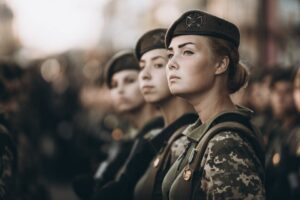
The law allows women with medical and pharmaceutical education to be registered for military service without their personal presence, but there are no mechanisms for the forced conscription of such women from abroad, lawyers interviewed by the Interfax-Ukraine news agency explained.
“The obligation to register for military service does indeed exist. If a person is physically outside Ukraine, they must notify the territorial recruitment center at their place of registration, in particular by email, that they are temporarily abroad. However, there is no mechanism that would allow the state to forcibly return a citizen to fulfill this obligation. This also applies to those who are abroad under the temporary protection mechanism,” said Zoryana Skaletska, partner at Ario Law Firm and Minister of Health in 2019-2020.
She noted that in the context of military registration of women with medical or pharmaceutical education, “it is important to distinguish between the concepts of ‘compulsory’ and ‘automatic’ registration.”
“Compulsory always means restriction of freedom, and we do not have such mechanisms. However, automatic registration is indeed provided for. The Cabinet of Ministers’ resolution of July 30, 2025, allows such women to be registered for military service without their personal presence,” she said.
Skaletskaya explained that there are currently three mechanisms through which women with medical or pharmaceutical education can be entered into the Unified State Register of Conscripts, Military Service Obligators, and Reservists: through an educational institution, through a personal message, and through an employer.
“Thus, ‘automatic registration’ actually takes place through official notification of the educational institution or employer, but does not imply coercion or physical control by the state,” Skaletskaya noted.
She also emphasized that the law does not provide for separate liability specifically for women with medical or pharmaceutical education who have not registered for military service, since there are now general rules on violations of the law on military duty and military service, which provide for a fine of 850 to 1,700 hryvnia.
“Theoretically, this article can also be applied to women who have the relevant education but have not applied to the TCC and SP, especially if they are not employed and received their diploma many years ago. However, in practice, the application of this norm is still limited,” she noted.
Skaletskaya pointed out that the TCC and SP will only be able to automatically identify such persons when the Unified State Register of Conscripts, Military Service Obligators, and Reservists has technical access to the Ministry of Education’s diploma database.
“Currently, such interaction between the registers has not been introduced, so we do not see active prosecution of female medical professionals who have not registered,” she said.
Skaletskaya pointed out that “the practice of submitting information about female graduates of medical institutions to military registration and enlistment offices existed even before the current changes, but now we have another problem: the data in the registers is often not updated.”
“If we talk about the practical meaning of this control, its purpose is not punishment, but the ability to quickly recruit medical specialists if necessary for the defense sector. But it is important to understand that even in this case, a woman can only be recruited after passing a military medical commission (VVC), and not all of them are recognized as fit for service based on its results,” the lawyer emphasized.
She also noted that military registration control applies to all enterprises regardless of ownership, including private clinics.
For her part, Galina Chernyakina, a lawyer at Barristers, noted that the registration of women with medical or pharmaceutical education is exclusively a registration measure and is not equivalent to mobilization, i.e., it does not in itself mean compulsory conscription or military service without a corresponding decision by the state.
At the same time, she noted that “restrictions on traveling abroad during martial law apply exclusively to male citizens of Ukraine between the ages of 18 and 60 who are subject to military registration and mobilization, while women who have medical or pharmaceutical education and are subject to military service are not restricted in their right to travel abroad, even during a period of general mobilization.”
“Accordingly, women who are abroad under a temporary protection program or on other grounds cannot be forcibly returned to Ukraine for military registration, mobilization, or military service,” she said.
Chernyakina noted that the main type of liability for violating military registration rules is administrative, which provides for fines, and criminal liability can only arise in the case of actual evasion of mobilization after receiving a summons.
“However, so far, the practice of bringing women who are subject to military registration in accordance with the law to administrative or criminal responsibility is rare,” she said.
Source: https://ru.interfax.com.ua/news/general/1114670.html
Barristers, LAWYER, LEGISLATION, military registration, pharmaceutical education, WOMEN, Чернякіна
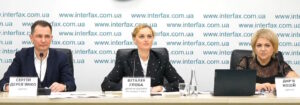
The wife of lawyer Konstantin Globa, lawyer Vitalia Globa, is asking law enforcement and the bar association to intervene in her conflict with her ex-husband. Vitalia Globa made this statement at a press conference at the Interfax-Ukraine agency on Friday. She noted that on September 10, she purchased a Mercedes car from her mother, but her ex-husband prevented her from taking it and blocked it near his office in the Pechersky district of Kyiv.
“As the owner of the vehicle, I came and tried to take it away, but my ex-husband resisted, forbade me to use it, blocked it, and climbed onto the roof of the car. He repeatedly threatened me and deprived me of the opportunity to use my property,” she said.
Globa also noted that her ex-husband “deprived me of my funds during the divorce because he had access to bank deposit boxes.

For her part, Vitalia Globa’s lawyer, Daria Koziy, noted that Vitalia purchased the car, which had previously belonged to her mother, after the divorce, and her ex-husband “had no connection to it and now has no right to this car, but continues to terrorize the family.
“At the moment when she (Vitalia Globa – IFU) decided to take the car, her car was blocked by other cars. Currently, this car is blocked by an armored Hammer vehicle, which cannot be removed by any tow truck,” the lawyer emphasized.
Kozij also reported that the day before, on September 12, unknown individuals attacked her when she asked them not to remove the license plates from her client’s car. She also noted that Konstantin Globa had filed several lawsuits against his ex-wife and her mother.
Vitalia Globa intends to prove her right to the car in court. According to Koziy, the court will consider the case regarding ownership of the car based on Vitalia Globa’s lawsuit on September 23.

The relocation of Ukrainian businesses abroad, which in 2022 took the form of emergency evacuation, is becoming strategic planning to diversify risks, enter EU markets, and ensure business continuity, according to Kateryna Danilova, partner at Barristers Law Firm.
“While in 2022 relocation was often an emergency evacuation, it is now taking on the characteristics of strategic planning with the aim of diversifying risks, entering EU markets, and ensuring business continuity,” she told the Interfax-Ukraine news agency.
Danilova noted that “since the start of the full-scale invasion, Ukrainian businesses have kept up their interest in relocation, although it’s changed depending on what’s happening on the front lines and the overall economic situation.”
According to the lawyer’s observations, the information technology (IT) sector is the most active in terms of relocation, due to its mobility, focus on global markets, and minimal dependence on physical assets.
“For IT companies, relocation often means opening offices in EU countries to retain their teams, which also allows them to guarantee continuity and stability of services to their clients and simplifies access to international financial infrastructure. Many companies based in Diia.City are setting up overseas hubs while keeping a significant part of their development in Ukraine,” she said.
In addition, according to Danilova, manufacturing companies in light industry, woodworking, component manufacturing, and the food industry are also very active in relocation.
“The main driver for them is the desire to protect production facilities from physical destruction, bring production closer to European consumers, expand the sales market, etc.,” she said.
Agrarian and processing enterprises are also active in relocation, seeking opportunities to create processing capacities in neighboring EU countries to gain access to the market without logistical complications at the border.
In addition, these are companies in the creative industry, consulting, and marketing, which, like IT, are mobile and actively integrating into the European market.
Commenting on the geography of relocation, Danilova noted that the choice of a relocation country depends on many factors, including geographical proximity, logistics, business conditions, the availability of support programs, the tax climate, and cultural and linguistic similarities.
Currently, the main destinations for Ukrainian businesses are Poland, which leads in the number of relocated Ukrainian companies, and Germany, where Ukrainian businesses are attracted by economic stability, access to the largest EU market, and high purchasing power, although this country is “characterized by a higher level of bureaucracy and tax burden.”
In addition, Ukrainian businesses are relocating to Romania and Bulgaria, which are gaining popularity thanks to, in particular, competitive tax rates and lower labor costs, the Czech Republic and Slovakia, which are traditionally attractive due to their cultural proximity and favorable conditions for small and medium-sized enterprises, and the Baltic countries (Lithuania, Latvia, Estonia), which are “interesting for technology and innovation companies due to their developed digital infrastructure and favorable investment climate.”
However, Danilova stressed that “it is legally impossible to transfer an employee from a Ukrainian legal entity to a foreign one, as they are different business entities operating in different legal systems,” but in practice, companies use a number of mechanisms.
These include, in particular, dismissal in Ukraine and employment abroad, which is the most common and transparent mechanism, but requires the employee to obtain a residence and work permit in the country of relocation, or a business trip, which is risky for long-term work abroad.
In addition, companies use mechanisms for concluding civil law contracts, where an employee registers as an individual entrepreneur in Ukraine (or as an individual entrepreneur in the country of relocation) and concludes a service contract with a foreign company. This model is flexible but carries the risk of additional taxes and penalties.
Another common mechanism is intra-corporate transfer (Intra-Corporate Transferee), which is used in EU countries that have implemented the relevant EU Directive, which creates simplified conditions for the temporary transfer of key managers, specialists, and trainees within a group of companies. This requires, in particular, the existence of legally related Ukrainian and foreign companies. Another popular mechanism is outsourcing or “leasing” of employees, which involves removing employees from the payroll on condition that they are hired by a foreign company. However, Ukrainian legislation does not contain clear regulatory provisions governing such legal relations.
Commenting on the pitfalls of Ukrainian legislation in the field of relocation, Danilova noted a number of restrictions in the Ukrainian legal field, in particular, currency restrictions, rules for controlled foreign companies (CFC), transfer pricing (TP), as well as restrictions on travel abroad and the movement of assets.
In addition, banking compliance and opening a bank account for a new company in the EU founded by Ukrainian citizens, the complexity of managing a dual structure, the loss of preferential treatment upon the actual transfer of activities abroad, in particular IT companies, which may lose the advantages of the special legal and tax regime of Dnipro.City, as well as adaptation to foreign legislation.
“Relocating a business abroad is an effective tool for minimizing the risks of war, but at the same time it is a complex legal and organizational project. The success of relocation directly depends on comprehensive strategic planning that takes into account all legal, tax, financial, and operational aspects,” she said.
Barristers, BUSINESS, Danilova, ENTERPRISES, LAWYER, RELOCATION



