

Ferrexpo, a mining company with assets in Ukraine, ended the first half of 2026 with a net loss of $14.9 million, which is 13.2 times less than in the first half of 2025, according to the company’s report released on Friday.
According to the report, revenue fell 2.3-fold to $196 million due to a decline in sales volume, while EBITDA was negative at $4 million, compared to a positive $4 million in the first half of 2025, reflecting the combined impact of lower sales volumes and selling prices, as well as rising production costs.
Following the morning release of the financial results, the stock rose from 28.9 pence to 32.88 pence and closed at 32.48 pence, representing a 13.33% increase over the previous day’s closing price. The last time the stock traded at such a high price was more than five months ago.
Ferrexpo noted that it deliberately reduced capital expenditures (CapEx) to $10 million from $28 million in January–June 2025, allocating 88% of these expenditures to projects necessary to sustain operations and only 12% to development projects.
Due to prolonged delays in VAT refunds and the resulting decline in financial liquidity, the group was forced to reduce production to a single pellet production line, according to the report.
Total commercial output for the first half of the year amounted to 1.556 million metric tons, which is 40% less than in the previous half-year (ending December 31, 2025) and 54% less than in the first half of 2025.
The production mix in the first half of 2026 consisted of 89% pellets and 11% marketable concentrate, compared to 61% and 39%, respectively, in the first half of 2025, when the higher share of concentrate production provided additional market opportunities during a period of reduced demand for pellets and lower market premiums, Ferrexpo noted.
Interim Chairman of the Board Lucio Genovese recalled that in early September, the company was able to raise $100 million through an additional share issuance, which significantly strengthened its liquidity position and provided additional financial stability and greater flexibility to manage the ongoing operational and financial pressures facing the business.
“However, the additional capital does not resolve the underlying issues arising from the prolonged withholding of VAT refunds, the war in Ukraine, constraints on logistics and energy infrastructure, as well as the need to maintain disciplined cash and working capital management,” he noted.
On Friday Ferrexpo clarified that C1 production costs rose to $81.3 per metric ton from $77.1 in the first half of 2025 due to increased mining and maintenance activities, the impact of higher electricity and fuel prices, and rising personnel costs.
It is noted that the group has made significant efforts to reduce costs in order to maintain financial stability. These measures include reducing employees’ working hours, cutting back on the procurement of goods and services, and suspending all non-critical capital expenditures, overhead costs, and corporate social responsibility expenditures.
In addition, there were no impairment losses in the first half of 2026, whereas in the first half of 2025, they amounted to $154 million.
In the report, Genovese emphasized that the continued suspension of VAT refunds by Ukrainian tax authorities remains a significant financial challenge: as of June 30, the net balance of VAT pending refund stood at $82.7 million, and as of September 24, the State Tax Service had suspended VAT refunds totaling 3.885 billion UAH, or $86.9 million.
The report also notes that during the first six months of 2026, Ferrexpo received news of the deaths of 11 more colleagues who served in the Armed Forces of Ukraine, bringing the total number of fatalities since the start of Russia’s full-scale invasion to 67, whereas in 2024 and 2025, the number of fatalities was 11 each year.
According to the report, as of the end of June 2026, 804 Ferrexpo employees were serving in the Armed Forces of Ukraine, and 218 had been demobilized, whereas at the end of 2025, those figures were 771 and 194, respectively, and a year earlier—706 and 160.
Ferrexpo owns 100% of Yeristovsky GOK LLC, 99.9% of Bilanivsky GOK LLC, and 100% of the shares of Poltava GOK PJSC.
The London Stock Exchange (LSE) suspended trading in Ferrexpo shares in early May due to the company’s inability to publish its annual financial statements on time, but resumed trading on September 7.
In 2025, the company’s revenue fell by 16% to $787 million, its EBITDA dropped 2.5 times to $28 million, and its net loss rose nearly 4.5 times to $223.9 million.
Metinvest B.V. (Netherlands), the parent company of the Metinvest mining and metallurgical group, ended January–June of this year with a net loss of $202 million, compared to a net loss of $58 million in the same period last year.
According to a press release issued by Metinvest B.V. on Monday regarding the first half of this year, revenue for the period increased by 3%, to $3.657 billion from $3.555 billion.
The company’s operating profit for the reporting period fell by 64% to $73 million.
In the first half of 2026, adjusted EBITDA decreased by 8.3% compared to the same period last year—to $311 million from $339 million. At the same time, EBITDA for the mining segment fell by 30%, to $119 million from $169 million, while EBITDA for the metallurgy segment rose by 17%, to $249 million from $213 million.
The financial results reflect the group’s performance prior to the port shutdowns and the subsequent shutdown of the Southern GOK, as well as before the shelling of Zaporizhstal and Kametstal, which caused those facilities to shut down as well.
It is noted, however, that Metinvest’s enterprises in Ukraine continued to operate at varying levels of capacity utilization due to constraints related to security, power supply, logistics, and economic factors. Despite all the challenges, the group demonstrated strong financial results, which enabled it to fully and timely repay $428 million in bonds in April. Since the start of the war, Metinvest, together with its joint ventures and associated companies, has allocated $328 million to support Ukraine.
Metinvest CEO Yuriy Ryzhenkov noted in his commentary that the first half of 2026 was generally characterized by stable operational and financial performance. A key achievement was the successful redemption in April of bonds maturing in 2026. This event demonstrates Metinvest’s financial discipline and resilience. Since 2022, the group has fully repaid three separate bond issues, with total payments exceeding $1 billion. Importantly, all these obligations were met without restructuring, despite the loss of control over certain assets and the unprecedented challenges facing Ukrainian businesses.
After the end of the reporting period, operating conditions in Ukraine became increasingly difficult: intensified missile attacks and drone strikes heightened security risks, disrupted commercial shipping through Black Sea ports, and further complicated export and import logistics. Against this backdrop, the “Pivdenny GZK” joint venture temporarily suspended production. In August and September 2026, missile strikes on the group’s enterprises—Zaporizhstal and Kametstal—resulted in the deaths and injuries of employees and caused significant damage to production and support infrastructure, leading to the temporary shutdown of the affected facilities.
“We plan to gradually resume operations at these facilities and bring the blast furnaces back online step by step. This demonstrates our commitment to preserving a competitive Ukrainian steel industry, which continues to support the country’s economy,” the CEO noted.
At the same time, external operating conditions are becoming more challenging. “We find ourselves in a fundamentally new regulatory landscape, driven by the EU’s introduction of the Carbon Border Adjustment Mechanism (CBAM) and changes to trade quotas. Although the group remains committed to decarbonization and integration into the EU’s economic space, these measures are placing additional pressure on Ukrainian industry at a time when the country continues to defend itself against military aggression and preserve its industrial potential,” Ryzhenkov emphasized.
Metinvest is a vertically integrated group of mining and metallurgical enterprises. Its facilities are located in Ukraine—in the Donetsk, Luhansk, Zaporizhzhia, and Dnipropetrovsk regions—as well as in the European Union, the United Kingdom, and the United States. The holding’s main shareholders are the SCM Group (71.24%) and Smart Holding (23.76%). Metinvest Holding LLC is the management company of the Metinvest Group.
Insurance Company “Quorum” (Kyiv) collected gross insurance premiums totaling 27.983 million UAH in January–June 2026, which is 25.4% less than during the same period in 2025, and net premiums by 27.978 million UAH (-18.9%).
This was reported by the rating agency (RA) “Standard-Rating” in an update on the company’s credit rating and financial stability rating on the national scale at the “uaAA” level for the specified period.
Revenues from individual policyholders at the insurance company decreased by 57.71% to 9.572 million UAH; there were no revenues from reinsurers. The share of individual policyholders in gross premiums for the first half of the year was 34.21%.
The RA also reports that insurance premiums ceded to reinsurers during the specified period amounted to 5,000 UAH, which is 99.83% less than during the corresponding period of 2025. Consequently, the reinsurers’ share of insurance premiums decreased by 8.01 percentage points—to 0.02%.
The volume of insurance payments and claims settled by the company over the first six months increased by 9.94%—to 5.487 million UAH. At the same time, the payout ratio increased by 6.30 percentage points to 19.61%.
The RA notes that the company operated at a loss in the first six months of 2026. The net loss amounted to 1.269 million UAH, whereas in the same period a year earlier, the company reported a net profit of 3.144 million UAH.
As of July 1, 2026, its assets decreased by 0.98% to 80.283 million UAH, equity decreased by 1.85%, to 67.150 million UAH, liabilities increased by 3.73%—to 13.133 million UAH, and cash and cash equivalents—by 3.36%—to 57.372 million UAH.
Insurance Company “Quorum” was established in March 2014 and specializes in risk insurance.
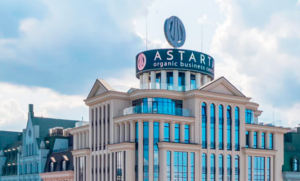
Agricultural holding company Astarta reported a net loss of EUR14.07 million in the first half of 2026, compared to a net profit of EUR42.27 million for the same period last year, according to a report filed by the company with the Warsaw Stock Exchange on Thursday.
According to the report, while all segments generated net profit in January–June of last year, each segment recorded a loss this year: in sugar production, a loss of EUR3.83 million replaced a profit of EUR8.35 million; in crop production, a profit of EUR20.07 million turned into a loss of EUR3.76 million; in cattle farming, a loss of EUR2.41 million was recorded instead of a profit of EUR10.68 million; and in soybean processing, a loss of EUR2.27 million was recorded instead of a profit of EUR5.84 million.
Crop production and soybean processing reported operating profits, while sugar production and livestock farming posted operating losses. Furthermore, livestock farming also reported a gross loss.
According to the report, Astarta’s consolidated revenue for the first half of the year decreased by only 0.1% to EUR 226.47 million, with export sales accounting for 62% compared to 61% in the first half of last year.
The agriculture sector led the way, with sales growing by 27% to EUR78 million, or 34% of total revenue. In sugar production, sales fell by 10% to EUR72 million, or 32% of total revenue; in soybean processing, by 7% to EUR51 million; and in livestock farming, by 15% to EUR25 million.
Gross profit for January–June of this year fell by half—to EUR46.01 million—as the cost of goods sold rose by 10% compared to the same period last year, and the estimated value of crops and livestock was reduced due to falling agricultural prices and rising costs.
Consolidated EBITDA fell 2.4-fold compared to the same period last year, to EUR34.32 million.
It is noted that net investments decreased by 41% to EUR27 million following the completion of investments in a protein concentrate production plant and ongoing planned capital expenditures in other segments.
According to the report, in the first half of 2026, net financial debt (excluding lease obligations) amounted to EUR81 million, compared to EUR28 million in the first half of 2025. Total net debt (including leases) increased by 44% to EUR220 million.
“Astarta” is a vertically integrated agro-industrial holding operating in eight regions of Ukraine and is the largest sugar producer in Ukraine. It comprises six sugar plants, agricultural enterprises with a land bank of 220,000 hectares, dairy farms with 22,000 head of cattle, an oil extraction plant in Hlobine (Poltava Oblast), seven grain elevators, and a biogas complex.
Astarta’s net profit for 2025 fell 4.2 times—to $19.94 million—while consolidated revenue decreased by 23%—to $472 million.
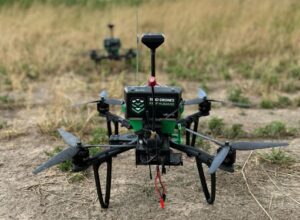
Ukrainian defense startup Swarmer, which went public on the Nasdaq in March of this year (ticker SWMR), reported in its financial statement that in the second quarter of 2026, its net loss increased from $1.6 million in the same period of 2025 to $7.3 million, while revenue rose from $138,200 to $216,000.
“The second quarter of 2026 was our first full quarter as a public company and a period of significant progress across all areas of our business. We successfully attracted new customers and made progress in implementing projects to deploy our solutions on various unmanned platforms, while continuing to invest in the team and technologies necessary to ensure future growth,” the press release quotes company co-founder Alex Fink as saying.
According to the report, the company’s gross profit for the second quarter of 2026 was $183,600, compared to $82,000 in April–June 2025. This growth was primarily driven by licensing revenue recognized under the SkyKnight program.
It is noted that Swarmer’s operating expenses for this reporting period totaled $7.5 million, compared to $854,800 a year ago.
“This increase is primarily due to investments in personnel, engineering development, product creation, and platform integration capabilities, as well as higher expenses for consulting, legal, and professional services related to the company’s operations as a public entity,” the company noted.
Operating expenses for the second quarter of 2026 also included, among other things, approximately $1.2 million in non-cash stock-based compensation expenses and certain one-time expenses for equipment purchases, which are not expected to recur on a regular basis.
The report added that during the second quarter of this year, the company billed drone manufacturer SkyKnight $1.5 million. Specifically, $0.2 million was recognized as revenue, $0.1 million was recorded as deferred revenue, and the remaining amount was recorded as an advance payment on the balance sheet.
The company noted that as of the end of June 2026, cash and cash equivalents had increased to $25.3 million from $9.3 million as of December 31, 2025.
Swarmer explains that this growth was driven by approximately $16 million raised from its initial public offering (IPO), $8.8 million raised under a share-for-equity financing facility, and $3.5 million from the sale of Series A-1 convertible preferred shares.
In April–June of this year, Swarmer also signed a memorandum of understanding (MOU) with the technology company Autonomous Power Corporation (Powerus) to explore the potential integration of Swarmer’s battle-proven software with Powerus’s autonomous aerial and maritime platforms.
The company’s core areas of activity include autonomous swarm coordination, integration of multi-domain unmanned systems, AI-based collaborative autonomy, and software for commanding and controlling distributed robotic operations, according to the press release. In addition, the company’s clients include drone manufacturers that license Swarmer’s software for integration with their hardware platforms.
As previously reported, Swarmer posted a net loss of $4.5 million for January–March 2026, compared to $0.7 million for the same period in 2025. Revenue fell to $20,300 from $110,700, while operating expenses rose to $4.5 million from $0.8 million.
The company was founded by Serhiy Kuprienko and Alex Fink in May 2023. Its registered headquarters and marketing and sales office are in Austin, Texas, USA, while its engineering divisions are split between offices in Kyiv, Ukraine, and Warsaw, Poland. The company’s holding structure includes “subsidiary” companies in Ukraine, Poland, and Estonia.
Prior to the IPO, Kuprienko held a 27.4% stake and Fink held 15.1%, while other shareholders included Theseus Capital Partners—where Philip Wagenheim, a member of the board of directors, serves as managing partner—with 22%, D3 Fund (Evelyn Buchacki) with 10.1%, RG.AI Technologies, led by Charles Eberle von Sexi, held 14%, Green Flag Fund I held 5.3%, and Radius Fund I held 6.9%
Swarmer’s revenue in 2025 fell to $0.31 million from $0.33 million a year earlier, while its net loss increased to $8.53 million from $2.07 million.
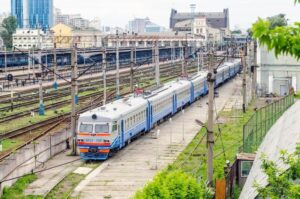
Kyiv Electric Railcar Repair Plant JSC (KEVRZ), a subsidiary of Ukrzaliznytsia, reported a loss of 4.48 million UAH for January–June 2026, which is 4.2 times less than the loss recorded in the first half of 2025.
According to the company’s interim financial report published in the disclosure system of the National Securities and Stock Market Commission (NSSMC), its net revenue decreased by 8.8% to 631.73 million UAH.
The plant reduced its gross profit by 27.6% to 33.3 million UAH, generating 7.4 million UAH in operating profit compared to 24.6 million UAH last year.
The company notes that during the reporting period, it sold 19 refurbished electric locomotive sections for 546 million UAH, 61 wheel sets for 24.4 million UAH, and 230 traction motors and auxiliary units for 37.8 million UAH.
As previously reported, the plant ended the first quarter of this year with a loss of 20.2 million UAH, compared to a net profit of 0.48 million UAH for the same period in 2025, despite a 14.6% increase in net revenue to 250.5 million UAH.
KEVRZ was founded in 1868. It specializes in the major overhaul of electric trains for Ukrainian railways, the repair of components and assemblies, electric machines, electric motors, and wheel sets, as well as the manufacture of spare parts.
The plant ended 2025 with a net profit of 70.2 million UAH—4.4 times more than the previous year—and a 34.2% increase in net revenue to 1.703 billion UAH. It repaired 51 electric sections, 223 wheel sets, 538 traction motors, and auxiliary machines.



