
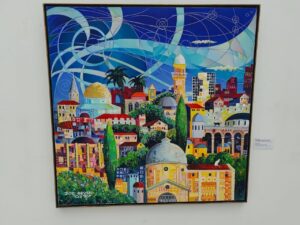
An exhibition titled “WHERE HOME IS” by Zoe Sever, an Israeli artist of Ukrainian descent, has opened at the Taras Shevchenko National Museum in Kyiv with the support of the Embassy of the State of Israel in Ukraine.
“Zoya Sever’s exhibition shows Israel as we know and love it—vibrant, colorful, warm, and full of life. I encourage everyone to visit this exhibition and experience the atmosphere of Israel,” said Michael Brodsky, Ambassador Extraordinary and Plenipotentiary of the State of Israel to Ukraine, during the exhibition’s opening.
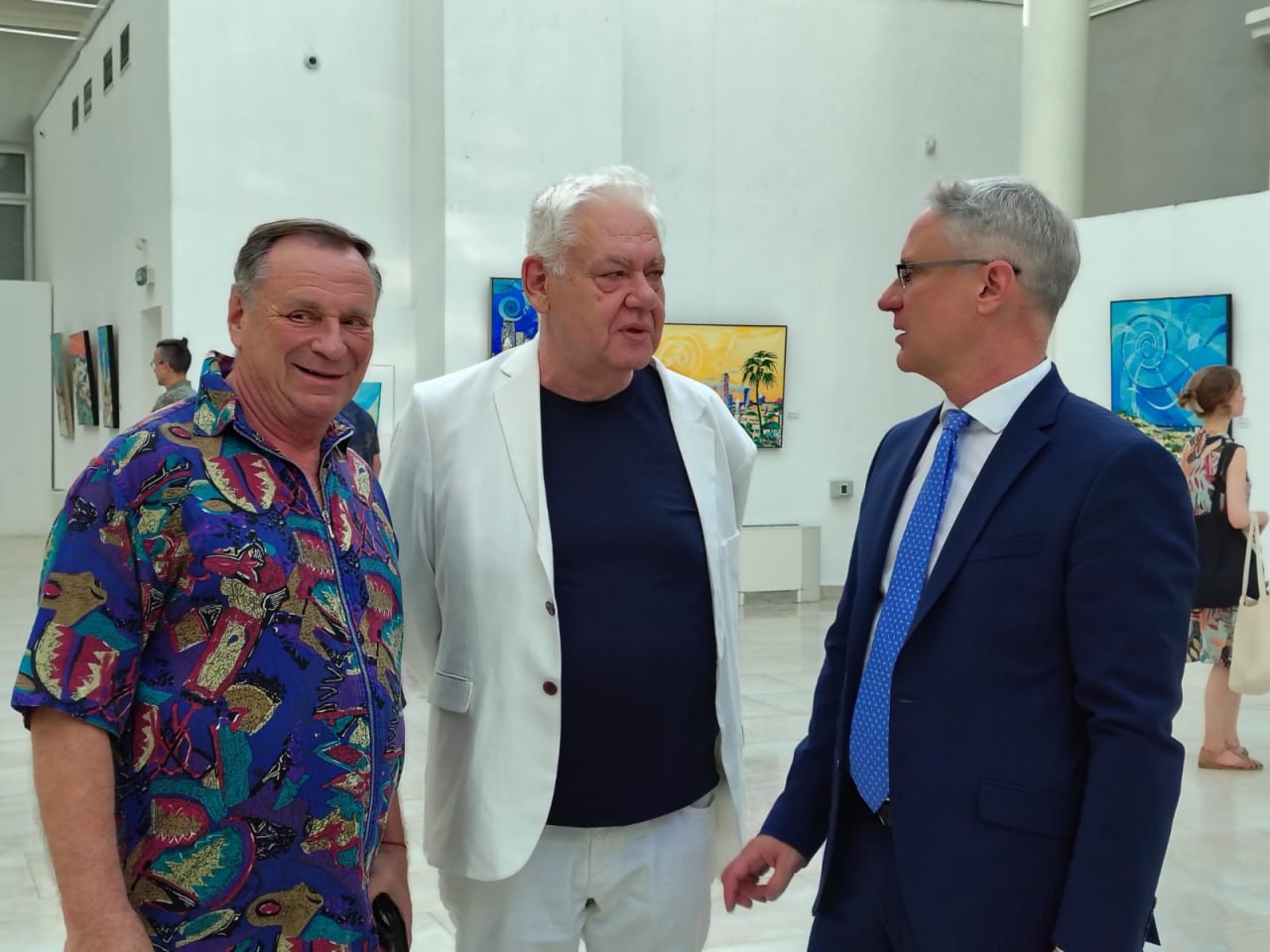
The artist brought to Ukraine a selection of works created in her signature style using the vibrant colors of oil and acrylic. Each painting conveys an impression or memory, an image of the city, its atmosphere, and its inner magic.
Sever’s works feature the rooftops of Jerusalem, black and white cats, the streets of the Old City, and the biblical white donkey as a symbol of eternity. The central theme of the exhibition is the home as a place of strength, memory, and return.
The organizers note that for Jews, even after two thousand years of diaspora, Israel remained a point of anchor—a home that needed to be reclaimed and restored. In the exhibition, this theme is combined with the experience of Ukraine, which today is also fighting for its own home, a peaceful sky, and the right to a future.
“This exhibition unites us—Ukrainians and Israelis, soldiers and artists, dreamers and pragmatists. Ordinary people in extraordinary circumstances. Those who stand on the front lines for the sake of their own home,” reads the project description.
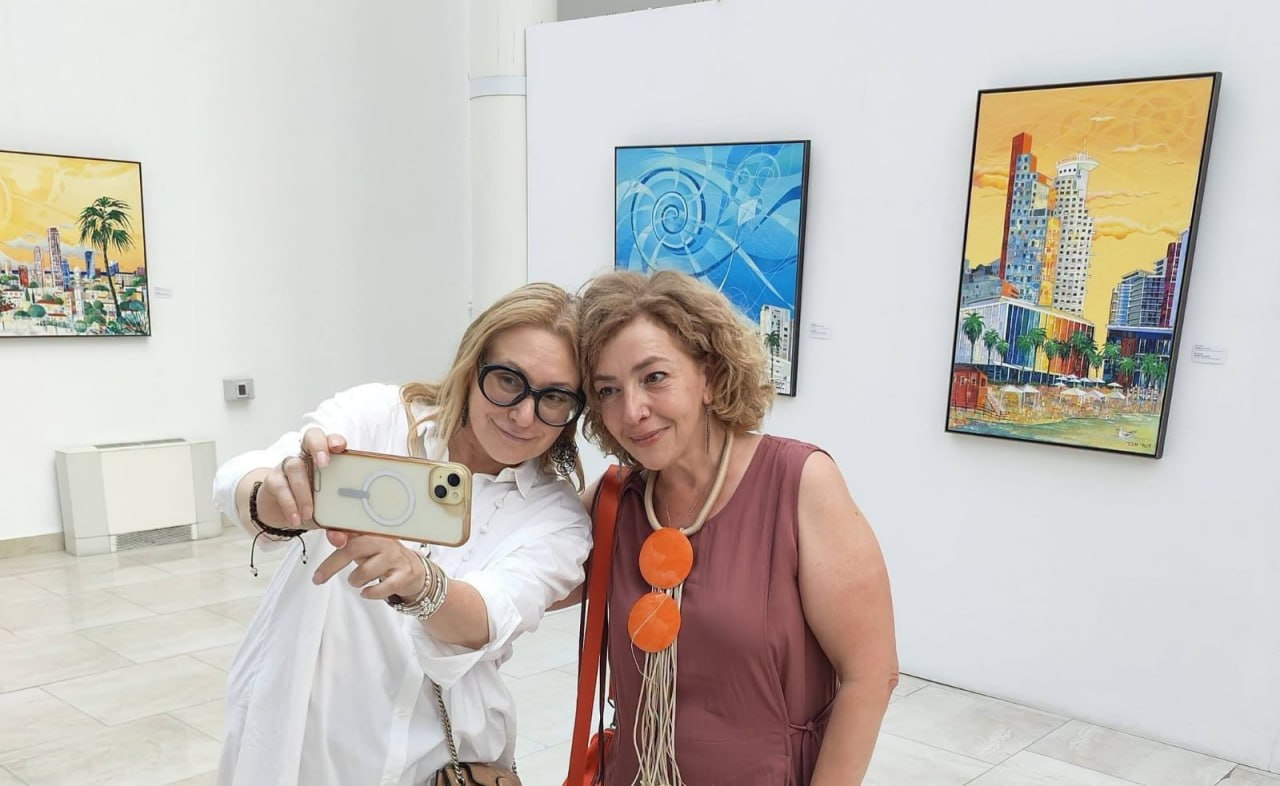
Zoya Sever is an Israeli artist who was born in Lviv. At age 16, she moved to Israel with her parents; she currently lives and works in Tel Aviv. She graduated from the Bezalel Academy of Arts and Design in Jerusalem with a degree in architecture.
After the start of the full-scale Russian invasion of Ukraine, Sever joined a volunteer group that provides protective gear to soldiers of the Armed Forces of Ukraine. She is also the founder of the “United People of the Planet” foundation, which runs the “Window to Peace” project: the artist, together with children, paints the walls of shelters.
Sever is also an instructor for the “Trauma Coalition” in Ukraine. Her works are held in museums and private collections in Israel, the United States, Canada, Spain, France, Germany, the United Kingdom, Switzerland, Australia, the Netherlands, Ukraine, and Kazakhstan.
According to the Interfax-Ukraine Culture project, dozens of Kyiv museums will traditionally open their doors for free admission in June. Journalists from the culture department of the Interfax-Ukraine news agency have compiled a list of museums where you can explore the capital’s history, art, and cultural heritage without purchasing a ticket.
Museum June will begin on June 2 with an open house at the National Museum of Ukrainian Folk Decorative Art on the grounds of the Kyiv-Pechersk Lavra.
The very next day, June 3, free admission until 2:00 p.m. will be available at three popular art venues in the capital—the National Museum “Kyiv Art Gallery,” the Khanenko Museum, and the “Chocolate House” Art Center.
On June 19, you can visit the Museum of Outstanding Figures of Ukrainian Culture for free.
The largest number of museums offering free admission will open on June 24. On this day, the National Museum of Ukrainian History, the Museum of Ukrainian Literature, the Museum of the History of Kyiv, the Museum of the 1960s Movement, the Museum of the Ukrainian Diaspora, the Sholom Aleichem Museum, the Museum of the Occupation of Kyiv, the Museum of the Avant-Garde, the Kudriavka Estate, and the Museum of Books and Printing of Ukraine will welcome guests.
On June 25, the Taras Shevchenko National Museum, the Taras Shevchenko House-Museum “Hata na Priortsi,” the Mykhailo Hrushevsky Historical and Memorial Museum, and the Mykhailo Bulgakov Literary and Memorial Museum will hold open house events.
The following day, June 26, free admission will be available to the Hetmanate Museum, the Ivan Honchar Museum National Center for Folk Culture, and the Kyiv Fortress National Historical and Architectural Museum.
At the end of the month, the Maria Zankovetska House-Museum, the Kyiv Literary and Memorial Museum of Maksym Rylsky, and the Pavlo Tychyna Literary and Memorial Apartment Museum will join the campaign, and visitors will be able to visit them for free on June 28.
On June 29, the Viktor Kosenko Apartment Museum and the Museum of Theater, Music, and Cinema Arts of Ukraine will open their doors to visitors.
The National Museum of the History of Ukraine in World War II will conclude the June program of free visits on June 30.
In addition to these special days, the Boris Paton State Polytechnic Museum, the Museum of Modern Art of Ukraine, and the Apple Museum on Khreshchatyk offer free admission on a regular basis.
Meanwhile, the Forest Museum can be visited for free every Wednesday, and the Money Museum of the National Bank of Ukraine offers free tours upon prior online registration.
https://interfax.com.ua/news/culture/1173008.html
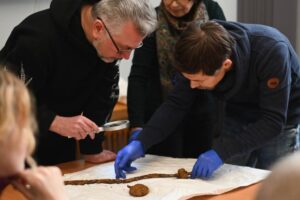
A rare sword from the times of Kievan Rus, accidentally found in the Zhytomyr region, was transferred to the National Museum of Ukrainian History. It is planned to be examined and transferred to the exhibition, the press service of the institution reported.
“On the eve of Christmas, our museum received an unexpected gift – (…) an ancient sword, accidentally found near Radomyshl, and two axes. This exceptional and rare sword dates back to the second half of the 10th – early 11th centuries. The Varangian guards of the Kyiv princes were armed with such swords,” the museum said in a Facebook post on Tuesday.
The artifacts found were donated to the museum by Viktor Moschenko and his daughter Natalia. It is noted that the location is also symbolic. Radomyshl is the territory of the former Drevlyans, where bloody events took place during the times of Oleg, Igor, and Olga.
The Slavic tribe of the Drevlyans lived in the Left Bank Polissya. It was an independent state with a developed economy, princely power, and fortified cities such as Iskorosten (modern Korosten), Vruchy (now Ovruch), Malyn, Mychesk, and Mykhorod (today Radomyshl).
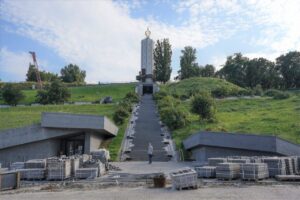
Canada has allocated CAD15 million ($10.94 million) for the completion of the second stage of the National Museum of the Holodomor Genocide, the press service of the Ministry of Culture and Information Policy of Ukraine reports.
“I want to confirm that the funds – CAD15 million – have been allocated. They are ready for this project, this initiative to continue the construction of the second phase of the Holodomor Museum. And we are now doing all our internal procedures to make sure that everything happens,” said Stephen Weaver, head of the International Development Section of the Embassy of Canada in Ukraine, following a meeting with acting Minister of Culture and Information Policy of Ukraine Rostyslav Karandieiev.
In turn, the Ukrainian official thanked Canada for its assistance and emphasized that the activities of the National Museum of the Holodomor Genocide should inspire Ukrainians and the international community to promote freedom and dignity, prevent genocide and prioritize human rights.
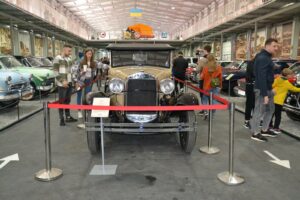
Crossing the threshold of the museum, you will find yourself in the atmosphere of bygone eras, where each exhibit tells its own story. More than 100 original vintage cars and motorcycles, carefully preserved, restored and maintained, are waiting for you in the museum’s halls.
But that’s just the beginning! In addition to cars and motorcycles, there is a collection of retro artifacts from the mid- and late twentieth century. From vintage advertising signs to old gas stations, from children’s toys to iconic household items, each exhibit tells its own story and takes you back to those times.
Join us and dive into the magical world of retro!
– Opening hours: Fri-Sun, 10:00-17:00
– Location: 1 Malynska St.

The Museum of Ukrainian Gramophone Recording has opened in Kyiv at the Singing Field (41 Lavrska Street), the Department of Culture of the Kyiv City State Administration reported on Sunday.
“The museum’s exposition tells the story of the history of gramophone recording. The collection consists of more than 400 items of the main fund of Ukrainian music on various sound carriers… The museum plans to expand, conduct cultural research, and organize expeditions dedicated to various aspects of the musical culture of Ukraine and the world,” the statement said.
The museum is open on Saturday and Sunday from 12:00 to 18:00, admission is free.



