

The weighted average price of dietary supplements in Ukrainian pharmacies from January through June 2026 rose by 36.36% compared to the same period last year—to 321.79 UAH per unit. This was reported to the Interfax-Ukraine news agency by Business Credit, citing the results of a pharmacy market study.
Sales of dietary supplements in monetary terms for the first half of the year increased by 15.77%—to nearly 13.516 billion UAH.
At the same time, in volume terms, sales decreased by 15.1%—to 42 million packages.
Thus, the increase in the monetary value of the dietary supplement market was accompanied by a sharp decline in the volume of goods sold and a significant rise in their average price.
By comparison, the average price of the total pharmacy shopping basket during this period rose by 22.15%—to 226.65 UAH per package—while the average price of prescription drugs increased by 13.96%, to 233.85 UAH. Thus, dietary supplements became one of the segments of the pharmacy market with the most noticeable increase in average retail price.

Total drug sales at gas stations accounted for less than 0.1% of the retail market; experts surveyed by Interfax-Ukraine believe this segment has a negligible impact on the retail pharmaceutical market.
“As of today, 260 licenses have been issued, with more than a third of them in Kyiv and the surrounding region. This accounts for 1% of the total number of pharmacies on the market. These are more like pharmacy kiosks than pharmacies at gas stations,” said Iryna Horlova, CEO of the analytical and consulting firm Support in Market Development (SMD).
She noted that the law permits these retail outlets to sell only a specific list of limited over-the-counter medications, primarily pain relievers, nasal drops, and cold remedies.
“Since this accounts for 1% of the total number of pharmacies and potentially about 0.05% of the pharmaceutical market’s turnover, the opening of these pharmacies has had no impact and will have no impact on the country’s pharmaceutical market,” she said.
At the same time, Gorlova noted that “prices are regulated by law.”
“Last year, the National Price Catalog was introduced, which sets a price cap for each registered drug item; pharmacies are not allowed to sell it for more than that. Therefore, prices at gas station pharmacies cannot be higher than at regular pharmacies and will not affect price changes in any way,” she said.
At the same time, according to Gorlova, despite the fact that “this initiative brings Ukraine closer to other developed countries where the sale of medicines at gas stations is permitted, unfortunately, these initiatives will not help make medicines more accessible to rural regions, as was intended, but will increase their accessibility and convenience for drivers and their passengers.”
For his part, Dr. Serhiy Sur, a pharmaceutical scientist, also noted that “the authorization to sell medicines at gas stations has not yet had any impact on the market.”
“According to results from April 2026, medicines were sold at only 260 gas stations, and the total volume of sales amounted to just 354,000 UAH. The average turnover per location was 4,700 UAH per month. For comparison, sales of over-the-counter medicines in the retail market (across 18,000 pharmacies) totaled 5.167 billion UAH as of April 2026. Accordingly, the average turnover for this category of drugs per pharmacy was approximately 283,000 UAH per month. In other words, sales of over-the-counter drugs at gas stations as of April 2026 accounted for less than 0.007% of their sales in pharmacies,” he said.
According to Sura’s estimates, the sale of medicines at gas stations also did not affect pharmaceutical manufacturers’ product ranges due to insignificant sales volumes. “Drug manufacturers have no need to change their product ranges for this sales channel,” he said.
At the same time, he noted that there is currently no available analytical data on price differences for the same drugs at gas stations and in pharmacies, but the cost of drugs at gas stations, just as in pharmacies, must not exceed the maximum retail prices listed in the National Price Catalog.
“Theoretically, expanding the channel for selling medicines at gas stations could create additional opportunities for patients to access over-the-counter drugs, especially in certain situations—while traveling or outside standard pharmacy hours. At the same time, from a practical standpoint, one should not expect this channel to drive significant sales growth compared to volumes sold through the pharmacy network. Gas stations will remain a niche channel with a limited product range and a specific consumption model. Thus, this can only be seen as a selective addition to the existing sales structure, rather than a significant transformation of it,” he concluded.
Sur also noted that “there is no uniform approach to the sale of medicines at gas stations across EU countries”: in some countries, their sale is permitted only through pharmacies, while others allow sales outside of pharmacies, specifically at gas stations. However, this applies exclusively to a limited list of over-the-counter medications, typically intended for treating mild conditions that do not require complex diagnosis and pose a low risk to the patient’s health. Furthermore, such activities are accompanied by regulatory safeguards: the establishment of special lists, requirements for storage conditions, as well as personnel standards.
International experience, particularly in EU countries such as France and Austria, shows that the range of permitted over-the-counter medications at gas stations is quite limited—approximately 30–50 items. These are medications in small packages (2–4–6 tablets or capsules) and in standard but low dosages, for example, ibuprofen 200 mg.
GAS STATIONS, MEDICINES, over-the-counter drugs, PHARMACEUTICAL MARKET, PHARMACIES

In 2024, the Podorozhnyk pharmacy chain invested about UAH 146.5 million in the energy autonomy of its pharmacies.
According to Interfax-Ukraine, the chain has provided pharmacies with inverters that automatically turn on when there is a power outage. The inverters are connected to the most important lines for the pharmacy’s operation.
“Thanks to the battery, the inverter provides power for several hours. As soon as the power goes back on, the inverter switches back on, and the battery itself is charged until the next use,” said Podorozhnyk.
At the same time, the chain noted that in the event of prolonged power outages, when the battery is discharged, pharmacies can additionally turn on the generator.
“Our generators are powerful and can withstand the lighting of pharmacies and the operation of refrigerators. The refrigerators have two temperature modes that are constantly maintained. Pharmacists measure the temperature every day and record it,” said Podorozhnyk, commenting on the chain’s work in the face of blackouts.
The Podorozhnyk pharmacy chain includes about 1.8 thousand pharmacies throughout Ukraine and employs more than 9 thousand people.
The chain was founded in 1999 in Lviv.

The French-made quadrivalent inactivated influenza vaccine has passed quality control and will be delivered to pharmacies in the near future.
According to the website of the Ministry of Health, 15,100 doses of the vaccine have received a positive conclusion on compliance with the requirements of national and international standards.
Earlier, 114600 doses of the Korean-made vaccine were approved by the State Service.
The agency clarifies that approximately 6 million infectious diseases are registered in Ukraine every year, 98% of which are influenza and ARVI. The increase in the incidence is traditionally expected from the 40th week, that is, from the beginning of October.
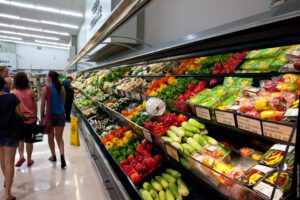
A list of stores, shopping malls, markets, pharmacies and veterinary clinics which continue working on autonomous power supplies during power outages has been compiled in Kiev.
You can read the list of objects and their addresses at the links:
Pharmacies: https://cutt.ly/Q1HCzGg
Veterinary clinics: https://cutt.ly/e1GaSwN
Supermarkets: https://cutt.ly/41BQ1UY
SHOPPING MALLS: https://cutt.ly/l1BWwoW
Markets: https://cutt.ly/X1BWiQf

Pharmacies with a sickle to dispense antibiotics for a prescription, vineyards – to cover the territory, areas for carrying out combat activities for the military hour, having called the Minister of Health Protection Viktor Lyashko.
“A pharmacist can dispense an antibiotic in a pharmacy in three ways: for an electronic prescription (for example, a pharmacy is connected to the electronic health care system, ESOS), for a paper prescription, that informational supplement, so that during the transitional period it will be added to the official document,” at the second.
Lyashko adding that the patient can get an antibiotic for a prescription from any pharmacist, for whom it is enough to show the pharmacy practitioner a proof or a paper prescription.
“Implementation of this solution is one of the best ways to counteract the global problem of antibiotic resistance, and I can also give you some information about the recognition of this obligation to fight antibiotics in Ukraine,” the minister said.
At the same time, the Ministry of Health has designated that innovations will be introduced step by step within the framework of the transitional period in medical mortgages, as they are applied from the EPHS. As a pledge to protect health, before which the patient is born, do not connect to the ESOS, the doctor, as before, you can write a paper prescription.
There is more than enough blame for pharmacies that are placed in the areas of military (combat) activities or on time-saving territories, the transfer of which was approved by the decree of the Ministry of Reintegration (https://zakon.rada.gov.ua/laws/show/z0453-22#Text ).
Thus, pharmacies in Timchasovo for the period of the military camp can and have given prescription antibacterial drugs to patients without a doctor’s prescription, the Ministry of Health clarified.
Such a navigation of the norm is permitted by the reception of the recipes, the pydrodrzlams of the Zbroyshany forces, the volunteer that is a benevolence of the organized survey at the submarine, the yaki may for the provagnita of the Vobrobnitsa, the wholesale of the Torgovyki



