

The Ministry of Agrarian Policy and Food of Ukraine, in collaboration with insurance companies, the agribusiness sector, and relevant government agencies, is developing additional mechanisms for insurance protection of port logistics and agricultural products against military risks, the ministry’s press service reported.
Taras Vysotsky, Minister of Agrarian Policy and Food of Ukraine, noted that the extent of damage to port infrastructure, logistics facilities, and agricultural products resulting from the recent massive attacks requires further improvement of existing support mechanisms.
“Maritime exports are critical for Ukraine’s agricultural sector and economy. Amid intensifying Russian attacks, businesses must have clear and accessible protection tools,” the minister’s press service quoted him as saying.
Meeting participants paid particular attention to state mechanisms for supporting businesses in the area of military risk insurance, which are implemented by the Export-Credit Agency of Ukraine.
Currently, companies can take advantage of two instruments. The first is partial compensation for the cost of property damaged or destroyed as a result of armed aggression by the Russian Federation. The maximum compensation amount is up to 30 million hryvnias for companies operating in 10 high-risk regions.
The second instrument is compensation for insurance premiums under military risk insurance policies. The state compensates for the portion of the insurance cost exceeding 1% of the insurance rate, up to 3 million UAH, which allows businesses to significantly reduce the cost of insuring their production assets.
The Ministry of Agrarian Policy noted that the stable operation of the Ukrainian Maritime Corridor is critically important for the agricultural sector, as it ensures the export of products, foreign currency inflows to the budget, and supports global food security. Since the corridor opened in August 2023, 209 million metric tons of cargo have been exported through Ukrainian ports, of which 123 million metric tons were grain products.
Agricultural exports, INSURANCE, MINISTRY OF AGRARIAN POLICY, of which 123 million metric tons were grain products., PORT, PORTS, ЭКА

Since its launch in 2023, the Ukrainian maritime corridor has transported 200 million tons of cargo, including 118 million tons of Ukrainian grain, according to a statement by Deputy Prime Minister for Recovery and Minister of Community and Territorial Development Oleksii Kuleba.
“Behind every figure lies the hard work of Ukrainian ports, sailors, logistics specialists, railway workers, farmers, and everyone who keeps our economy running every day despite the war,” Kuleba wrote on Telegram on Thursday.
According to him, since the beginning of 2026, nearly 35 million tons of cargo have been transported through seaports, and Ukrainian products have reached 56 countries around the world.
It is noted that in April of this year alone, more than 500 drone attacks on logistics infrastructure were recorded.
“The ports were under fire practically every other day,” the post states.
Kuleba specified that since the start of the full-scale invasion, 935 port infrastructure facilities have been damaged or partially destroyed, 191 civilian vessels have been affected, and 255 people have been injured.
“Despite this, the Ukrainian maritime corridor is operational. It remains one of the key tools for supporting the national economy, ensuring exports, and Ukraine’s important contribution to global food security,” the Deputy Prime Minister emphasized.
As reported, Ukraine’s ports handled 35.8% more cargo in April 2026 than in April 2025—8.2 million tons.
According to the Ukrainian Sea Ports Authority (USPA), in total, from January to April 2026, Ukraine’s seaports handled 29.5 million tons of cargo, which is more than during the same period in 2025.
At that time, it was noted that grain accounted for the bulk of the cargo flow—16 million tons, which is 7% more than last year.
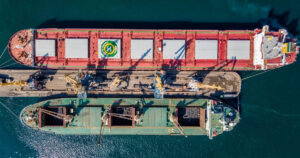
The cargo turnover of Ukrainian ports increased to 86.8 mln tons from January 1 to November 17, 2024, of which 53.5 mln tons of grain were exported, the press service of the Ukrainian Sea Ports Authority (USPA) reports.
According to the USPA’s Facebook post on Thursday, the key export items are sunflower oil – 5.3 million tons worth $4.4 billion, corn – 25.5 million tons worth $4.2 billion, and wheat – 19 million tons worth $3.4 billion.
Port operations are complicated by Russian aggression, mine threats, and military challenges. Despite this, Ukraine’s seaports are demonstrating record export capacity, the USPA said.
Earlier it was reported that in January-October 2024, Ukrainian ports increased cargo handling by 78.1% compared to the same period last year – up to 82.1 million tons. In October, the ports handled 8 million tons of cargo, of which 6.8 million tons, or 85%, were transshipped through the “sea corridor”. More than half of the cargo handled by ports in October was agricultural. They accounted for 5 million tons, which is almost 3.3 times more than in the same period last year.
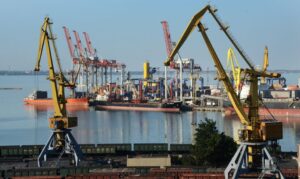
Since the beginning of the year, the cargo turnover of Ukrainian ports has increased to 80.07 million tons, of which more than half (49.5 million tons) was grain, said Deputy Minister of Communities, Territories and Infrastructure Development Timur Tkachenko.
“Since the beginning of the year, Ukraine’s ports have handled 80.077 million tons of cargo, of which 49.508 million tons were grain,” Tkachenko wrote in a telegram on Friday.
According to him, the figures once again prove that Ukraine is a guarantor of global food security. “Even despite constant air raids, shelling and threats, our ports continue to operate normally, ensuring the stable operation of the Ukrainian sea corridor.
Earlier it was reported that in January-September 2024, Ukrainian ports increased cargo transshipment by 1.8 times to 74 million tons.
It was also reported that the Cabinet of Ministers would allocate additional funds for the restoration of Odesa ports.

In January-June 2024, six Ukrainian ports increased cargo transshipment by 1.6 times compared to the same period in 2023 – up to 52.7 million tons, the Ukrainian Sea Ports Authority (USPA) reported, citing operational data.
“According to the operational data of USPA, in January-June 2024, the ports of Ukraine handled almost 52.7 million tons, compared to 31.3 million tons in 2023. Six months, six ports – 52.7 million tons,” the USPA said on Facebook on Monday.
As noted, more than half of the cargo (33.5 million tons) is agricultural products.
In June, seaports handled 6.7 million tons of cargo, which is 30% more than in June 2023. Of these, 4.1 million tons of agricultural products were exported.
According to the National Bank of Ukraine, in January-April 2024, seaports handled 35 million tons of cargo. In particular, in January – 6.3 million tons (4.4 million tons of which were agricultural products), February – 7.9 million tons (5.2 million tons), March – 6.4 million tons (4.2 million tons), April – 7.7 million tons (5.1 million tons), May – 6.7 million tons (4.5 million tons).
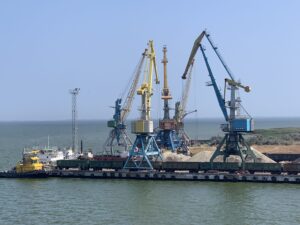
The state intends to attract private investors to lend to projects for the repair, modernization, reconstruction, and construction of strategic port infrastructure facilities in Ukraine with the possibility of compensation for the funds spent through port dues.
The relevant provisions are contained in the draft resolution of the Cabinet of Ministers “Some issues of compensation for investments made by business entities in strategic port infrastructure facilities that are state-owned”, the text of which is posted on the website of the Ministry of Community Development, Territories and Infrastructure (Ministry of Health) for discussion.
The document provides for the approval of the procedure and conditions for concluding agreements on the basis of which investments made by business entities in strategic port infrastructure facilities are compensated, as well as amendments to the Cabinet of Ministers Resolution No. 899 of October 3, 2012, according to which public sector entities may make expenditures on capital investments, in particular on port infrastructure facilities, in the absence of an approved financial plan.
It is noted that the amount of investment compensation should not exceed the amount of funds actually paid by the investor to finance the design or construction of port infrastructure facilities.
In addition, it is noted that the investor may be a legal entity or an individual entrepreneur. There may be several investors at one facility.
At the same time, the new procedure will not apply to legal relations involving business entities that make private investments in port infrastructure facilities on the basis of agreements concluded under public-private partnerships, including concession agreements and lease agreements for state property.
The Ministry of Reconstruction expects that the adoption of this resolution will help restore strategic port infrastructure facilities, accelerate the growth of maritime transport, improve the competitiveness of seaports and increase their investment attractiveness.
“Due to the military aggression of the Russian Federation against Ukraine, there is a problem of insufficient funding for the maritime industry, in particular due to imperfect fiscal policy, which leads to a lack of funds at the state-owned enterprise Ukrainian Sea Ports Authority (USPA),” the explanatory note to the draft resolution says.
It is noted that the USPA has entered into contracts for a number of construction projects, but “due to lack of funds and the state’s dividend policy, it is not possible to implement even part of these projects.”
At the same time, the USPA is facing an acute issue of the need to reconstruct and maintain port infrastructure, including berthing facilities. As of February 24, 2022, the state-owned enterprise had 265 berths (cargo, auxiliary, passenger) located in 13 seaports of Ukraine. Of this number, 20 are unsuitable for normal operation, 37 require significant investment in the next five years, and more than 50 operate with low economic efficiency – they need to be restored through overhaul or reconstruction.
In addition, it is indicated that, according to preliminary calculations, in the period before the full-scale invasion, the need for USPA to finance projects for the reconstruction, modernization and construction of berths alone (more than 48 projects, of which 36 are for reconstruction and modernization) was estimated at UAH 12 billion over four years.



