
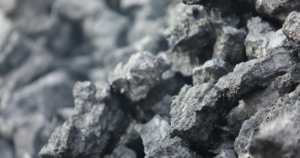
PJSC Zaporizhkox, one of Ukraine’s largest producers of coke and chemical products and a member of the Metinvest Group, reduced its blast furnace coke production by 19.7% in January this year compared to the same period last year, from 74.4 thousand tons to 59.7 thousand tons.
According to the company, 73.3 thousand tons of coke were produced in December 2025, compared to 76.3 thousand tons in the previous month.
As reported, Zaporizhkox increased its output by 2.7% in 2025 compared to 2024, to 898,300 tons from 874,700 tons.
In 2024, Zaporizhkox increased its production of blast furnace coke by 2.1% compared to 2023, to 874,700 tons from 856,800 tons.
In 2023, Zaporizhkox increased its blast furnace coke output by 16% compared to 2022, to 856.8 thousand tons from 737.4 thousand tons.
Zaporizhkox has a full technological cycle for processing coke chemical products.
Metinvest is a vertically integrated mining group of companies. Its main shareholders are SCM Group (71.24%) and Smart Holding (23.76%). Metinvest Holding LLC is the managing company of the Metinvest Group.

The Lviv Locomotive Repair Plant (LLRP), part of Ukrzaliznytsia, increased its production volume by 24.2% in 2025 compared to 2024, to UAH 1 billion 026 million.
According to information in the plant’s interim management report, published in the disclosure system of the National Securities and Stock Market Commission, last year’s production plan was UAH 1 billion 254 million, i.e., it was fulfilled by 82%, while in 2024, 85% of the plan was fulfilled.
As reported, in 2025, the plant planned to repair 17 locomotives compared to 16 in 2024, as well as increase the repair of traction motors and their anchors by 30% to 495 units, and auxiliary electric machines by 19.2% (or 30 units) to 186 units.
At the same time, the production plan for the repair of wheel sets was 450 units, compared to 556 units repaired the year before last.
Founded in 1861, LLRZ is now a large Ukrainian enterprise for the repair of electric locomotives, traction motors, and wheel sets.
As reported, in 2024, the plant increased its net profit by 55% compared to 2023, to UAH 24 million, and its net income by 39%, to UAH 827.7 million.
At the beginning of 2025, the plant employed 846 people (599 of whom were men).

In 2025, the Euroformat plant increased elevator production by 20% compared to 2024, primarily due to government programs to support domestic manufacturers, according to Igor Tkachenko, CEO of the Euroformat Lifts group of companies.
“We consider the program to compensate 15% of the cost of Ukrainian equipment within the framework of ”Made in Ukraine“ and the introduction of a minimum localization requirement for goods participating in public procurement to be effective tools for promoting national production,” he told the Interfax-Ukraine news agency.
Tkachenko did not specify the number of elevators produced by the plant, citing the military context, but noted that every tenth elevator installed during the year is a Euroformat elevator, and one in three of the elevators that meet current construction requirements, since imported elevators supplied as one-off deliveries often have serious deviations from standards and requirements.
Describing the elevator market in Ukraine in recent years, Tkachenko said that it was previously characterized by a large number of imports, often in the form of one-off contracts for small batches.
“In 2022, out of 80 companies that imported elevators, 46 imported no more than 10 units, and 38 imported no more than five. Most of these suppliers (76%) imported elevators from Turkey and China. The situation in 2023 only got worse: 97 companies imported elevators from Turkey alone. At the same time, most importers were unable to provide adequate warranty service, technical support, or regular supply of spare parts,” he said.
Tkachenko added that the expectations from the support programs were generally met: the growth of Ukrainian elevator production in 2025 by approximately 25% and an increase in the share of the domestic market to about 40% testify to the effectiveness of these mechanisms.
“At the same time, imports continue to account for more than half of the market, which means there is significant potential for further growth in the coming years,” said the CEO of the group of companies.
According to him, domestic manufacturers have untapped production capacity: the combined capacity of Ukrainian enterprises allows them to produce up to about 5,000 elevators per year, but the actual production load remains significantly lower.
“In particular, at the Euroformat plant, the utilization rate in 2025 was about 35%. This figure is still lower than it was before 2022, but we see positive dynamics,” Tkachenko emphasized.
At the same time, he believes that when an elevator is manufactured in Ukraine, the manufacturer is responsible for the entire life cycle of the equipment, from installation to service, for decades. “For the end user, this means less downtime, faster elevator repair, higher safety, and predictable operating costs,” Tkachenko emphasized.
He also said that in parallel with its production activities, the company has invested in its production base — new laser cutting and welding sections have been launched, the range of wheelchair lifts has been expanded, and dozens of design improvements have been introduced in elevator equipment.
“It is important that this is not a one-time growth, but the formation of a stable production cycle — with planning, predictable volumes, and the development of service infrastructure,” Tkachenko emphasized.
According to him, the volume of investments in production modernization in 2025 exceeded UAH 12 million, without attracting grants, while in 2024, about 60% of the UAH 25 million invested was grant aid.
Among the landmark projects implemented in 2025, Tkachenko named two projects for the manufacture and installation of hospital elevators in medical facilities — in one of them, they worked in a building, an architectural monument, and developed an exclusive elevator with custom cabin dimensions. Before putting it into operation, additional tests were conducted. In another project, the company worked on a request from project development to commissioning.
“These cases confirm that a national manufacturer is capable of meeting the complex, custom, and inclusive needs of Ukrainian medical institutions,” Tkachenko emphasizes.
According to Dmytro Kysilevsky, deputy chairman of the Verkhovna Rada Committee on Economic Development, Ukrainian elevator manufacturers increased production by 25% in 2025, and their share in the domestic market grew from 30% to 40%.
According to the MP, participation in the program to compensate 15% of the cost of Ukrainian equipment requires a localization level of at least 40%. All leading Ukrainian elevator manufacturers meet these requirements, in particular, elevators from the Euroformat plant have a localization level of 60%.
The Euroformat group of companies has been operating in the Ukrainian market for over 18 years. It specializes in the production of products and provision of services for residential and commercial construction. The main focus of the plant is the production of elevator equipment. The company has the only testing tower in Ukraine and the largest in Eastern Europe, with a height of 40 m and two shafts. It exports its products to Poland, where it has a representative office.
According to YouControl, in January-September 2025, the Euroformat plant received UAH 2.98 million in net profit, which is almost equal to the figure for the nine months of 2024, with revenue growing by 27.3% to UAH 236.5 million.

Raw milk production in Ukraine decreased in 2025 amid falling purchase prices, increased production costs, shipping disruptions, as well as severe frosts and heating problems that led to a decline in cow productivity, according to the Association of Milk Producers (AMP), citing data from the State Statistics Service.
The industry association noted that in December 2025, farms of all categories produced 478,000 tons of raw milk, which is 29,000 tons less (-6%) than in November of the same year and 75,000 tons less (-14%) than in December 2024.
At the same time, milk production in Ukraine in 2025 amounted to 6.86 million tons, which is 374 thousand tons less (-5%) than in the previous year. In December 2025, the share of enterprises in raw milk production was 57%, and that of private farms was 43%.
In December 2025, enterprises produced 271,000 tons of raw milk, which is 6,000 tons more (+2.1%) compared to November, but 12,000 tons less (-4%) compared to December 2024.
Last year, commercial dairy farms produced 3.18 million tons of raw milk, which is 210,000 tons more (+7%) than the previous year.
According to the ABM, milk production in private households in December 2025 amounted to 206 thousand tons, which is 35 thousand tons less (-14%) than in November and 64 thousand tons less (-24%) than in December 2024. In January-December 2025, households produced 3.67 million tons of raw milk, which is 583 thousand tons less (-14%) than the year before last.
“Raw milk production volumes are declining in Ukraine, primarily due to the household sector, which is ceasing to play an important role in the dairy industry. It is likely that if private farms do not consolidate by 2030, their milk will no longer be sent for processing and will be used for their own consumption. To remain in the industry, PFFs must unite into cooperatives and form commercial milk batches or independently increase their cow herds and develop craft production of dairy products,” emphasized AVM analyst Georgiy Kukhiashvili.
He noted that the industrial sector is compensating for the decline in the share of private farms and demonstrating stability in raw milk production. However, in December, milk production in the industrial sector declined compared to the same period last year amid a decline in purchase prices for raw milk under pressure from the collapse of world prices for commodities, including butter.
“Low raw milk prices do not correspond to its cost at dairy farms, which have increased production costs due to energy supply problems, which worsened in January 2026, and the need to spend more money on diesel generators. Due to long blackouts, there were interruptions in the shipment of raw milk from dairy farms to milk processing plants. The plants report that they cannot accept milk and send it for processing when the power is off. The severe frosts this winter, combined with heating problems, have led to a decline in cow productivity,” the AVM said.
The association suggested that, in the context of the crisis, dairy farms may revise their investment plans for 2026, as it is difficult to increase raw milk production during blackouts, and a significant recovery in demand for dairy products on the domestic market is unlikely in the short term.
“It is likely that in 2026, the reduction in raw milk production will occur not only in the household sector, but also in the industrial sector. Due to unprofitability, certain farms with less than 400 head of cattle are likely to close. In this case, raw milk production in Ukraine may decline to 6.0-6.2 million tons. However, those dairy farms that are able to maintain their cow numbers in 2026 and invest in sustainability should benefit in the coming years,” the UAM concluded.

In 2025, the metallurgical enterprises of the Metinvest mining and metallurgical group began production of 11 new types of products, including a joint venture, the Zaporizhstal plant, which mastered the production of three new products.
According to the group’s press release on Tuesday, having operated under conditions of full-scale Russian invasion for almost four years, Metinvest remains the country’s economic and industrial backbone. Overall, during more than a decade of Russia’s war against Ukraine, the group has managed to establish the production of 433 new products.
Last year, the company mastered new positions in the segments of semi-finished products and rolled products (four each), hot-rolled coils and sheets (two), and cold-rolled coils and sheets (one). The lion’s share of new products was produced by the Kametstal and Zaporizhstal plants. One product was mastered by the group’s Bulgarian rolling mill, Promet Steel.
It is specified that Kametstal has established the production of four types of continuously cast billets measuring 335×400 mm from various steel grades used for the manufacture of pipe products.
Zaporizhstal has mastered two types of hot-rolled coils: a new coil size in the S235JR grade (1.8×1045 mm) and products made of S235JRC steel, which is suitable for cold forming by bending and profiling. Both products are manufactured in accordance with European standard EN 10025-2 and are used in the construction and machine-building industries for the production of steel structures, pipes, and closed profiles for structural purposes.
The company has also mastered the production of cold-rolled coils made of S280GD steel, the chemical composition and mechanical properties of which comply with the European standard EN 10346. These products are intended for further processing, profiling, and the application of protective coatings. These coils are used to produce lightweight thin-walled steel structures for construction, load-bearing and decorative elements of facade systems, etc.
The Kametstal plant has also established the production of reinforcing steel for the Polish and Romanian markets. B500SP reinforcement complies with the Polish construction standard and is used to strengthen concrete. B500C reinforcing steel for Romania, which has a similar strength level, is characterized by increased plasticity, which allows it to be used in more complex and earthquake-resistant structures.
In addition, Kametstal has mastered the production of 100 mm diameter grinding balls of the fifth hardness group according to the Ukrainian standard DSTU 8538. They are used in the mining and metallurgical industry for grinding ore, concentrates, or intermediate products in drum-type ball mills.
Last year, the Promet Steel plant began producing reinforcing bars in accordance with the MKS 1021:2019 standard for the North Macedonian market. The product is designed for reinforcing concrete structures and is used in construction. It has a corrugated surface for reliable adhesion to concrete and is suitable for welding, ensuring the strength and safety of reinforced concrete structures.
Metinvest is a vertically integrated group of mining and metallurgical enterprises. Its enterprises are located in Ukraine – in the Donetsk, Luhansk, Zaporizhzhia, and Dnipropetrovsk regions – as well as in the European Union, the United Kingdom, and the United States. The main shareholders of the holding are SCM Group (71.24%) and Smart Holding (23.76%). Metinvest Holding LLC is the managing company of the Metinvest Group.

The Kametstal plant, part of the Metinvest mining and metallurgical group (Kamensk, Dnipropetrovsk region) took into account the demands of the Ukrainian and European markets in 2025, expanding its range of continuously cast billets (CCB) by four items and its range of sought-after rolled products by three items.
According to the company, in 2025 Kametstal once again confirmed its leading position among Metinvest’s metallurgical enterprises in terms of the number of new products developed. Of the 11 new types of metal products brought to market, seven are the work of the Kametstal team.
It is specified that the achievements of the steelmakers of the converter shop include four new steel grades: 10U1, 20U, 26G2TR, and S355NL-1N with enhanced requirements for chemical composition, primarily in terms of sulfur and phosphorus content.
The casting of new steel grades into continuously cast billets with a cross-section of 335×400 mm has been mastered at continuous casting machine No. 2, where the reconstruction of electrical equipment was completed last year. This, in particular, contributed to the stabilization of the casting speed and, consequently, to the improvement of the cutting accuracy of billets, minimizing metal waste. The purpose of the new semi-finished products is the manufacture of round rolled products and their further processing into seamless pipes for critical applications.
The rolling mill team offered Ukrainian and European consumers three new product ranges that had not previously been produced at the plant. First and foremost, these are 8-32 mm diameter rebars for the Polish and Romanian markets, the production of which has been mastered on the 400/200 mill. Thanks to certification in accordance with the building standards of these countries, Metinvest has already shipped more than 100,000 tons of B500SP class rebar to Poland in 2025.
The ball mill has mastered the production of 100 mm diameter grinding balls with high surface and volume hardness, which corresponds to the fifth group. By experimentally determining the optimal heat treatment mode after rolling, specialists have achieved stable production of products with increased wear resistance, which is necessary for the stable and efficient operation of the company’s mining and processing plants.
Kametstal is part of the Metinvest Group.



