
Latvia announced a contribution of 50,000 EUR to the Ukrainian Cultural Heritage Fund (UCHF), according to Ukraine’s Deputy Prime Minister for Humanitarian Policy and Minister of Culture Tetiana Berezhna.
“This is the eleventh country to support the Fund,” she wrote on Facebook on Tuesday.
The Ukrainian Cultural Heritage Fund was established as an international mechanism to mobilize resources for the protection and restoration of Ukrainian cultural heritage. To date, the Fund has already raised over EUR4.3 million, Berezhna noted.
“Funds from the Ukrainian Cultural Heritage Fund are directed toward specific projects—the protection, restoration, and preservation of Ukrainian cultural heritage. The first project to receive support is ‘Mystetskyi Arsenal,’” the post states.
Berezhna thanked Latvia for its support of Ukraine, its solidarity with Ukrainian culture, and its willingness to invest resources in its preservation.
As previously reported, in July 2025, the Ministry of Culture, together with its partners, presented new international instruments to support Ukrainian culture at the Recovery Conference in Rome (Italy): the Alliance for Cultural Resilience, the Ukrainian Cultural Heritage Fund, and Team Europe Ukraine.
In early November 2025, the second international conference, “Cooperation for Resilience,” took place in Copenhagen, Denmark, where the operational framework of the Ukrainian Cultural Heritage Fund was presented. Following the conference, Denmark, the Netherlands, Poland, and the United Kingdom announced that they would invest EUR 3 million in the newly established Ukrainian Cultural Heritage Fund.
In late January 2026, Berezhna stated that launching the UCHF’s operations would require an initial budget of EUR10–15 million. In June, she confirmed that EUR15 million would need to be raised by the end of 2026 for the UCHF to fully launch.
The following countries have announced their contributions: the Kingdom of Denmark—10 million Danish kroner; the Kingdom of the Netherlands—1 million euros; the United Kingdom—200,000 pounds sterling; the Republic of Poland and the Kingdom of Spain—0.5 million euros each; the Republic of Estonia—20,000 euros; the Republic of Latvia – 50,000 euros
It has been reported that the first site to be restored under the auspices of the Ukrainian Cultural Heritage Fund will be the History and Local Lore Museum in Ivankiv (Kyiv Oblast), which was destroyed by the occupiers and once housed paintings by Ukrainian artist Maria Pryimachenko.
The cost of construction and installation work on civil engineering projects in Ukraine in June 2026 rose by 24.3% compared to June of last year—the highest rate among the major construction segments. According to data from the State Statistics Service, nonresidential construction rose in price by 23.8% over the same period, while residential construction rose by 19.2%. On average across the construction industry, the increase was 23.1%.
Civil engineering also led the way in terms of monthly trends. In June, compared to May, prices in this sector rose by another 1.8%, compared to 1.3% in non-residential construction and 0.8% in residential construction.
In the second quarter of 2026, civil engineering and installation work cost 22.4% more than in April–June of the previous year. A similar increase—22.4%—was recorded in non-residential construction, while residential construction prices rose by 18.2%.
The quarterly trends are particularly telling. Compared to the first quarter, prices for engineering work rose by 12.4% in the second quarter, and for non-residential construction by 12%, while the residential sector saw an increase of only 0.4%.
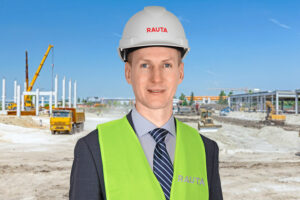
According to Andriy Ozeychuk, owner and director of the engineering and construction company Rauta, the shortage of skilled workers remains one of the key factors driving up construction costs.
“The market is currently short about 30% of construction specialists,” Ozeychuk noted, commenting on the situation in the industry in February 2026.
According to his data, the labor shortage has already led to a noticeable acceleration in wage growth. While wages in the construction sector grew by an average of approximately 15–20% annually between 2022 and 2024, the growth rate reached 25–30% in 2025. Wages rose particularly sharply for concrete workers—by 50%, surveyors—by 44%, and concrete pourers—by 38%.
Thus, the current rise in the cost of construction work is not driven solely by prices for building materials and equipment. The cost of construction work itself and labor is playing an increasingly important role.
Ozeychuk also drew attention to the long-term nature of the labor shortage. According to him, vocational schools are facing both a shortage of students enrolling in construction programs and a high dropout rate as early as the first years of study.
“In the long run, this could lead to an even greater labor shortage and slow down Ukraine’s recovery,” says the owner of Rauta.
According to the company’s estimates, the labor shortage is already forcing the construction industry to seek workers outside Ukraine, particularly in India, Nepal, Bangladesh, and Pakistan.
The rising cost of civil engineering is of particular importance to Ukraine due to the massive need to rebuild energy, transportation, utilities, and other critical infrastructure. According to Rauta’s estimates for 2025, the segment of critical infrastructure restoration and protection already accounted for about 20% of the Ukrainian construction market.
Therefore, further increases in the cost of civil engineering work could directly impact the cost estimates for restoration projects. If the cost of construction and installation work rises by 20–25%, projects whose budgets were established much earlier may require additional funding or a revision of technical solutions and implementation timelines.
At the same time, non-residential and infrastructure construction remain among the most active segments of the market. In 2025, the main targets for investment in commercial real estate were warehouse, industrial, and retail buildings, while the most attractive regions for new construction were the Kyiv, Lviv, and Ivano-Frankivsk regions, Ozeychuk noted.
In the first half of 2026, civil engineering construction costs rose by 16.1% year-over-year, non-residential construction by 16.5%, and residential construction by 13.7%.
“Rauta” operates in the fields of design, construction, and installation of buildings and is a member of the European Construction Industry Association. According to data from the Unified State Register, Andriy Ozeychuk owns 100% of the company’s authorized capital.
CONSTRUCTION, INFRASTRUCTURE, OZEYCHUK, PRICE, RAUTA, RESTORATION, STAFF

Ukraine is forming a National Reserve of Mobile and Modular Power Equipment for rapid recovery after attacks, according to Deputy Prime Minister for the Recovery of Ukraine – Minister of Community and Territorial Development Oleksiy Kuleba.
‘We are forming a national reserve of mobile and modular energy equipment. Such solutions allow for the rapid restoration of critical infrastructure after attacks. We communicated our priority needs to the Norwegian delegation during the meeting,’ he wrote on Telegram.
Kuleba said that he discussed Ukraine’s energy security with Norwegian Foreign Minister Espen Barth Eide, in particular the construction of physical protection for energy facilities.
According to him, on Monday, Norway announced the allocation of about $400 million for Ukraine’s urgent needs this winter.
The minister also stressed that heating plants remain one of the main targets of Russian attacks.
‘During the last massive shelling alone, the enemy fired more than 20 missiles at them. Russia is trying to provoke a large-scale humanitarian crisis – we are doing everything to prevent this,’ he said.
The parties also discussed housing reconstruction.
‘The Nansen programme is key for us: in 2025, its volume reached 85 billion Norwegian kroner, which is three times more than the initial plans,’ Kuleba emphasised.
According to him, the extension of the programme until 2030 with total funding of 205 billion kroner is a clear sign of confidence in Ukraine.
‘I also expressed my gratitude for the support of the effective HOPE, RELINC and Re-Power programmes. The partnership with NEFCO is equally important – EUR 16 million in investments in energy efficiency projects,’ the minister noted.
As reported, Ukrainian President Volodymyr Zelensky met with Norwegian Foreign Minister Espen Barth Eide and discussed with him the energy situation in Ukraine, as well as the prospects for joint arms production. He thanked Norway for today’s decision to allocate a $400 million aid package to Ukraine and for its assistance since the beginning of Russia’s full-scale aggression.
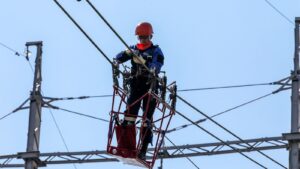
The Ukrainian Cabinet of Ministers has simplified procedures for restoring elements of the gas transportation system and power lines, the Ministry of Energy announced on Monday.
“This will enable companies to implement projects for the construction and reconstruction of gas transportation system components, in particular special bridges for reverse gas supplies, more quickly,” the ministry explained.
In addition, conditions for the construction of new power lines will be simplified, especially in frontline regions, to ensure rapid restoration and reliable electricity supply to consumers.
“The government has adopted a strategic decision aimed at strengthening the sustainability of Ukraine’s energy system in preparation for the autumn-winter period. This step will allow for the rapid restoration of power lines damaged by the war and the construction of new ones, especially in frontline areas,” said Energy Minister Svetlana Grinchuk.
According to her, this decision will also significantly reduce the time needed to prepare and implement technical solutions aimed at strengthening the reliability and flexibility of the natural gas transportation system.
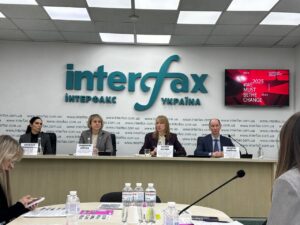
One of the criteria for participation in state reconstruction programs should be their compliance with the new law “On the Placing of Construction Products on the Market”, also known as EU Regulation 305, says Andriy Ozeychuk, director of the engineering and construction company Rauta and chairman of the board of directors of the Ukrainian Steel Construction Center Association.
“The implementation of the requirements of Regulation 305 will improve the quality of Ukrainian construction products to the European level and create prerequisites for Ukrainian producers to participate in international tenders for the reconstruction of Ukraine and open up opportunities for exporting construction materials to the EU market,” he explained during the roundtable discussion ”Public Partnership and Investment in Territorial Recovery. How to Involve Ukrainian Construction Materials Producers in the Reconstruction Process” at the Interfax-Ukraine press center on Friday.
Mr. Ozeychuk emphasized that the state should promote more active involvement of Ukrainian producers in the recovery process and create the preconditions for the development of the construction industry.
According to him, there are currently no designated conformity assessment bodies for several product categories to fully implement Regulation 305. Another pressing issue is the possibility of recognizing the test results of EU laboratories in Ukraine, which will avoid the procedure for obtaining a certificate of stability of indicators.
He also mentioned the persistence of corruption in tenders, when the terms of reference are prescribed for the products of a particular manufacturer.
At the same time, he believes it is crucial to eliminate non-market pricing, when the real wages of construction workers differ significantly from those that can be agreed upon by the regulatory authorities; to reduce the risks of non-payment for work performed and delays in financing.
Mr. Ozeychuk noted that the state should take a systematic approach to restoring the war-affected industry. It is necessary to support the creation of new production facilities for construction materials that are not produced in Ukraine or their production volumes are insufficient for potential recovery (European steel, thick plates, hardware, glass, insulation, membranes, etc.)
“It is important for the state to encourage European partners to involve Ukrainian producers in financing the recovery, rather than importing structures from the EU, as is sometimes the case now. (It should – IF-U) give preference to Ukrainian producers without limiting foreign suppliers of products and services, unless there is a full-fledged alternative in Ukraine. This is especially true for products that are equivalent in quality to their European counterparts,” Ozeychuk emphasized.
He pointed out that Ukrainian manufacturers of metal structures have sufficient potential for recovery and are already at the level of European ones: they design according to Eurocodes, work according to modern EN 1090 standards and use BIM technologies, the expert explained.
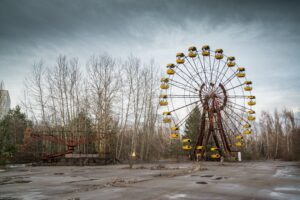
The countries contributing to the International Cooperation Account for Chernobyl have announced the allocation of about EUR7 million for the development of the Chernobyl Exclusion Zone, Ukrainian Minister of Environmental Protection and Natural Resources Svitlana Hrynchuk said on Facebook.
“Canada has announced its plans to transfer EUR 5 million from the fund that was recently closed in Russia. The European Commission is adding EUR 1.7 million to the EUR 5 million that was previously provided. Belgium’s contribution will also be added. “The meeting adopted important decisions, namely the creation of a Project Management Group for more effective implementation of grant agreements, and agreed on the direction of work on dismantling unstable structures of the Shelter,” the Minister said about the results of the meeting of the Assembly of Account Holders organized by the European Bank for Reconstruction and Development (EBRD).
She clarified that the depositors’ funds will be used to restore the equipment of the Chornobyl nuclear power plant destroyed and damaged during the Russian occupation.
Hrynchuk reminded that these are not the first contributions to the account. Earlier, Ukraine has already received more than EUR 26 million from 18 contributing countries.
The Minister assured that work on the restoration of the Chornobyl zone will continue. Thus, on June 5, the law of Ukraine on ratification of the Framework Agreement between Ukraine and the European Bank for Reconstruction and Development (EBRD) on the operation of the International Cooperation Account for Chornobyl came into force. In addition, Ukraine has a wide range of opportunities for partnership in nuclear safety. Plans for 2025 include signing new grant agreements and implementing joint projects.



