

In a number of large-scale studies, regular ice cream consumption was unexpectedly found to be associated with a lower risk of developing type 2 diabetes; however, scientists caution that this is a statistical association rather than a proven protective effect of the product, according to SciTechDaily, citing research on dairy products and metabolic health.
Ice cream is not typically considered a disease-preventive food due to its sugar, saturated fat, and calorie content. Nevertheless, in several large observational studies of dairy products, researchers discovered an unexpected finding: in certain groups, people who ate ice cream more frequently were less likely to develop type 2 diabetes.
One of the earliest indications emerged from the Health Professionals Follow-up Study, which included more than 41,000 men. The published study focused primarily on the association between low-fat dairy products and the risk of diabetes; however, in the data on individual products, ice cream also showed an unexpected inverse association with the disease.
Later, in a 2014 study published in BMC Medicine, researchers analyzed three large U.S. cohorts: 41,436 men from the Health Professionals Follow-up Study, 67,138 women from the Nurses’ Health Study, and 85,884 women from the Nurses’ Health Study II. Over nearly 4 million person-years of follow-up, 15,156 cases of type 2 diabetes were recorded.
The main conclusion of this study was more conservative: total dairy intake was not significantly associated with the risk of diabetes, whereas yogurt showed a consistent inverse association. In a meta-analysis of 14 prospective cohorts with 459,790 participants and 35,863 cases of diabetes, a daily serving of yogurt was associated with an approximately 18% reduction in the risk of diabetes.
Furthermore, in a subgroup analysis of individual dairy products, ice cream also demonstrated a statistically significant inverse association with the risk of diabetes.
The researchers emphasize that these findings should not be interpreted as a recommendation to eat ice cream to prevent diabetes. The most likely explanation is reverse causality: people with early signs of metabolic problems, excess weight, or high cholesterol may, on the advice of doctors, cut back on sweets, including ice cream. As a result, there may be more relatively healthy people among those who continue to eat ice cream.
Another possible explanation is errors in dietary questionnaires. Observational studies are often based on self-reports, and people may inaccurately report their consumption of foods considered “unhealthy.” This can distort the statistical association between diet and disease.
Some researchers also suggest that part of the effect may be related to the characteristics of milk fats and proteins, ice cream’s lower glycemic index compared to some other carbohydrate-rich foods, and the structure of milk fat. However, these hypotheses do not yet provide grounds for considering ice cream a protective food.
For the food industry and the dairy market, such studies are important not as an endorsement of ice cream, but as a reminder of the complexity of evaluating food products. The same product can have different effects depending on its composition, portion size, frequency of consumption, overall diet, body weight, level of physical activity, and an individual’s health status.
Nutrition experts continue to recommend limiting foods high in added sugars and saturated fats. Ice cream can remain part of a healthy diet as a dessert in moderate amounts, but the available data do not prove that consuming it reduces the risk of diabetes or cardiovascular disease.
Thus, the scientific debate surrounding ice cream remains unresolved.

China has taken a new step in the race for leadership in future communications technologies. Scientists from Peking University and City University of Hong Kong have developed the world’s first universal 6G chip, which is capable of delivering data transfer speeds of over 100 Gbps and operating at any frequency in the range from 0.5 to 115 GHz. This was reported by the South China Morning Post and Interesting Engineering, citing a publication in Nature magazine.
The finger-sized device (11×1.7 mm) allows you to download, for example, a 50 GB 8K video in a matter of seconds.
The modem uses a photon-electron architecture, which allows different frequency bands to be combined into a single system.
The development solves a key problem for future 6G networks: spectrum fragmentation. Currently, equipment is created separately for “low,” “medium,” and “millimeter” frequencies, which complicates implementation. The new chip is universal and can be used both in rural areas (for low-frequency coverage) and in megacities (for ultra-fast connections at high frequencies).
Prototypes that transmitted data at a speed of 100 Gbit/s over limited distances were previously demonstrated in Japan, and an experimental 6G network was launched in China in 2024. However, it is the Chinese universal modem that has covered the entire frequency range for the first time, making it unique.
The next step is to integrate the technology into compact USB-format modules and adapt it for smartphones, base stations, and Internet of Things devices. This will bring us closer to the mass adoption of 6G, which experts expect in the 2030s.
China is cementing its leadership in 6G development by offering the world a unique solution that could change the landscape of mobile technology. The breakthrough universal modem opens up opportunities for a digital revolution — from medicine to the entertainment industry.

On Tuesday, June 7, the Ministry of Education and Science of Ukraine and Mitacs signed a Memorandum of Cooperation, according to which 60 students will do internships under the Mitacs Globalink Research Internship program this summer, Ukrainian Ambassador Yulia Kovaliv said.
“600 Ukrainian students and scientists will be able to do internships at Canadian universities. A memorandum of cooperation was signed today by the Ministry of Education and Science of Ukraine and Mitacs, and this summer 60 students will be doing internships under the Mitacs Globalink Research Internship program,” she wrote on Twitter on the night of Tuesday to Wednesday.
Kovaliv thanked the Government of Canada and Mitacs for supporting Ukraine and for the decision to stop scientific ties and cooperation with Russian institutions.

Scientists and doctors from Ukraine, the United States and Italy exchanged the results of the latest scientific research in the fight against coronavirus and confirmed the effectiveness of antiviral drugs in the fight against COVID-19.
“The problem of combating the pandemic is relevant both for Ukraine and for the whole world. In our country, the number of COVID-19 cases is growing daily. And although the immunization of the population is quite active, none of the vaccines guarantees that a person will not get sick. The issue of prevention and treatment of COVID-19 in the early stages is now extremely relevant,” the scientists said, following the results of the scientific and practical conference entitled “New Treatment Strategies for COVID-19,” organized by the pharmaceutical company Farmak (Kyiv).
At the conference, scientists discussed the development of new and effective existing medicines that help treat patients with COVID-19. In particular, they paid special attention to the results of studies of antiviral drugs that demonstrated a therapeutic effect, shared their experience of partnership in the development of a direct-acting antiviral drug, talked about the prospects for the development of other antiviral drugs.
“How do antiviral drugs work? The virus is much smaller than bacteria, but this does not prevent it from destroying cells. People often mistakenly believe that antibiotics can neutralize the virus, but this is not the case. It is important to understand that antibiotics are effective only against certain types of bacteria. Antiviral agents are used to quickly and effectively deal with the virus. At the beginning of the disease, they reduce the symptoms and shorten the duration of the disease. It should also be understood that such drugs prevent it from multiplying,” the scientists said.
Italian scientist, doctor of the Ronzoni Institute for Chemical and Biochemical Research Stefano Elli, in particular, said that antiviral drugs have great potential in the fight against a pandemic. He presented a study showing the effect of Enisamium on SARS-CoV-2 (the virus that causes COVID-19). Enisamium is better known as the active ingredient of Farmak pharmaceutical company.
“According to the results of preclinical and clinical studies, Enisamium has confirmed its effectiveness. Prescribing the drug to patients with moderate severity of COVID-19 made it possible to alleviate the course of the disease in the subjects, prevent the deterioration of its clinical condition, avoid deaths and shorten the length of hospital stay,” Elli said.
According to the representative of the state enterprise State Expert Center Pavlo Babich, the positive experience of using this drug is confirmed by the results of a study on its use among patients with moderate COVID-19.
“Studies have shown that an antiviral drug successfully used in the treatment of influenza and acute respiratory viral infections in 11 countries of the world and, as it was recently established, by the joint efforts of scientists from Ukraine, Germany, the U.K., is also clinically effective in moderate COVID-19. Indeed, the drug has a wide spectrum of antiviral action against RNA viruses that cause acute respiratory diseases by inhibiting the RNA polymerase enzyme of the virus, under the influence of which it replicates,” he said.
“According to the results of research by scientists from the United States, Italy and Ukraine, it can be summarized that antiviral drugs are a powerful weapon in overcoming and preventing the negative consequences of COVID-19,” the scientists said.
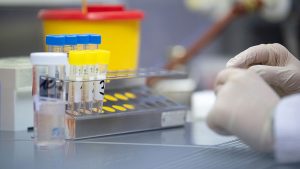
A team of Ukrainian researchers, which included scientists from JSC Farmak pharmaceutical company and the Hromashevsky Institute of Epidemiology and Infectious Diseases, have developed a PCR test capable of detecting even new strains of the Sars-Cov-2 coronavirus. According to the company’s press release, the availability of technological equipment purchased by Farmak allowed for the first time in Ukraine to carry out the sequencing procedure. This is “reading” the sequence of nucleotides in the RNA of the virus “as spelling a text.”
“Sequencing allows, in case of revealing differences in the genetic text (mutations), to draw conclusions about the presence of new strains of the virus. The results of the study, in fact, confirmed the presence of a new strain of coronavirus in Ukraine,” the researchers said.
The results of the study, as well as information about the virus strains circulating in Ukraine since the beginning of the pandemic, have already been posted in the GISAID international initiative promoting the rapid sharing of data from all influenza viruses and the coronavirus causing COVID-19.
Farmak said that on March 3, the research team confirmed that the new PCR test system developed by the pharmaceutical company’s specialists, in addition to the already widespread strains, also detects the new UK variant of coronavirus.
The Farmak test system was based on the TaqPath COVID 19 RT PCR Kit (Thermo Scientific, the United States), which is authorized by the U.S. Federal Drug Administration (FDA). High quality components made in the United States are used for the production of the new SARS-CoV-2 test kit.
The quality of the new test kit is confirmed by the relevant findings of the Hromashevsky Institute of Epidemiology and Infectious Diseases of the Academy of Medical Sciences of Ukraine (Kyiv) and the Mechnikov Institute of Microbiology and Immunology of the Academy of Medical Sciences of Ukraine (Kharkiv). Reference trials of the PCR test kit are carried out in private and public laboratories in Ukraine (Kharkiv, Dnipro, Zaporizhia, Vinnytsia), confirming its effectiveness.
Farmak said that the new test kit has opened up to pre-purchasing.



