
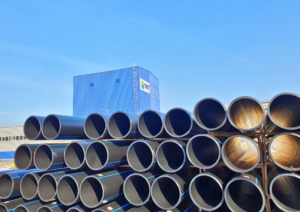
Planeta Plastik has launched a new plant in Irpin that will manufacture polyethylene pipes using solar energy.
The plant has a capacity of over 17,000 kilometers of pipes per year for water supply, gas networks, as well as technical and protective systems.
All products will be manufactured using the latest equipment, which allows the production of polymer pipes with diameters ranging from 16 to 800 mm.
Compliance with standards
The plant operates under the ISO 9001:2015 quality management system, using high-quality raw materials from world leaders. Polyethylene pipes have already been tested, received quality certificates, and are manufactured in accordance with current standards:
DSTU EN 12201 – for water supply systems
DSTU EN 1555 – for gas distribution networks
Economic effect and community support.
Thanks to the opening of the new production facility, the company has created new jobs. The plant’s products will be supplied both to the domestic market and for export. Thanks to its location in Irpin, the company will be able to quickly meet the needs of customers in all regions of Ukraine.
To support educators and medical professionals, as well as educational and medical institutions in Ukraine, the plant will supply polymer pipes at special prices.
A symbol of resilience
“Irpin. In 2022, the enemy destroyed everything here. We did not give up. We are building something new. That is why, continuing this mission, we built a new pipe plant in less than a year, which will work for the benefit and future of Ukraine,” says Kostyantyn Vashchenko, co-founder and visionary of Planeta Plastik.
About Planeta Plastik
Planeta Plastik LLC is a Ukrainian manufacturer of polyethylene products. The company specializes in the production of films for agriculture and industry, Harwell™ polymer sleeves for grain and feed storage, as well as polyethylene pipes for water supply, gas, and technical needs. Founded in 2003 and completely destroyed in the spring of 2022, the company is actively building new production facilities, developing exports, and remaining a reliable partner for customers in Ukraine and abroad. The new plant in Irpin is not only about restoring production, but also about taking a step into the future, where Ukrainian industry combines innovation, energy independence, and sustainability.
IRPIN, Planeta Plastik, PLANT, polyethylene pipe, PRODUCTION, Solar energy
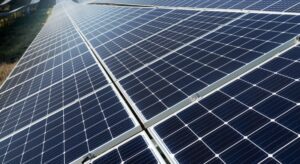
Grocery supermarket chain Varus will invest UAH 150 million in the installation of rooftop solar power plants (SPP) at 48 of its 115 facilities, the Ukrainian Council of Shopping Centers (UCC) has reported.
According to the report, the total capacity of the SPP will reach 4.8 thousand kWh, which will generate more than 5 million kW of electricity per year. The payback period of the project is estimated at two years.
The planned generation will amount to 21% of the annual consumption of supermarkets, with annual savings of UAH 50 million. It is noted that the company has chosen the model of direct consumption of generated energy due to the high cost of storage systems. The SPP will cover 95% of supermarkets’ electricity needs during the day.
The company plans to further expand the project to the entire supermarket chain and explore the possibility of installing gas diesel generators.
As reported, the European Bank for Reconstruction and Development (EBRD) has issued a $25 million loan to Varus for the reconstruction and modernization of equipment in existing stores, lease of a new warehouse, and installation of a solar power plant to reduce dependence on the grid.
Varus is a national supermarket chain represented on the Ukrainian grocery retail market by Omega. The chain’s first store was opened in 2003 in Dnipro, and the total number of its stores is 114 in different cities of Ukraine, including a DarkStore in Kyiv. The chain operates in several formats: classic supermarkets, To Go stores and the online store varus.ua.
According to Opendatabot, the owner of Omega LLC is Cyprus-based Weigant Enterprises Limited, with Valeriy Kiptyk and Ruslan Shostak listed as the ultimate beneficiaries.
According to the company’s financial results for 2024, its revenue increased by 14.3% compared to the previous year and amounted to UAH 20 billion. The company’s net profit decreased by 80.9% to UAH 38.2 million.
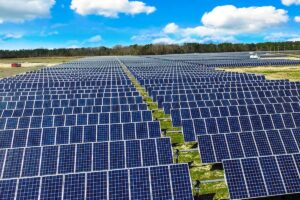
Ukraine has a large untapped potential in the use of solar energy. A new BE study commissioned by Greenpeace shows the ways and opportunities, as well as the obstacles to solar energy development.
Background
In the years preceding the outbreak of Russian aggression, the share of solar energy in Ukraine’s total electricity production has already increased significantly – from 5.9 GW in 2018 to 8.06 GW in 2022 – with an increase in solar generation capacity of almost 37%. Further expansion of solar generation is essential for achieving climate goals. But it’s not just climate protection considerations that speak in favor of solar power. Ongoing Russian attacks on fixed energy infrastructure make decentralized alternatives necessary, in which solar power will play a key role. With this in mind, we analyze how a significant expansion of solar generation can be integrated into the Ukrainian power grid. We conducted this study on behalf of Greenpeace.
Methodology and results
Based on technical and economic modeling, we determined the optimal share of solar power for the period 2027-30. The results show that 9.2 GW of solar generation capacity can be integrated into the Ukrainian grid by 2027, and up to 14 GW by 2030. This corresponds to an increase of 8.4 GW compared to current capacities and requires investments totaling almost €5 billion.
The study also analyzes the technical and economic obstacles that currently still hinder the expansion of solar energy. These include barriers to market entry, lack of incentives for investors, regulatory obstacles, and high investment costs.
Outlook.
Based on our analysis, we can conclude that Ukraine has a great potential for solar power plants. However, a number of measures need to be taken to realize this potential. These include
– Investments in electricity infrastructure
– Reducing investment costs
– Liberalization of the electricity market
– Strengthening public finances
– Support for end users
In our study, we analyze individual measures in detail.



