

JSC “Ukrainian Exchange” (UE, Kyiv), which on July 1 of this year won a two-year case in the Court of Appeals regarding the revocation of its license, has registered with the National Securities and Stock Market Commission (NSSMC) updated rules for the operation of the regulated stock market and the multilateral trading platform—brought into compliance with new legislation—and plans to resume operations.
“The court proceedings have concluded. The license has been reinstated. We plan to resume trading by the end of November!” — Artemiy Yershov, chairman of the UB board, told the Interfax-Ukraine news agency on Saturday.
According to information on its website, the National Securities and Stock Market Commission (NSSMC) approved the registration of the rules on October 23.
Yershov added that the National Bank of Ukraine has already registered the currency swap specification, and the exchange has submitted the relevant documents to the NSSMC.
As previously reported, in late March 2024, the NSSMC warned market participants of the risk that two of the three Ukrainian stock exchanges—the PFTS and the UB—could lose their licenses due to violations of licensing conditions and suggested considering possible solutions to the issue, including the creation of a new exchange as well as the voluntary surrender of exchange licenses.
The PFTS was able to meet the prudential requirements and retained its license. As for the UB, the NSSMC revoked its license on July 8, 2024, due to sanctions against a minority shareholder, and although the Court of Appeals suspended the regulator’s decision on September 24 of that year, trading—which had been suspended by the exchange on July 8—was never resumed.
In its ruling, the panel of judges of the Court of Appeals noted that it had taken into account the exchange’s implementation of all possible measures to prevent Freedom Holding Corp.—whose ultimate beneficiary is Timur Turlov, an individual subject to sanctions—from influencing the activities of the UB, thereby precluding the possibility of control through shares.
According to information in the NSSMC’s disclosure system, Freedom Holding remained the largest shareholder of the Kyiv Stock Exchange as of August of this year, with a stake of 24.265088%. In addition, Yershov held 6.9032%, former exchange director for business development Oleksiy Sukhorukov held 5.919289%, and former Finance Minister Yuriy Kolobov held 8.99892%.
Turlov, president of the Kazakhstan Chess Federation and founder and CEO of Freedom Holding Corp. (with a market capitalization of $11 billion)—against whom Ukraine has imposed personal sanctions since October 2022—was elected president of the International Chess Federation (FIDE) at the end of September this year. At Turlov’s suggestion, Mykhailo Podolyak, an advisor to the Office of the President of Ukraine, became FIDE’s vice president.
In addition to the PFTS, PJSC “Perspektiva Stock Exchange” (Dnipro) also holds a stock exchange license.
LICENSE, NSSMC, STOCK MARKET, TRADING, Ukrainian stock exchange

According to Fixygen, the British fintech company Revolut, whose private valuation has reached $115 billion, is considering the United States as the primary market for its upcoming initial public offering (IPO). The company is open to a simultaneous listing in New York and London, but is prioritizing the U.S. stock market due to its greater liquidity and access to international investors.
Revolut founder and CEO Nick Storonsky confirmed in an interview with Bloomberg TV that the company is interested in conducting its primary listing in the U.S. if it decides to go public.
“This has always been our goal, given the high liquidity of the U.S. market,” Storonsky said.
Previously, Revolut’s management had considered a dual listing on the U.S. Nasdaq and the London Stock Exchange. The new statement clarifies the company’s priority but does not signify a definitive rejection of the British trading platform.
At the same time, an IPO is not expected before 2028. Storonsky had already mentioned these tentative timelines back in April 2026, noting that public company status could help boost customer and investor confidence in the financial institution.
The decision regarding the future offering will depend on market conditions, the company’s financial performance, and compliance with regulatory requirements.
In July 2026, Revolut launched a secondary sale of shares held by employees and early investors, in which the company was valued at $115 billion. According to Reuters, the price per share was $2,017.
The new valuation exceeded the November 2025 figure by more than 50%, when Revolut was valued at $75 billion following a similar transaction.
Thus, in just eight months, the company’s private valuation increased by approximately $40 billion.
At this valuation, Revolut surpassed the market capitalization of a number of major European financial groups, including Britain’s Barclays and France’s Société Générale, based on figures at the time of the transaction.
At the same time, a private company’s valuation is not equivalent to its market capitalization. During an IPO, the final share price will be determined by investor demand and the business’s financial prospects.
The move into the U.S. stock market is linked to Revolut’s plans to significantly expand its banking operations in the United States.
On September 3, 2026, the company announced that it had received conditional approval from the U.S. Office of the Comptroller of the Currency (OCC) to establish Revolut Bank US, a national bank.
To fully launch the banking institution, the company still needs to complete the approval process with the Federal Deposit Insurance Corporation (FDIC), the Federal Reserve System, and the OCC.
Revolut expects to meet the necessary requirements and launch its U.S. bank in 2027.
Once it receives final approvals, the company plans to offer U.S. customers deposit accounts, credit cards, consumer loans, and other banking products.
According to Storonsky, Revolut intends to compete in the U.S. market with major financial institutions, including JPMorgan Chase and American Express.
The transition to a full-fledged banking model will allow the company to diversify its revenue streams by expanding lending and attracting deposits. At the same time, expanding the lending business will require additional investments in capital, risk management, and compliance with banking regulations.
Throughout 2026, Revolut also achieved significant milestones in the development of its European banking business.
On March 11, the British regulator, the Prudential Regulation Authority, allowed Revolut Bank UK Ltd to complete the transitional licensing phase and begin full-fledged banking operations in the United Kingdom.
The company gained the ability to offer bank accounts with deposit protection through the UK’s Financial Services Compensation Scheme (FSCS). At the time of the announcement, Revolut had approximately 13 million customers in the UK.
On August 10, 2026, Revolut received a full banking license in France following approval from the French regulator ACPR and the European Central Bank.
The company also plans to invest over €1 billion in business development in Western Europe. In particular, the company plans to open a new regional office in Paris in early 2027.
According to Revolut, as of September 2026, the company had more than 80 million customers worldwide.
The prospect of one of Europe’s most valuable fintech companies going public on a U.S. stock exchange is significant for the British financial market. London is competing with New York to attract large technology companies seeking access to a broad base of institutional and retail investors.
For Revolut, the advantage of the U.S. lies not only in the liquidity of the stock market but also in the opportunity to expand its presence in the world’s largest financial services market.
At the same time, with a dual listing, the company will be able to maintain its presence on the London Stock Exchange, even if the bulk of trading in its shares takes place in the U.S.
Revolut was founded in 2015 by Nick Storonsky and Vlad Yatsenko. The company began as a mobile app for currency transactions and international payments, and later expanded its range of services to include bank accounts, payment cards, international money transfers, investment instruments, cryptocurrency transactions, and financial products for businesses. The company is headquartered in London.
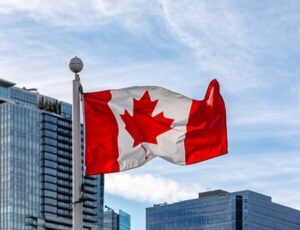
The United Kingdom has fallen to seventh place in the world in terms of the total capitalization of companies traded in the country, passing the Canadian market, Bloomberg writes.
Since the beginning of the year, the market value of companies traded in Canada has increased by 11% to $3.22 trillion.
The British stock market, which was once among the world’s leaders, is also inferior to the United States, China, Japan, Hong Kong, and India. Last year, it also passed France, but due to the difficult political situation in the neighboring country, the UK regained its status as Europe’s largest equity market earlier this year.
Over the past decade, Canadian companies have increased their capitalization by about $1 trillion, while British companies have lost about the same amount.
Brian Madden, head of First Avenue Investment Counsel, attributes this mixed performance to the UK’s decision to leave the European Union. In addition, the tech sector has an extremely small share in the main British stock index, the FTSE 100, at only 1% compared to 8.4% in Canada. In the US stock index S&P 500, high-tech companies have a share of about 30%.
Bloomberg notes that since 2022, there has not been a single IPO in Canada. However, during the same period, the Toronto Stock Exchange lured 51 companies from competing trading platforms.
Meanwhile, London still ranks second in the ranking of the world’s largest financial centers, second only to New York. Toronto ranks 23rd on the list. In addition, 11% of all global assets are managed from the UK.

The National Securities and Stock Market Commission (NSSMC) has added brokerage platform CapitalProf, cryptocurrency exchanges Crypto Lloyds / Crypto Lloyds LTD, IncCrypto, ABNBITFX, RWB Group and seven more cases to the list of questionable investment projects.
As the Commission clarified in a statement on Wednesday, in particular, the list was supplemented by the trading platform Advanced Mining, trading platforms DotBig, ParadTrade and xChief Ltd, RoboForex, Fondexx, as well as Avalon Technologies, a platform that trades IT assets, positioning itself as “one of the fastest growing investment projects in Runet”.
The total number of positions in the list reached 268 investment projects.
Last week, as part of the work to protect the rights of investors, the SECP held an online meeting with specialists from BaFin (German Federal Financial Supervisory Authority). The Commission again reminded potential investors of the significant risks associated with investing: through persons whose activities on the territory of Ukraine are not regulated in any way, as well as persons indicating false information about licensed and allegedly official activities in countries with developed financial markets.
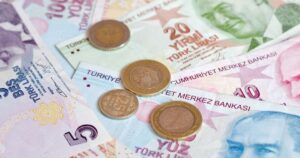
Turkish lira exchange rate on Monday once again updated its historic low against the U.S. dollar on the results of the presidential election.
The national currency is trading at 20.1004 lira/$1 from 19.9731 lira/$1 at the close of the previous session. Over the past twelve months, the lira has fallen in value by about 23 percent.
Analysts at Morgan Stanley predict that the Turkish currency rate could drop another 29% by the end of this year – to about 28 lira/$1 if the country’s current policies persist. The experts at Wells Fargo & Co. expect a decline to 23 liras/$1 by the end of the current quarter.
Meanwhile, the BIST 100 stock index jumped 4.1 percent in trading Monday to a two-week high. It has nearly doubled over the year (up 88.2%).
Leaders of the rise include companies that earn a significant portion of their revenues from abroad, including glass maker Sise ve Cam Fabrikalari (+6.2%) and Turkish Airlines (+3.3%).
The yield on Turkey’s ten-year government bonds is around 9% annually, the lowest level since January.
Current Turkish President Recep Tayyip Erdogan won the second round of presidential elections. In a speech after the announcement of his victory, he called on his fellow citizens to unite and work together for the good of the country, and promised to address urgent problems, in particular to deal with the effects of inflation.

Asia-Pacific stock indices rose on Tuesday, recovering from declines in previous sessions after Wall Street and European markets.
U.S. main indices were up 0.4-1.2%, while the Stoxx Europe 600 composite added 1% on the news that Swiss bank UBS is buying distressed Credit Suisse for 3bn Swiss francs ($3.25bn).
The key event of the week will be the meeting of the Federal Reserve System. Analysts and market participants generally believe that due to the tense situation in the banking sector, the Federal Reserve may raise the prime rate by only 25 basis points. At the same time many economists admit the probability that the rate will be kept at the same level.
China’s Shanghai Composite stock index rose 0.5%.
Shares of Kunlun Tech (10.7%), Zhonghang Electron (6%), Inspur Electronic (1.3%), Wuxi Apptec (5.4%) and Changchun High New (6.7%) showed the most notable gains.
Hong Kong Hang Seng indicator added 0.9%.
Healthcare and consumer sector stocks were the growth leaders. Wuxi Biologics gained 7.3%, Li Ning gained 5.2%, Chow Tai Fook Jewelry gained 4.4% and AIA Group gained 2.8%.
Shares of Bilibili Inc. jumped more than 9% on news that Chinese regulators had issued licenses to sell 27 foreign video games in the country. Bilibili will be the distributor for some of them.
South Korea’s Kospi index rose 0.4%.
The market value of one of the world’s largest chip makers Samsung Electronics Co. rose 0.3% and automaker Hyundai Motor rose 0.2%.
Australia’s S&P/ASX 200 index rose 0.8 percent.
The minutes of the March meeting of the Australian Central Bank, released on Tuesday, showed that the regulator’s leadership is ready to consider a pause in the cycle of rising rates at the next meeting.
Shares of Australia’s leading banks Macquarie Group, Commonwealth Bank, ANZ Group, Westpac Banking and NAB rose 1.3-2.7%.
Major mining and energy companies, including BHP Group (1.9%), Pilbara Minerals (3.6%), Whitehaven Coal (3.5%) and Woodside Energy (1.8%) also rose.
Japan’s stock exchanges are closed Tuesday in observance of Vernal Equinox Day.



