

On September 11, 2026, in the Romanian city of Turda, located in Transylvania near Cluj-Napoca, the ancient Roman castrum of Potaissa—one of the most significant military fortresses of Roman Dacia—was officially opened to the general public. Prior to this, following the completion of restoration work, the site had been accessible primarily to organized groups.
The castrum was built around 168–170 CE for the 5th Macedonian Legion, which was deployed to Dacia during the reign of Emperor Marcus Aurelius. The military base covered an area of about 23.4 hectares, measured approximately 573 by 408 meters, and was designed to house several thousand Roman soldiers.
In 2024, Potaissa was inscribed on the UNESCO World Heritage List as part of the serial site “Frontiers of the Roman Empire—Dacia.” The entire Romanian complex comprises 277 individual sites of the ancient Roman defensive system, stretching over 1,000 km.
The project to restore and adapt the castrum for tourism has been in the works since 2016; the agreement for European funding was signed in 2018, and the main work was completed in 2024. According to the Turda City Hall, the final cost of the restoration work amounted to 22.97 million lei excluding VAT, while the total investment, including other expenses, was estimated at approximately 30 million lei, or about 6 million euros. Most of the funding came from European funds.
For visitors, the remains of the Principia Legion command building, Roman roads, bastions, gates, and thermal baths have been restored and preserved. The tour of the ancient baths is organized in a particularly unusual way: a protective structure has been built over the archaeological remains, featuring a system of suspended walkways with a total length of about 230 meters, allowing visitors to view the ruins from above without damaging them.
At the same time, a significant portion of Potaissa still remains underground. Archaeologist Sorin Nemeti told Romania’s ProTV that of the nearly 24 hectares, about 1 hectare has actually been excavated to date. Archaeologists already have an idea of the complex’s underground layout, but a complete study of such a site could take many more decades. Thousands of artifacts related to the daily life of Roman soldiers have been discovered during the excavations.
For Ukrainian tourists, Potaissa is relatively close. From the Romanian side of the Porubne–Siret border crossing to Turda, it is about 338 km by road. The distance from Lviv is approximately 480 km, and from Kyiv—about 830 km by road. Travel time depends significantly on border crossing wait times.
The most practical route from Ukraine is by car via Chernivtsi and the Porubne–Siret border crossing, then through Suceava toward Transylvania and Turda. Without a car, you can take a bus via Suceava and Cluj-Napoca. The nearest major international airport is in Cluj-Napoca, about 39 km from Turda; buses run from the airport to the city, and the trip takes about 20–40 minutes. Since Ukrainian airspace is currently closed to civilian aviation, this option is primarily relevant for travelers arriving in Romania from other European countries.
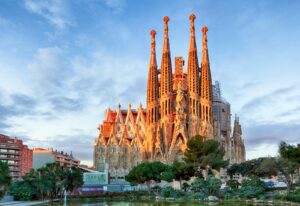
The number of foreign tourists who visited Spain in July rose by 4.6% year-over-year, reaching 11.539 million people, according to the National Institute of Statistics (INE).
This is a record high for any month since records began in 1995.
The largest number of tourists last month came from the United Kingdom—nearly 2.2 million—followed by France (1.6 million) and Germany (1.2 million).
The number of visitors from other European countries rose by 10% to 1.12 million.
The Balearic Islands welcomed the most tourists (2.57 million), followed by Catalonia (2.37 million), Andalusia (1.69 million), and the Valencian Community (1.63 million).
Total spending by visitors to the country in July rose by 10.9% year-over-year, to EUR 18.22 billion, or an average of EUR 1,579 per person.
From January through July, tourist arrivals to Spain rose by 4.6%, to approximately 58.1 million people. This is also a record figure for that period. Foreign tourists spent EUR82.05 billion in the country over the seven-month period.
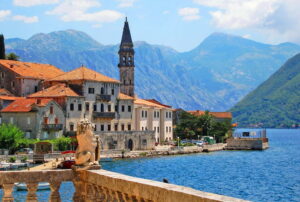
According to “Serbian Economist”, Ukraine ranked sixth among Montenegro’s foreign tourism markets in July 2026 in terms of the number of overnight stays in collective accommodation facilities, as evidenced by new MONSTAT data published on August 27.
Ukrainian tourists spent 43,400 nights in hotels, tourist complexes, hostels, and other collective accommodations. In total, approximately 7,350 tourists from Ukraine stayed at such accommodations during the month.
Serbia, Bosnia and Herzegovina, Poland, the United Kingdom, and Russia ranked ahead of Ukraine in terms of the number of overnight stays. Ukrainians accounted for about 4.4% of all overnight stays by foreign guests.
At the same time, the flow of tourists from Ukraine remains fairly stable. The number of tourists from Ukraine has remained virtually unchanged compared to July of last year, while the number of overnight stays decreased by approximately 3%.
Serbia remains the leader in Montenegro’s tourism market, accounting for about a quarter of all foreign overnight stays. At the same time, the influx of Russian tourists rose sharply in July: the number of overnight stays by Russians increased by more than 60% year-over-year.
In total, 244,800 tourists and 1.08 million overnight stays were registered in Montenegro’s collective accommodation establishments in July. Foreigners accounted for over 90% of overnight stays.
However, the actual role of Ukrainians in Montenegro’s tourism sector is greater than what the July hotel statistics indicate. MONSTAT does not include private apartments and vacation rentals—which Ukrainian tourists actively use—in this monthly report. As of 2025, Ukraine accounted for 4.7% of foreign overnight stays in Montenegro’s private sector.

Greece ranks first among European countries in terms of seasonal growth in short-term rental prices: in the summer, the average rental price is 54.9% higher than in the rest of the year, according to data from the analytics platform AirDNA.
The AirDNA study was published on May 21, 2026, and updated on May 29. Analysts compared the average daily rate (ADR) for short-term rentals in June–August with the rate for the remaining nine months of the year.
In Greece, the average off-season rate is 112.64 euros per night, while in June–August it rises to 174.46 euros. Thus, the seasonal premium reaches 54.9%—the highest rate among the European countries analyzed.
Croatia ranks second, with summer prices 37.6% higher—€154.28 compared to €112.09 during the rest of the year. Portugal ranks third, with a seasonal increase of 36.5%, to €160.06 from €117.27.
Seasonal fluctuations are particularly pronounced on popular Greek islands. On Mykonos, the average cost of a short-term rental rises from approximately 458 euros during the off-season to 758 euros per night in the summer—an increase of 65.6%.
At the same time, even more dramatic fluctuations are observed among individual European resorts. For example, Portimão, Portugal, shows a seasonal increase of about 71.6%, but Greece ranks first overall among countries.
The sharp rise in prices is accompanied by steady demand. According to AirDNA estimates, before the start of the season, the number of nights booked in Greece for June–August 2026 was approximately 9.3% higher than a year earlier. For July, the growth in early bookings was 13.5%, and for August, 11.4%.
Actual statistics for the summer confirm the high price levels. In June, the average cost of a short-term rental in Greece reached 178.8 euros per night, an increase of 12.2% year-over-year, while the European average was 150.05 euros, up 7.5%. At the same time, the number of available properties in Greece decreased by 2.5%, to approximately 156,000
. In July, the average price rose to 200.35 euros per night, which is 12.8% higher than in July 2025. The European average rate was €159.20, up 8.2% year-over-year. Revenue per available night in Greece increased by 14.3% to €142.8.
Over a longer period, the growth is even more pronounced. According to AirDNA, the average cost of a short-term rental in Greece has increased by approximately 100% over the past ten years—from about 100 euros in 2016. Over the past five years, the increase has been about 38%.
However, the claim that Greece “has outpaced all of Europe in terms of Airbnb price growth” should be interpreted with caution. The top ranking specifically refers to seasonal summer growth—that is, a comparison of June–August with the rest of the year—rather than annual price growth. Based on actual July data, year-over-year growth in Greece was 12.8%, compared to an 8.2% average across Europe.

During her one-day visit on August 15, the Secretary-General of UN Tourism, Sheikha Nasser Al-Nuwais, expressed her support for the Ukrainian people and announced a series of international initiatives to support tourism in Ukraine; She cited medical tourism, IT, and digital technologies as promising areas for development, according to a statement from the press service of the State Agency for Tourism Development of Ukraine (SATD) to the Interfax-Ukraine news agency.
“Ukraine should leverage its strengths, such as medical tourism, IT, and digital technologies, as these are precisely what will enable it to establish a solid foundation for attracting foreign tourists in the future. Bringing together all stakeholders in the tourism sector and the government under one roof can offer great potential,” noted Sheikha Al-Nuwais, whose remarks were quoted in the statement.
She noted that ten years have passed since the Secretary-General of UN Tourism last visited Ukraine, and this visit is an opportunity to renew the partnership “and look to the future together.”
“Recovery efforts cannot wait for peace to arrive. They begin right now. UNESCO and UN Tourism. Culture and tourism. Side by side with Ukraine. The path to the future belongs to Ukraine. But Ukraine will not walk it alone. UN Tourism will be by its side. And our work begins right now,” emphasized Sheikha Al-Nuwais.
During the meeting with representatives of the industry and the innovation and technology community, the Secretary-General of UN Tourism paid special attention to international coordination and the exchange of experiences regarding the recovery of the tourism sectors after the crisis. Potential areas of cooperation include the safety of tourist destinations, accessibility, barrier-free travel, and inclusivity.
In turn, GART Chairwoman Natalia Tabaka noted that this visit demonstrates that Ukraine remains on the global tourism radar and that its recovery is a key focus of the international agenda.
“For us today, tourism is first and foremost about preserving and restoring people—their emotional and physical well-being—strengthening identity, and supporting communities. And we are grateful for the support shown to Ukraine and for the willingness to stand by us during this historic time for us,” Tabaka said.
During the visit, UNWTO announced a special category of its “Safe Destinations Challenge” initiative for Ukraine. This initiative provides technical support to member states in five different regions, one of which is Ukraine. The initiative aims to find innovative solutions for the safety, resilience, and recovery of tourist destinations, especially following periods of crisis and disasters, according to the statement.
“Amid a full-scale war, the Ukrainian tourism sector has learned to operate under constant risks—from air raid alerts and missile attacks to evacuations, crisis communications, and ensuring people’s safety. It is precisely this extensive experience that can serve as the foundation for new international solutions in the field of safe and sustainable tourism,” noted Sheikha Al-Nuwais.
As part of her visit, the UN Tourism Secretary-General visited two UNESCO World Heritage sites—St. Sophia Cathedral and the Kyiv-Pechersk Lavra—where she took part in celebrations marking the Lavra’s 975th anniversary.
Sheikha Al-Nuwais also presented awards to the winners of the UN Tourism “Best Tourist Villages of Ukraine” competition for 2024 and 2025. Specifically, the awards went to the Kolochava community (Zakarpattia Oblast) and the Urych community (Lviv Oblast).
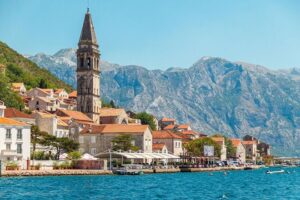
According to Serbian Economist, in the first six months of 2026, Budva welcomed approximately 245,000 tourists, who spent nearly 800,000 nights at the resort, according to preliminary MONSTAT data cited by the Budva Tourism Organization. The number of overnight stays was slightly higher than last year’s.
As of August 7, there were 44,534 registered tourists on the Budva Riviera, of whom 44,143 were foreigners and only 391 were residents of Montenegro. Thus, foreign guests currently account for over 99% of the registered tourist flow. The private sector accommodated 24,888 people, while hotels accommodated 18,525.
Based on the results of the first half of the year, Serbia remains Budva’s largest foreign market, accounting for about 13% of tourist arrivals. The tourism organization also notes growth in the Western European market.
A precise breakdown of current vacationers by nationality is not published, but official data from TO Budva reveals the leading markets.
In group accommodations—primarily hotels—the largest number of tourists currently come from Serbia, Russia, Israel, the United Kingdom, Germany, Bosnia, Poland, Ukraine, and Turkey.
In private apartments and vacation rentals, the breakdown is slightly different: Serbia, Russia, Bosnia, Ukraine, Poland, Germany, Turkey, the United Kingdom, North Macedonia, and Romania lead the way. Thus, Ukrainians currently rank fourth among Budva’s main markets for private accommodations and are among the top ten in the hotel segment.
Despite changes in the structure of international tourism since 2022, the number of Russian tourists also remains high. Russians currently rank second in both group and private accommodations, behind tourists from Serbia.
At the same time, the market structure is becoming more diversified. The role of Israel, the United Kingdom, Germany, and Poland has noticeably increased in the hotel sector, and representatives of Budvanska rivijera, the largest hotel group, also note the presence of guests from the Baltic states, Ukraine, Kazakhstan, Egypt, and China during the current season.
Thus, Budva’s main tourist flow today is driven by Serbia and neighboring countries, Russia and Ukraine, as well as the rapidly growing markets of Western Europe and Israel.
https://t.me/relocationrs/3425



