
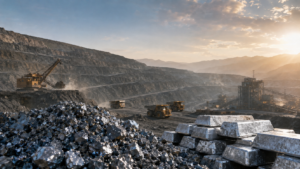
China retained its status as the world’s largest zinc producer at the end of 2025, while Peru and Russia posted the most notable growth among the leading producing countries. Global zinc production returned to growth after several years of sluggish performance, according to the Experts Club information and analytical center.
This is evidenced by data from the U.S. Geological Survey’s (USGS) Mineral Commodity Summaries 2026, published on February 6, 2026, and subsequently updated in May. The USGS describes this report as the earliest comprehensive source of data on global mineral production for 2025.
Largest zinc-producing countries in 2025
According to USGS estimates, the ranking of the leading producers is as follows:
| Rank | Country | Mine production in 2025 | Mine production in 2024 |
|---|---|---|---|
| 1 | China | 4.10 million tonnes | 4.00 million tonnes |
| 2 | Peru | 1.50 million tonnes | 1.27 million tonnes |
| 3 | Australia | 1.10 million tonnes | 1.10 million tonnes |
| 4 | India | 870,000 tonnes | 870,000 tonnes |
| 5 | Mexico | 780,000 tonnes | 773,000 tonnes |
| 6 | United States | 670,000 tonnes | 759,000 tonnes |
| 7 | Bolivia | 500,000 tonnes | 512,000 tonnes |
| 8 | Russia | 430,000 tonnes | 310,000 tonnes |
| 9 | Kazakhstan | 360,000 tonnes | 380,000 tonnes |
| 10 | Sweden | 230,000 tonnes | 239,000 tonnes |
Thus, the ten largest producers accounted for approximately 10.54 million tonnes, or 81% of global mine production, based on the USGS estimate of 13 million tonnes.
China increased production by approximately 2.5% to 4.1 million tonnes and accounted for almost one-third of global mine production. The gap between China and its closest competitors remains enormous: Chinese enterprises mined almost as much zinc as Peru, Australia and India combined.
One of the main changes in 2025 was the increase in mine production in Peru by approximately 18%, to 1.5 million tonnes. The country strengthened its second-place position in the global ranking. The International Lead and Zinc Study Group (ILZSG) linked the growth, in particular, to increased production at the large Antamina polymetallic mine and the recovery of other capacities.
The position of Russia changed significantly. According to USGS estimates, mine production increased from 310,000 tonnes in 2024 to 430,000 tonnes in 2025, allowing the country to move ahead of Kazakhstan and approach Bolivia. One of the key factors was increased production at the new Ozernoye deposit in Buryatia, where concentrate output began in September 2024. The ILZSG also cited the commissioning of Ozernoye as one of the factors behind the growth of European zinc production in 2025.
The United States moved in the opposite direction. U.S. mine production declined by approximately 12%, from 759,000 to 670,000 tonnes. The USGS attributes the decline mainly to lower zinc grades in the ore at the Red Dog mine in Alaska. The mine’s operator, Teck Resources, reported that Red Dog itself reduced zinc production from 555,600 tonnes in 2024 to 462,700 tonnes in 2025.
Why the 2025 ranking does not include separate positions from 11th to 20th
Unlike some previous statistical compilations, the USGS Mineral Commodity Summaries 2026 does not disclose separate country figures beyond tenth place. Their production is combined under the Other countries category, which accounted for approximately 2 million tonnes of zinc in 2025. Therefore, compiling an accurate top 20 exclusively from publicly available USGS statistics would be incorrect. A detailed ILZSG country database exists, but the complete dataset is available by subscription.
At the same time, notable changes occurred among second-tier producers. Mine production grew particularly rapidly in the Democratic Republic of the Congo following the commissioning of the Kipushi mine. Ivanhoe Mines reported that this mine alone produced 203,200 tonnes of zinc in concentrate in 2025, compared with approximately 50,000 tonnes during its start-up period in 2024. Thus, the DR Congo has already approached the production volumes of the group of countries immediately following the top ten.
The ILZSG also noted growth in mine production in 2025 in South Africa, Ireland, Bosnia and Herzegovina and other European countries. Irish mine production recovered following the return of the Tara mine to operation, while additional supply came from new and expanding projects in the DR Congo, Russia and Iran.
Global zinc mine production returned to growth
The USGS estimates global zinc mine production in 2025 at approximately 13 million tonnes, compared with a revised 11.9 million tonnes a year earlier. At the same time, later ILZSG statistics provide a somewhat more conservative market estimate. According to data published by the group on April 23, 2026, global zinc mine production increased by 4.8% in 2025, reaching approximately 12.5 million tonnes. The difference is explained by the timing of the estimates, methodological differences and subsequent data revisions.
The main sources of additional supply were increased mine production in Peru and China, the commissioning and ramp-up to design capacity of new large mines, including Kipushi in the DR Congo and Ozernoye in Russia, as well as the recovery of several European enterprises.
At the same time, the USGS estimates global zinc reserves that are economically recoverable at approximately 240 million tonnes. The largest reserves are concentrated in Australia, with approximately 64 million tonnes, China with 60 million tonnes and Russia with 29 million tonnes. They are followed by Peru with 18 million tonnes and Mexico with 14 million tonnes.
Zinc remains one of the key industrial non-ferrous metals. Its main use is the galvanization of steel to protect it against corrosion, primarily in construction, infrastructure and the automotive industry. Zinc is also used to produce brass, alloys, chemical products and several new energy-storage systems.
CHINA, MINING, PERU, zinc, ZINC MINING
In January–May 2026, Ukraine reduced imports of zinc and zinc products by 34.2% compared to the same period last year, to $14.029 million.
In May, imports of zinc and zinc products amounted to $3.499 million.
Zinc exports for the first five months of 2026 totaled $466,000, while in January–May 2025 they were $523,000. In May, zinc exports amounted to $174,000.
As reported, in 2025 Ukraine reduced imports of zinc and zinc products by 9.6% compared to 2024—to $52.982 million. Zinc exports for the past year reached $1.234 million, compared to $563,000 a year earlier.
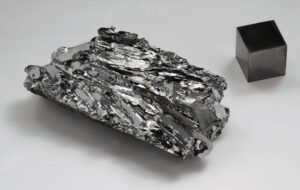
Pure metallic zinc is used to restore precious metals, protect steel from corrosion, and for other purposes.
In January-February 2026, Ukraine reduced imports of zinc and zinc products by 29% to $4.269 million (in February – $2.282 million).
Zinc exports for the two months reached $81,000 (in February – $1,000), while in January-February 2025 they were $178,000.
In 2025, imports of zinc and zinc products fell by 9.6% to $52.982 million.
Zinc exports last year reached $1.234 million, while in 2024 they amounted to $563 thousand.
Pure zinc metal is used to recover precious metals, protect steel from corrosion, and for other purposes.
In January 2026, Ukraine reduced imports of zinc and zinc products by 26.3% to $1.986 million (in December — $4.392 million).
Zinc exports last month reached $81,000 (in December — $68,000), while in January 2025 they were $137,000.
In 2025, imports of zinc and zinc products decreased by 9.6% to $52.982 million.
Zinc exports last year reached $1.234 million, while in 2024 they amounted to $563,000.
In 2024, Ukraine increased imports of zinc and zinc products by 27.5% to $58.610 million.
Zinc exports in 2024 amounted to $563,000, while in 2023 they amounted to $130,000.
In 2023, the country increased imports of zinc and zinc products to $45.966 million (+18.8%).
Zinc exports in 2023 amounted to $130 thousand, compared to $1.331 million in 2022.
Pure zinc metal is used to recover precious metals, protect steel from corrosion, and for other purposes.

Imports of zinc and zinc products to Ukraine in 2025 decreased by 9.6% to $52.982 million.
Zinc exports, despite their small volumes, showed a sharp jump to $1.234 million (in 2024, they amounted to $563,000).
In December, imports amounted to $4.392 million, while exports amounted to $68 thousand. The trend has changed: in 2024, the country increased zinc imports by 27.5%.
Pure metallic zinc is used to recover precious metals, protect steel from corrosion, and for other purposes.
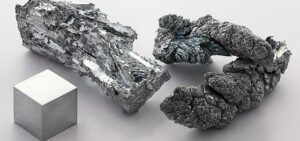
Imports of zinc and zinc products in January-November 2025 fell by 11.3% to $48.590 million. In November, imports amounted to $3.070 million.
Zinc exports for the 11 months of 2025 reached $1.166 million, in November — $22 thousand, while in January-November 2024 it was $463 thousand.
In 2024, imports of zinc and zinc products increased by 27.5% to $58.610 million, while exports amounted to $563 thousand.
In 2023, the country increased imports of zinc and zinc products to $45.966 million (+18.8%), while exports fell to $130,000 compared to $1.331 million in 2022.
Pure metallic zinc is used to recover precious metals, protect steel from corrosion, and for other purposes.



