Climate change is already having practical consequences for Ukraine — from energy and agriculture to the condition of the Carpathian ecosystem and the prospects for winter tourism, experts from the Institute of Industrial Ecology and the Institute of Engineering Thermophysics of the National Academy of Sciences of Ukraine said. According to them, global warming in the Ukrainian region is manifesting itself more intensely than in a number of Western European countries, while Russia’s full-scale war is further increasing climate risks.
Corresponding Member of the National Academy of Sciences of Ukraine Nataliia Fialko stressed that the current climate crisis has already gone beyond the bounds of a purely scientific discussion and is directly affecting issues of security, energy and long-term state policy.
“In recent years, the threshold value of 1.5 degrees Celsius has already been reached. In 2023, this anomaly amounted to 1.54 degrees, in 2024 to 1.6, and in 2025 to 1.55. These are data from leading research centers and the World Meteorological Organization, which means humanity has already received a signal that global warming is moving toward its critical limit,” she said at a press conference at the Interfax-Ukraine agency on Thursday.
According to the scientist, the response to climate challenges must focus on decarbonization of the economy, energy efficiency and a transition to climate-neutral energy sources, including nuclear generation.
“The problem of climate security is directly linked to the decarbonization of the economy. And the latter, in turn, is determined by the transition to climate-neutral energy sources, and this concerns not only renewable energy, but also nuclear energy, which is very important for Ukraine. This problem is also linked to increasing energy efficiency overall and to the introduction of a circular economy,” Nataliia Fialko added.
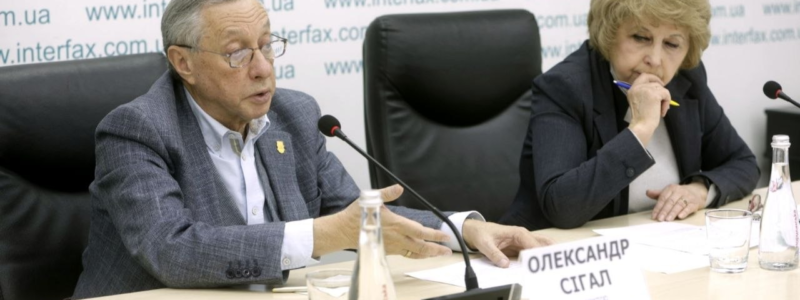
In turn, Director of the Institute of Industrial Ecology and Full Member of the Academy of Construction of Ukraine Oleksandr Sihal noted that Ukraine already has domestic opportunities to reduce fossil fuel consumption, but this requires systematic modernization of heat supply infrastructure.
“If we look at the heating seasons in Ukraine over the past 20 years, we will see that they have already shortened by about 20%. That means we already need about 20% less fossil fuel even without additional measures. Then there is the block of energy efficiency, there is modernization of heating networks, there are individual heating substations, there is biomethane, the sun, the wind — all this makes it possible to significantly reduce the volumes of fossil fuel,” the scientist said.
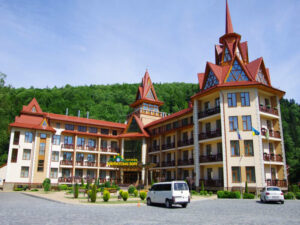
The participants in the press conference paid special attention to the Carpathians, where, according to Oleksandr Sihal, climate change is already having a fully measurable effect. He noted that historical data, in particular Austrian observations, already record a significant temperature increase in the Carpathian region.
“According to Austrian data, since 1850 we have already seen a temperature increase of 2.4 degrees. If we interpolate this curve further, even without any acceleration of the process, then by 2050 we will have another 1.4–1.9 degrees of average increase. And this means not just a change in the average temperature, but an increase in imbalance — more very cold and very warm days and fewer stable moderate periods,” the expert added.

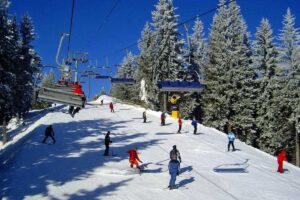
He emphasized that one of the most noticeable consequences of warming for the Carpathians has already been a reduction in the period of stable snow cover that can be used during the tourist season.
“If we are talking about our Carpathians, then already now the season when people can use snow for skiing holidays has shortened by 8–10 days. And if this process is not supported by artificial snow, this reduction will only continue to grow. We can already see that the snow disappears and then appears again, and these gaps have to be covered,” the scientist said.
At the same time, according to him, replacing natural snow with artificial snow will require significant water and electricity resources, which the country currently lacks under present conditions.
“To replace that same snow, 250–400 liters of water are needed for 1 cubic meter of snow, and in total, 3,000–4,000 cubic meters of water per hectare. In addition, the energy costs of producing artificial snow amount to 0.3–0.7 kilowatts per cubic meter, and if we calculate even minimal ski slopes, we are talking about millions of kilowatt-hours of electricity. In the situation Ukraine is currently in, we do not have such volumes of electricity, no matter how much money it might cost,” Oleksandr Sihal said.
According to the expert, this will inevitably affect the cost of recreation in the Carpathians as well.
“If we still want to preserve resorts in Ukraine, then we must be ready for the fact that for those who will отдыхать, this will mean additional costs. This may amount to between EUR100 and EUR800 for a vacation period of 10–20 days — in fact, this is how much will have to be paid to maintain such resort infrastructure. And if at some resorts, with the exception of Bukovel, which has sufficient water resources of its own, water also has to be transported, then all these costs will ultimately fall on the end consumer,” he stressed.
Nataliia Fialko also drew attention to the fact that for Ukraine the problem is even more acute than for some other European countries because of climate features and the consequences of the war.
“In Ukraine, global warming is taking place somewhat more intensely than in Western Europe, and this is primarily due to a drier climate. In addition, the situation is significantly affected by Russia’s full-scale invasion, which has led to a considerable increase in CO2 emissions. This is the so-called carbon footprint of war,” she said.

According to her, military actions have already become one of the main sources of additional climate pressure on Ukraine. In 2022, according to the scientist, military actions themselves, rather than energy or industry, became the main source of CO2 emissions, which caused emissions to rise by 23% immediately. Additional CO2 emissions from military actions in 2025 amounted to 77 million tonnes of CO2 equivalent, and for the period from February 2022 to February 2025 they totaled 175 million tonnes. The total related damage is estimated at $57 billion. The expert also outlined a broader list of risks that warming poses for states and societies.
“The main components of this problem include shortages of drinking water, food insecurity, soil degradation, competition for land, climate migration and energy vulnerability. In response, adaptive agriculture, international tools for resource management, energy decentralization and early warning systems are needed. And, what is especially important, armed forces and intelligence services must include climate forecasts in their strategic planning,” Fialko added.
Oleksandr Sihal expressed doubt about the possibility of quickly launching a separate state support program for ski resorts under wartime conditions and financial shortages, while at the same time naming the preservation of forests in the Carpathians as the first priority.
“The countries around us have similar problems, and the first piece of advice is not to cut down forests in the Carpathians. In fact, other countries are increasing forest cover, while Ukraine is cutting down century-old oaks and beeches. So we need to copy what is being done abroad and stop cutting down the Ukrainian Carpathians,” he concluded.
CARPATHIANS, CLIMATE CHANGE, NATALIIA FIALKO, OLEKSANDR SIHAL