Aparthotels are a type of investment property that has established itself as a distinct sector and consistently attracts investors in Ukraine. They combine property ownership, passive income, and professional hotel management. Why investments in hotel real estate remain relevant—let’s consider the example of modern resort projects.
In recent years, the investment real estate market has been gradually transforming. The traditional model of investing in apartments for long-term rent is giving way to new formats.
Investors are increasingly seeking managed assets capable of generating passive real estate income without the need to handle leasing, maintenance, or operational processes themselves.
This is precisely why investments in aparthotels and hotel real estate are becoming one of the most dynamic market segments. In tourist regions, such properties demonstrate stable demand and the potential for long-term capitalization of asset value.
According to management companies, the average hotel occupancy rate in professionally managed portfolios is around 55–65%, while the most successful properties achieve 70–85% occupancy. It is precisely these indicators that make hotel real estate attractive for long-term investments.
“According to data from LUN, the income-generating real estate market is growing steadily—and this is no coincidence. This segment attracts investors by combining the clarity of a classic square meter with the advantages of a ready-made investment product. It is a physical asset, passive income without operational hassle, a transparent economy, and income pegged to a currency. “If a project is well-calculated, has an interesting concept, and is professionally managed, the yield here can be higher than in traditional rental real estate,” explains Vitaliy Mazhara, CEO and managing partner of the development company GREENWOOD Development.

An aparthotel is a type of hotel real estate in which an investor purchases a separate unit—an apartment, villa, or cottage—within a hotel complex.
Unlike the traditional rental model, the owner is not involved in day-to-day operations. Management of the property is handled by a management company, which is responsible for:
The investor’s profit is generated from hotel operations—revenue from guest stays, infrastructure, and the complex’s services.
In this way, the property becomes an investment asset that functions as a business and generates passive income.
The modern hospitality industry is evolving alongside tourist behavior. Today, guests are increasingly choosing hotels based on more than just location or service level. A key role is played by the experience, atmosphere, and emotions a guest receives during their stay.
That is why concept resort hotels demonstrate higher guest loyalty, a stronger brand, and stable occupancy.
“Today, investors are increasingly focusing on concept hotel projects. It is not just the location or architecture that plays an important role, but also the idea that creates a unique experience for guests. It is precisely these hotels that demonstrate stable demand and long-term investment value,” — notes the leading management company Maestro Hotel Management.
According to market participants, it is conceptual resort hotels that are currently driving a new wave of investment in tourism real estate, as they combine an emotional experience for guests with the stable economics of the hotel business.

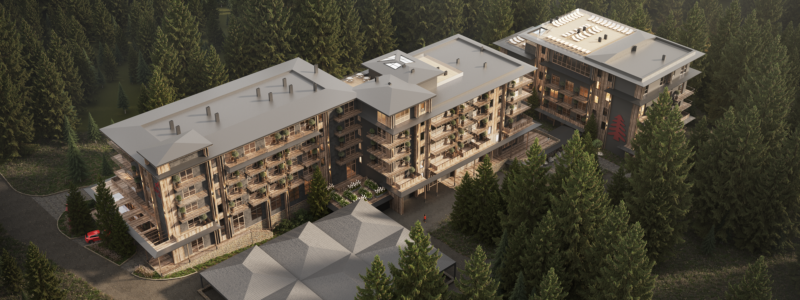
One example of a new generation of resort projects is the “VIRSHI” experience hotel in the Carpathians.
The project’s concept is based on the idea of the experience economy, where the key product is not square footage, but the guests’ emotional experience.
In this format, the guest becomes the creator of their own vacation—choosing a stay scenario from dozens of possible options: from active recreation to solitude or rejuvenation.
The hotel’s service model is built on two approaches:
Service by Scenario — personalized experience packages that adapt to the guest’s travel style.
Moments of Magic — specially designed service moments that create unexpected pleasant impressions during the stay at the hotel.
From the very beginning, the “VIRSHI” experience hotel has been developed as an investment product, where every decision impacts the property’s future economics.
The choice of location, infrastructure format, service model, management team, and concept are not separate elements but a system that determines the hotel’s future occupancy and profitability.
That is why the project combines an emotional experience for the guest with clear investment logic, where the product is shaped with demand, vacation scenarios, and long-term efficiency in mind.
You can learn more about the project’s concept on the VIRSHI Experience Hotel website.
Combined with the growth of domestic tourism and the development of resort infrastructure, this format is gradually shaping a new market segment—income-generating investment real estate.
That is why more and more investors are turning their attention to conceptual resort projects that combine a strong idea, professional management, and stable hotel economics. One example of this approach on the market is the “VIRSHI” experience hotel near Bukovel, which operates within the experience economy model and offers investors a new way to engage with hotel real estate.