

Agricultural production in Ukraine increased by 1.7% in January–February 2026 compared to the same period last year, according to the State Statistics Service (SSS).
According to the agency’s data, the growth was driven exclusively by the livestock sector (index 101.7%), while data on crop production for this period are traditionally unavailable.
The main driver was agricultural enterprises, which increased production by 8.9%. The best performance in this segment was shown by enterprises in the Donetsk (index 162.5%), Lviv (132.9%), and Volyn (135.0%) regions. Overall, growth among enterprises was recorded in 20 regions.
In contrast, a decline was observed in private households: production volumes fell by 14.8% compared to January–February 2025. The largest declines in the private sector were recorded in the Donetsk (index 35.3%), Ternopil (50.9%), and Zakarpattia (63.8%) regions.
Regionally, across all categories of farms, the largest declines in production volumes were recorded in Donetsk (index 60.5%), Zakarpattia (68.3%), and Chernivtsi (82.9%) regions. At the same time, the leaders in overall growth were Vinnytsia (+22.9%), Lviv (+22.7%), and Kirovohrad (+7.6%) regions.
As reported, in January 2026, agricultural production in Ukraine increased by 3.2% compared to January 2025. Thus, over the course of two months, the growth rate slowed slightly.
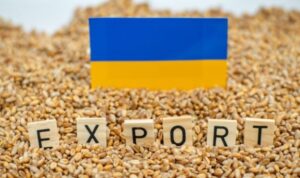
According to the results of 2025, Ukraine provided domestic exporters of animal and plant products with access to 22 new foreign markets, said Serhiy Tkachuk, head of the State Service for Food Safety and Consumer Protection, during a public report on Thursday.
According to him, this figure is a record for the period of full-scale war.
“Last year, we opened 22 new export markets. Currently, work is underway to open about 300 more. It does not stop there, because it is our priority to ensure that small, medium, and large Ukrainian businesses have the opportunity to export their products worldwide,” emphasized the head of the State Service.
According to the data presented, in 2025, the Chinese market opened up to Ukrainian peas, wild-caught seafood, and aquatic products. India and Canada allowed the import of Ukrainian apples. Canada also opened its market to table eggs.
“Each new certificate is the result of lengthy technical negotiations and audits. For example, opening up markets in countries such as Canada or China requires strict adherence to high safety standards,” added Tkachuk.
In addition, the Albanian market became accessible for table eggs, Argentina for sunflower seeds, and Kuwait for processed food products. Malaysia has opened access for milk, dairy, and egg products. Vietnam and Moldova have allowed the import of dairy products not intended for human consumption. The Chilean market has opened up for meat and bone meal and feather meal, and Turkey for canned animal feed.
Tkachuk noted that since 2022, Ukraine has managed to open a total of 75 new markets, despite logistical and political challenges.
“Even in the conditions of war, we continue to expand our geography. Currently, Ukraine has the right to export agricultural products to 386 trade destinations,” he specified.
The State Service of Ukraine for Food Safety and Consumer Protection is currently exploring opportunities to access markets in Asia, the EU, America, and the Middle East. In particular, work is underway to open the Canadian market for Ukrainian wheat, corn, soybeans, and rapeseed, as well as to expand the presence of plant products in China.
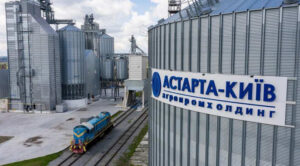
Astarta, Ukraine’s largest sugar producer, supplied over 870,000 tons of agricultural products to foreign markets in 2025, the company reported on its website.
According to the report, exports of soybean products (oil and meal) increased by 15% compared to 2024. The main markets in this segment were Hungary, Poland, Romania, and Austria. In addition, the company exported sugar to 25 countries, mainly to the MENA region (Middle East and North Africa) and Europe.
In 2025, wheat and corn were supplied to EU countries (Italy, the Netherlands, Spain), the United Kingdom, as well as Indonesia, Saudi Arabia, Turkey, and Vietnam.
“Global trade uncertainty requires new approaches. We continue to export and adapt our work through interaction within our partner ecosystem,” said Vyacheslav Chuk, Director of Commercial Operations and Strategic Marketing at Astarta.
Astarta is a vertically integrated agro-industrial holding operating in eight regions of Ukraine. It includes six sugar factories, agricultural enterprises with a land bank of 220,000 hectares and dairy farms with 22,000 head of cattle, an oil extraction plant in Hlobyn (Poltava region), seven elevators, and a biogas complex.
According to the results of 2025, Astarta reduced its total revenue from sales of key product categories by 15.6% compared to 2024, to UAH 21.05 billion, while physical sales volumes of its main products fell by 23.5%, to 1.21 million tons.

Russian troops carried out about 1,200 combined strikes on Ukraine’s railway infrastructure in 2025, which is one of the three key problems of the season for agricultural exports, said Valery Tkachov, deputy director of the commercial department of Ukrzaliznytsia (UZ).
“The most painful thing for us is that our employees are dying under enemy fire. More than 1,000 railway workers have already been killed during the full-scale war. This is the most difficult challenge, which cannot be measured only by technical indicators,” he said at the Forbes Agro conference in Kyiv on Thursday.
Tkachov named security as the first systemic problem. Last year alone, the enemy carried out 1,200 attacks on railway energy facilities, rolling stock, and control centers in an attempt to completely stop the movement of export cargo.
Tkachov named the second critical problem as restrictions on the external power supply to the network due to strikes on the energy sector, which directly reduces the throughput capacity of key trunk lines. In particular, after the shelling of the Kolosivsky passage in the south and the Kamyanets-Podilsky junction in the west, Ukrzaliznytsia was forced to switch to the use of diesel locomotives on a massive scale.
This leads to a significant slowdown in train traffic, restrictions on train weight, and an increase in transportation costs due to the high cost of diesel fuel compared to electricity. The third set of problems in the work of Ukrzaliznytsia, according to Tkachov, covers economic and political barriers.
This particularly concerns restrictions on western land crossings from neighboring countries and low demand for Danube ports. Despite the availability of alternative routes through Reni and Izmail, agribusiness still prefers the ports of Greater Odessa, which creates an uneven load on the infrastructure.
The deputy director of the UZ department assured that the railway network remains stable, but its efficiency is still critically dependent on the stability of the power system and the security situation on the southern approaches to sea terminals.
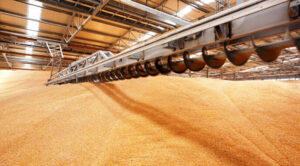
Ukraine has confirmed its readiness to open a food grain hub in Ghana and is interested in joint projects for the processing of agricultural products, Ukrainian Foreign Minister Andriy Sybiga said following talks with his Ghanaian counterpart Samuel Okudzeto Ablakawa in Kyiv on Wednesday.
During the meeting, the parties discussed strengthening global food security and developing agricultural partnerships. Sybiga emphasized that Ukraine considers Ghana a key partner in West Africa and is ready to remain a reliable supplier of agricultural products to the region.
“Ukraine is ready to remain a reliable supplier of agricultural products and at the same time is interested in joint projects with added value, particularly in the field of processing and logistics,” said the head of the foreign ministry.
As reported, in July 2025, Ukrainian President Volodymyr Zelensky held a telephone conversation with Ghanaian President John Dramani Mahama on cooperation in the agricultural industry. The presidents agreed to expand practical cooperation, particularly in the construction of a logistics hub for food storage. Zelensky also confirmed his intention to send a Ukrainian delegation to Ghana to work on these projects.
Ghana has consistently supported Ukraine’s territorial integrity, including by voting in favor of the UN General Assembly resolution “Support for sustainable peace in Ukraine” on February 24, 2026.
According to the National Scientific Center “Institute of Agrarian Economics” (IAE), citing data from the State Customs Service, Ukraine increased its imports of agricultural products by 13% compared to 2024, reaching $9.12 billion in 2025.
According to the research institute, EU member states retained their position as the main supplier and provided 53.9% of domestic agri-food imports worth $4.91 billion.
According to the institution, EU member states retained their position as the main supplier for the seventh consecutive year and provided 53.9% of domestic agri-food imports in 2025, worth $4.91 billion, with the value of supplies from the EU increasing by 15% compared to 2024.
According to the IEA, imports from other regions were much lower. Food supplies from Asian countries amounted to $1.635 billion (17.9%), Latin America – $693 million (7.6%), and Africa – $489 million (5.4%). All of them also increased sales of agricultural products for the needs of the Ukrainian domestic market last year.
Since 2017, Poland has held the top spot in the ranking of major suppliers of agricultural products to Ukraine, selling $1.15 billion worth of agricultural goods in 2025, 24% more than in 2024. The top ten exporters also included Germany ($692 million), Turkey ($654 million), Italy ($575 million), the Netherlands ($417 million), Norway ($338 million), France ($317 million), Spain ($314 million), China ($264 million), and the United States ($235 million). In total, these ten countries accounted for 54% of all imports.
In the commodity structure of purchases, 70% of the value was made up of fruits, berries, and nuts ($1 billion), fish and seafood ($999 million), beverages ($870 million), cocoa products ($640 million), food products ($575 million), tobacco products ($493 million), feed ($476 million), coffee and tea ($471 million), vegetables ($467 million), and oilseeds ($418 million).
“Food imports to Ukraine in 2025 reached their highest level in monetary terms since the country gained independence, growing for the third consecutive year amid a full-scale invasion of our state by the Russian Federation. Against the backdrop of a general trend of rising food prices, especially given the significant risks for specialized businesses in Ukraine, the cost of foreign purchases in 2026 is likely to remain high,” concluded Bogdan Dukhnytskyi, a leading researcher at the IAE.



