
As of now, Oschadbank has signed loan agreements in the energy sector totaling 11 billion UAH, which is more than 1.5 times the amount for all of 2025, when such agreements totaled 6.77 billion UAH, said Yuriy Katsion, Chairman of the Board of Oschadbank.
“Investors in the energy sector can still be called the biggest optimists in the country today. It is they who, despite all the risks, are investing in the country’s future. Lending trends confirm growing business interest in this sector: while Oschadbank concluded energy sector loan agreements totaling 6.77 billion hryvnias for the entire year of 2025, their volume reached 11 billion hryvnias in 2026,” said Katsion during the first annual forum of the Ukrainian Renewable Energy Association, UKRAINE RENEWABLE ENERGY AGENDA 2027, which took place recently in Kyiv.
According to him, these figures demonstrate the business community’s readiness to invest in the country’s energy independence and implement long-term projects.
As Oschadbank clarified in a press release following the forum, of the total volume of loan agreements concluded by Oschadbank to finance the energy sector in 2026, 8.83 billion UAH went to corporate clients, and another 1.94 billion UAH went to micro, small, and medium-sized businesses. At the same time, half of the agreements in the MSME segment were concluded with the support of government and international programs. For comparison: in 2025, the volume of loan agreements in the energy sector amounted to 5.64 billion UAH for large corporate clients and 1.13 billion UAH for MSMEs.
At the forum, Katsion noted that for certain projects, the payback period can now be as short as three years, which increases the investment attractiveness of the energy sector and encourages businesses to invest more actively in new capacity.
At the same time, he noted that a key factor for continued growth in energy lending will be the reduction of the corporate income tax rate for banks to at least 25%, down from the current 50%.
According to the banker, such a high tax rate critically affects capital adequacy and limits the banking system’s ability to lend to the real economy.
The chairman of Oschadbank’s board identified forecasting medium- and long-term electricity prices as one of the key challenges for further attracting investment; therefore, insurance and hedging instruments for price risks should also become an important area of market development.
At the same time, Katsion noted that the bank has been granted the status of an active electricity consumer and is developing its own energy consumption management system.
As he told reporters on the sidelines, the entire branch network is equipped with inverters and battery systems that provide at least four hours of autonomous operation, and in most cases, up to eight hours.
Automated commercial electricity metering systems (ASKOE) have also been installed in branches and regional offices.
To manage this infrastructure, Oschadbank has established its own control center, which, among other things, tracks hourly electricity prices and determines the optimal times for charging and discharging the battery systems. According to him, this not only ensures the uninterrupted operation of the bank’s network during power outages but also generates economic benefits through optimized energy consumption.

In October 2026, the National Bank of Ukraine fined the state-owned Oschadbank JSC 10 million hryvnia for violating financial monitoring laws, specifically for inadequate customer due diligence, deficiencies in risk assessment, and failure to comply with requirements for providing information to the regulator.
This is stated in an official NBU press release published on November 6, 2026.
According to the regulator, Oschadbank failed to properly fulfill its obligations to apply a risk-based approach, as required by Article 7 of the Anti-Money Laundering Law.
In addition, the bank failed to ensure proper compliance with customer due diligence requirements under Article 8 of that law.
Separately, the National Bank identified violations of the procedures for providing information and documents necessary for conducting financial monitoring oversight.
Specifically, this refers to the bank’s failure to properly fulfill its obligation to provide, in a timely manner and in full, accurate information, conclusions, decisions, copies of documents, or relevant extracts upon the regulator’s request.
The NBU uses such materials to verify banks’ compliance with legal requirements and to establish the circumstances of possible violations.
Another violation involved entering information into customer questionnaires whose accuracy was not corroborated by documents held by the bank.
The regulator cited a violation of the requirements of the Regulation on the Implementation of Financial Monitoring by Banks, approved by NBU Board Resolution No. 65 of May 19, 2020.
The statement does not specify the number of customers affected by the identified violations, nor does it list the specific financial transactions that led to the imposition of the sanction following the audit.
Oschadbank’s fine was the second-largest among the enforcement measures imposed by the National Bank in October. The largest fine—25 million UAH—was imposed on Sens Bank.
In total, these two state-owned banks accounted for 35 million UAH, or approximately 90.8% of the total fines imposed by the regulator on five financial institutions.
Oschadbank is Ukraine’s state-owned universal bank, providing services to individuals, entrepreneurs, corporate clients, and the public sector. The bank operates in the areas of lending, deposit operations, payment services, and business financing.
Source: National Bank of Ukraine, press release dated November 6, 2026.

In October 2026, the National Bank of Ukraine (NBU) imposed sanctions on two banks and three non-bank financial institutions for violating financial monitoring and foreign exchange regulations; specifically, it fined Sens Bank 25 million UAH and Oschadbank 10 million UAH, the regulator announced on its website.
SENS Bank was fined for violating requirements regarding the application of a risk-based approach and the proper verification of customers.
Oschadbank was fined 10 million hryvnias for improper customer due diligence and application of a risk-based approach, failure to comply with requirements regarding the timely and complete provision to the NBU of accurate information and documents necessary for financial monitoring supervision, as well as entering data into customer questionnaires that was not confirmed by documents available at the bank.
Lombard “Credit Ukraine” LLC was fined 2.747 million UAH for improper organization and conduct of initial financial monitoring. The violations concerned, in particular, internal documents, customer verification, the application of a risk-based approach, additional measures regarding family members of politically exposed persons, and the provision of information in response to requests from the National Bank.
The company also received a written warning for conducting transactions with non-resident individuals involving the granting and repayment of loans and the payment of interest in hryvnia without the appropriate license from the NBU, as well as for improperly maintaining a register of transactions involving foreign currency cash.
FC “Artu” LLC was fined 799,000 UAH for a series of violations in the area of financial monitoring, specifically regarding internal documents and risk management procedures, customer due diligence, politically exposed persons, the provision of information to the National Bank, the maintenance of customer profiles and lists, and the retention of documents.
“FC Finofis” LLC was fined 17,000 UAH for failing to submit separate statistical reports on foreign currency transactions to the National Bank.
As previously reported, on August 19, the National Anti-Corruption Bureau of Ukraine (NABU) and the Specialized Anti-Corruption Prosecutor’s Office (SAPO), as part of Operation “Forest Gump,” notified members of a criminal organization of their status as suspects; according to the investigation, these individuals laundered 150 million UAH to post bail for a defendant in the “Midas” case. According to anti-corruption authorities, in early June, the organizers of the scheme gained de facto control over Sens Bank, and the state bank’s top management was involved in carrying out the relevant transactions.
On the same day, the Cabinet of Ministers suspended Mykola Hladyshenko, chairman of Sens Bank’s supervisory board, for six months and initiated the suspension of Oleksiy Stupak, chairman of the management board. On August 25, at the request of the National Bank of Ukraine (NBU), the bank temporarily suspended Lyudmyla Snigur, director of the financial monitoring department.
In early September, the NBU determined that Stupak did not meet the qualification requirements for professional competence and sent a request to the Cabinet of Ministers, as the bank’s owner, to replace him. On September 2, the High Anti-Corruption Court imposed a preventive measure on Stupak in the form of a 15 million hryvnia bond.
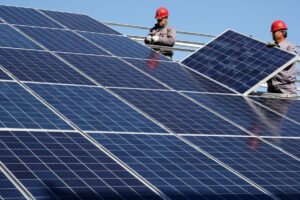
State-owned Oschadbank has provided Eco-Future “Kamianka” LLC with a EUR10.34 million loan for the construction of three solar power plants with a total capacity of 18.322 MW in the Khmelnytskyi region, the financial institution announced on Monday.
Along with the solar power plants, the company plans to install a 50 MW energy storage system. Once commissioned, the complex is expected to generate up to 22,600 MWh of electricity per year.
According to Oschadbank, this is the bank’s largest energy project in terms of financing volume in the micro, small, and medium-sized business (MSME) segment.
“Since the beginning of the year, Oschadbank has financed the construction of solar power plants with a total capacity of 42.6 MW for nearly 850 million UAH,” said Natalia Butkova-Vitvitska, a member of the bank’s management board responsible for the MSME segment.
The facilities will be built by Solar Stalkonstruktsiya LLC, which has been operating in the market since 2012 and has experience implementing over 5 GW of solar energy projects and energy storage systems in 20 countries.
According to the National Bank, as of July 1, 2026, Oschadbank, with total assets of 518.87 billion UAH, ranked second among Ukraine’s 59 banks. The bank’s total loan portfolio grew by 6.7% in the first half of the year, reaching 136.83 billion UAH.
INVESTMENT, Khmelnytskyi region, LOAN, OSCHADBANK, Solar energy
State-owned Oschadbank has put up for auction on the “Prozorro.Sales” platform a claim against ESU LLC, which owns 92.79% of the shares in JSC “Ukrtelecom,” with a starting price of 2.65 billion hryvnia, the bank announced on Friday.
The claim arose under a securities purchase agreement dated April 25, 2013, under which Oschadbank acquired 2 million bonds of ESU LLC with a total par value of 2 billion UAH.
The auction is scheduled for October 6 at 12:55 p.m., and the submission of bids will close on October 5 at 8:00 p.m. Bidding will follow the English-style ascending-bid model.
The starting price of the lot is 2.65 billion UAH excluding VAT; the minimum bid increment is 1%, or 26.45 million UAH; and the security deposit is 5%, or 132.27 million UAH.
Banks and other financial institutions that are legally authorized to provide funds and bank metals on credit are eligible to participate in the auction.
If the English-style auction does not take place, Oschadbank may subsequently offer the claim rights in a Dutch-style auction with a reduced starting price.
As previously reported, in November 2022, Oschadbank had already put the claim against “ESU” up for sale via OpenMarket (the State Enterprise “SETAM” of the Ministry of Justice) with a starting price of 1.82 billion UAH; however, the auction did not take place due to a lack of eligible bidders.
Following a tender announced in the fall of 2010, the State Property Fund of Ukraine sold 92.79% of Ukrtelecom’s shares in early 2011 to the Ukrainian subsidiary of the Austrian company EPIC—ESU LLC—for 10.58 billion hryvnias. The SCM Group, owned by Ukrainian businessman Rinat Akhmetov, acquired ESU in 2013.
In 2024, the Kyiv Commercial Court opened bankruptcy proceedings against ESU LLC.
Oschadbank and the Lviv City Council signed a five-year loan agreement for 582.6 million UAH to finance projects aimed at modernizing the city’s critical infrastructure, the financial institution announced on Friday.
“The new 582.6 million hryvnia loan will enable Lviv to continue upgrading its housing, utilities, and road infrastructure, modernizing its heat supply system, and strengthening energy security,” said Serhiy Chernikov, deputy chairman of Oschadbank’s board of directors responsible for corporate business.
It is noted that the funds will be directed toward nine critical infrastructure projects in the city.
Taking this new agreement into account, the total amount of loans provided to Lviv by Oschadbank over the past three years has reached 2.09 billion UAH: in 2024, the bank provided the city with 840.0 million UAH, and in 2025—668.0 million UAH.
Since the start of the full-scale invasion, Oschadbank has entered into loan agreements with Ukrainian municipalities totaling 7.8 billion UAH. As of August 1, 2026, the bank accounted for over 64% of municipal lending.
According to the National Bank, as of July 1, 2026, Oschadbank, with total assets of 518.87 billion UAH, ranked second among Ukraine’s 59 banks. The bank’s total loan portfolio grew by 6.7% in the first half of the year, reaching 136.83 billion UAH.



