
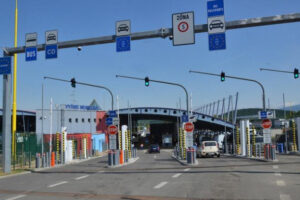
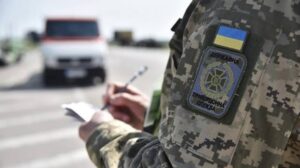
Passenger traffic across Ukraine’s western border fell by 9.3%—to 685,000—during the week of August 29 through September 4, coinciding with the start of the new school year, according to daily statistics from the State Border Guard Service monitored by the Interfax-Ukraine news agency.
According to the data, the number of outbound border crossings this week decreased to 344,000 from 364,000 the previous week, while the number of inbound crossings fell to 341,000 from 391,000.
The number of vehicles passing through border checkpoints also decreased to 137,000 from 145,000, while the number of vehicles carrying humanitarian cargo fell to 416 from 433.
The highest outbound traffic was recorded on Saturday (56,000 per day), and the highest inbound traffic on Sunday (68,000), while the lowest outbound traffic was on Tuesday (42,000), and the lowest inbound traffic was on Tuesday and Thursday (39,000 each).
According to the State Border Guard Service, as of 12:00 p.m. on Sunday, the largest number of passenger cars waiting to cross the border with Poland were at the “Ustyluh” border crossing point—50. Shorter lines were observed at the “Ugryniv” checkpoint—20 vehicles—and the “Krakivets” checkpoint—10 vehicles, where 4 buses had also accumulated.
At the border with Slovakia, the line at the “Maly Berezny” checkpoint consisted of 20 cars, and at the “Uzhhorod” checkpoint—30.
The largest number of passenger cars was waiting to exit at the border with Hungary: at the “Luzhanka” border crossing – 40, at the “Tisa” border crossing – 25, at “Kosyno” – 20, and at the “Dzvinkove” and “Vilok” border crossings – 10 each.
At the border with Romania, 15 cars had accumulated at the “Porubne” checkpoint, while there were no lines at the border with Moldova.
Last year, passenger traffic across the border during this week fell by 10%, but was slightly higher—692,000; however, outbound traffic significantly exceeded inbound traffic—by 32,000 compared to 3,000 this year.
The following week last year, passenger traffic fell by another 12.4%, and then remained at around 600,000 for two weeks.
As reported, starting May 10, 2022, the outflow of refugees from Ukraine—which began with the start of the war—was replaced by an inflow that lasted until September 23, 2022, totaling 409,000 people. However, starting in late September—possibly influenced by news of mobilization in Russia and “pseudo-referendums” in the occupied territories, followed by massive shelling of energy infrastructure—the number of people leaving exceeded the number of those entering. In total, from the end of September 2022 until the first anniversary of the full-scale war, this figure reached 223,000 people.
In the second year of the full-scale war, the number of border crossings out of Ukraine, according to the State Border Guard Service, exceeded the number of crossings into the country by 25,000; in the third year, by 187,000; in the fourth year, by 221,000; and by 44,000 since the start of the fifth year—31,000 of which have occurred since the beginning of summer.
In its July inflation report, the National Bank maintained its estimate of 0.3 million people migrating from Ukraine last year due to the deterioration of the security situation at the end of the year and the easing of exit rules for young people, but noted that this figure would be less than 0.5 million in 2024. The NBU continues to forecast a net outflow of 0.2 million in 2026, while net returns, according to its forecast, will begin in 2027 and amount to about 0.1 million people, increasing to 0.5 million people in 2028.
According to UNHCR data, the number of Ukrainian refugees in Europe as of June 30, 2026, stood at 5.159 million, and globally at 5.687 million, compared to 5.213 million and 5.687 million, respectively, as of April 30.
In Ukraine itself, according to the latest UN data for July 2026, there were 3.80 million internally displaced persons (IDPs), compared to 3.70 million in January of this year and 3.34 million in July 2025.
BORDER, MIGRATION, PASSENGER TRAFFIC, State Border Guard Service of Ukraine, UKRAINE

JSC “Ukrzaliznytsia” (UZ) transported 8.14 million passengers over the three summer months, compared to 8.07 million during the same period last year and 7.94 million in the summer of 2024, according to a company announcement on its Telegram channel on Thursday.
According to UZ, 628,400 children and 90,000 military personnel visiting their families traveled by train between June and August this year. A total of 22,000 people with disabilities, including veterans, traveled in accessible railcars. A total of 357,000 passengers purchased tickets through the auto-renewal system.
“This result once again demonstrates a more efficient use of the rolling stock: additional ‘rotational’ trains and minimal downtime for cars, especially in frontline regions,” Ukrzaliznytsia noted.
It is noted that over the summer, “UZ” put 20 new railcars into service, while losing seven during this period.
According to Ukrzaliznytsia, there were four and a half passenger requests per seat in June–August. The top five most popular routes based on the number of ticket searches in the company’s app were Lviv–Kyiv, Przemyśl–Kyiv, Kyiv–Kharkiv, Kholm–Kyiv, and Kyiv–Dnipro.
Among other things, passengers exchanged more than 300 million “hugs” for discounts in the “Rail Friends” loyalty program during the summer and also earned about 500,000 rewards.
For its part, the Ministry of Recovery, Transport, and Infrastructure reported that the railway is entering the fall season with a schedule that has been updated and adapted to the current needs of Ukrainians, while also taking the security situation into account.
“This year’s summer season has been yet another challenge for the Ukrainian railway. Russia is attempting to disrupt domestic logistics. At the same time, railway workers continue to optimize operations in accordance with the security situation, quickly adjust logistics, and make the most of the available rolling stock,” the ministry emphasized.
As reported, citing data from “Ukrzaliznytsia,” since the start of the war, the enemy has carried out 6,100 attacks on its infrastructure, more than 1,500 of which occurred between January 1 and August 20, 2026.
PASSENGER TRAFFIC, railcar, RAILROAD, TRANSPORTATION, UKRZALIZNYTSIA
As the new school year approached, passenger traffic across Ukraine’s western border during the last full week of summer—August 22–28—fell by 4.6% from last week’s record high to 755,000, according to daily statistics from the State Border Guard Service, as tracked by the “Interfax-Ukraine” agency.
According to the State Border Service, the number of outbound border crossings this week fell to 364,000 from 391,000 the week before, while the number of inbound crossings fell to 391,000 from 400,000.
The number of vehicles passing through border crossing points remained at 145,000, while the number of vehicles carrying humanitarian cargo fell to 433 from 466.
The highest outbound traffic was recorded on Saturday (60,000 per day), and the highest inbound traffic on Sunday (62,000), while the lowest outbound traffic was on Monday (46,000) and the lowest inbound traffic on Thursday (50,000).
According to the State Border Guard Service, as of 6:00 p.m. on Saturday, the largest number of passenger cars were waiting to cross the border with Poland at the “Krakivets” border crossing point (BCP)—80—and the “Ustyluh” BCP—65. Smaller lines were observed at the “Shehyni” checkpoint (45 vehicles), the “Hrushiv” checkpoint (30), the “Nyzhankovychi” checkpoint (20), and the “Ugryniv” checkpoint (10).
In addition, 12 buses had accumulated at the “Krakivets” checkpoint, and at the “Shehyni” checkpoint, 170 pedestrians were also waiting in line, which is very rare.
At the border with Slovakia, there was a line of 20 cars at the “Maly Berezny” checkpoint, 15 cars and 2 buses at the “Uzhhorod” checkpoint.
At the border with Hungary, 20 passenger cars each were waiting to cross at the “Tisa” and “Vylok” border checkpoints, while 15 were waiting at the “Luzhanka” checkpoint and 10 at the “Kosyno” checkpoint.
At the border with Romania, 40 cars had accumulated at the “Dyakivtsi” checkpoint and another 6 at the “Krasnoilsk” checkpoint, while at the border with Moldova, there was a line of 25 cars at the “Mamalyga” checkpoint.
Last year, passenger traffic across the border during this week was still at its peak at the time—769,000—though the number of people entering the country significantly exceeded the number leaving—by 33,000 compared to 27,000 this year.
The following week last year, passenger traffic dropped immediately by 10%, and over the course of the week—by another 12.4%.
As previously reported, starting May 10, 2022, the outflow of refugees from Ukraine—which had begun with the start of the war—turned into an inflow that lasted until September 23, 2022, totaling 409,000 people. However, since the end of September—possibly influenced by news of mobilization in Russia and “pseudo-referendums” in the occupied territories, followed by massive shelling of energy infrastructure—the number of people leaving has exceeded the number of those entering. In total, from the end of September 2022 until the first anniversary of the full-scale war, this figure reached 223,000 people.
In the second year of the full-scale war, the number of border crossings out of Ukraine, according to the State Border Guard Service, exceeded the number of border crossings into the country by 25,000; in the third year—by 187,000; in the fourth year—by 221,000; and since the start of the fifth year by 44,000, of which 31,000 have occurred since the beginning of summer.
In its July inflation report, the National Bank maintained its estimate of 0.3 million people migrating from Ukraine last year due to the deterioration of the security situation at the end of the year and the easing of exit rules for young people, but noted that this figure will be less than 0.5 million in 2024. The NBU continues to forecast a net outflow of 0.2 million in 2026, while net returns, according to its forecast, will begin in 2027 and amount to about 0.1 million people, increasing to 0.5 million people in 2028.
According to UNHCR data, the number of Ukrainian refugees in Europe as of June 30, 2026, stood at 5.159 million, and globally at 5.687 million, compared to 5.213 million and 5.687 million, respectively, as of April 30.
In Ukraine itself, according to the latest UN data for July 2026, there were 3.80 million internally displaced persons (IDPs), compared to 3.70 million in January of this year and 3.34 million in July 2025.
BORDER, MIGRATION, PASSENGER TRAFFIC, State Border Guard Service, UKRAINE
Passenger traffic across Ukraine’s western border during the week of August 15–21 increased by 1.8%—to 791,000 — a record high since the start of Russia’s full-scale aggression, excluding the first few days of the conflict, according to daily statistics from the State Border Guard Service monitored by the Interfax-Ukraine news agency.
The previous record was set in mid-August 2025 at 778,000, but last year during this same week, passenger traffic had already begun to gradually decline.
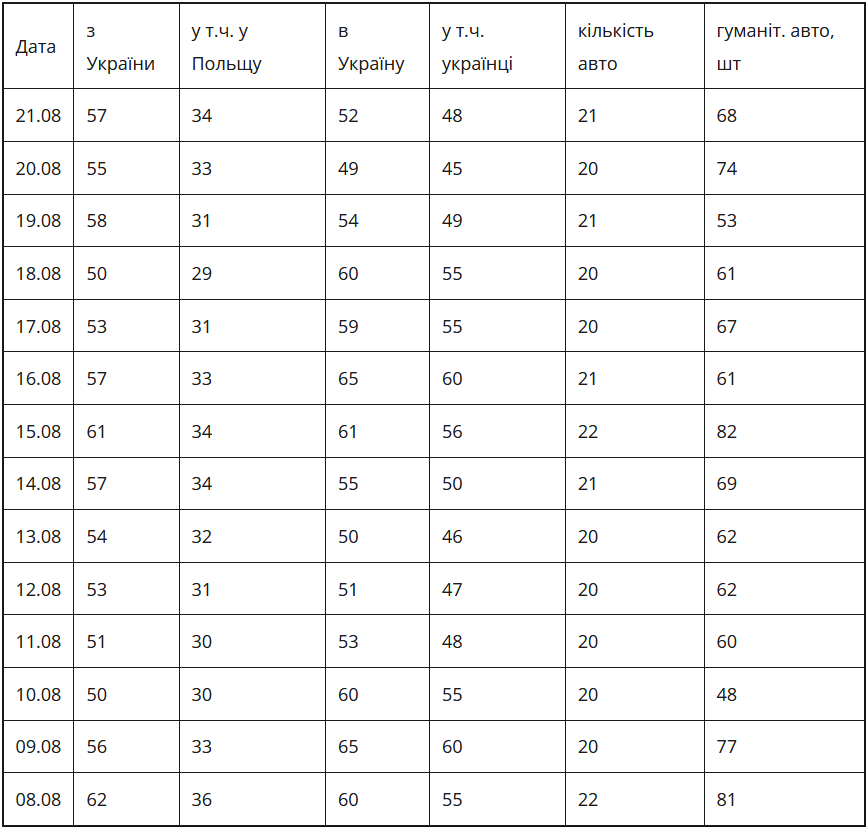
According to data from the State Border Guard Service, the number of outbound border crossings this week increased to 391,000 from 383,000 the week before, while inbound crossings rose to 400,000 from 394,000.
The number of vehicles passing through checkpoints also increased slightly—to 145,000 from 143,000 last week—as did the number of vehicles carrying humanitarian cargo—to 466 from 459—but these figures are not record-breaking.
The heaviest outbound traffic was recorded on Saturday (61,000 per day), and the heaviest inbound traffic on Sunday (65,000), while the lightest outbound traffic was on Tuesday (50,000), and the lightest inbound traffic on Thursday (45,000).
According to the State Border Guard Service, as of 9:00 p.m. on Saturday, the largest number of passenger cars were waiting to cross the border with Poland at the “Krakovets” border crossing point (BCP)—100, “Ustyluh”—60, and “Shehyni”—50. Shorter lines were observed at the “Hrushev” checkpoint (40 vehicles), the “Nyzhankovychi” checkpoint (20), and the “Rava-Ruska” checkpoint (15).
In addition, 15 buses had accumulated at the “Krakovets” checkpoint, 5 at the “Smelnitsa” checkpoint, and 90 pedestrians were also waiting in line at the “Shehyni” checkpoint, which is very rare.
At the border with Slovakia, there was a line of 25 vehicles at the “Maly Berezny” border crossing point and 10 at the “Uzhhorod” border crossing point.
At the border with Hungary, 30 passenger cars were waiting to cross at the “Luzhanka” checkpoint, 25 at the “Tisa” checkpoint, and another 20 at the “Vylok” checkpoint.
At the border with Romania, 20 vehicles had accumulated at the “Dyakivtsi” checkpoint and another 10 at the “Porubne” checkpoint.
Last year, passenger traffic across the border this week had already decreased by 1.3% compared to the peak figure—to 768,000—with outbound traffic exceeding inbound traffic by 2,000.
It remained at this level during the last week of August but then dropped sharply in the first half of September with the start of the new school year.
As reported, starting May 10, 2022, the outflow of refugees from Ukraine—which began with the start of the war—turned into an inflow that lasted until September 23, 2022, totaling 409,000 people. However, starting in late September—possibly influenced by news of mobilization in Russia and “pseudo-referendums” in the occupied territories, followed by massive shelling of energy infrastructure—the number of people leaving exceeded the number of those entering. In total, from the end of September 2022 until the first anniversary of the full-scale war, this figure reached 223,000 people.
In the second year of the full-scale war, the number of border crossings for departure from Ukraine, according to the State Border Guard Service, exceeded the number of crossings for entry by 25,000; in the third year—by 187,000; in the fourth year—by 221,000; and by 77,000 since the start of the fifth year—64,000 of which occurred since the beginning of summer.
In its July inflation report, the National Bank maintained its estimate of last year’s migration from Ukraine at 0.3 million people due to the deterioration of the security situation at the end of the year and the easing of exit rules for young people, but noted that in 2024 this figure will be less than 0.5 million. The NBU continues to forecast a net outflow of 0.2 million in 2026,
while net returns, according to its forecast, will begin in 2027 and amount to about 0.1 million people, increasing to 0.5 million people in 2028.
According to UNHCR data, the number of Ukrainian refugees in Europe as of June 30, 2026, stood at 5.159 million, and globally at 5.687 million, compared to 5.213 million and 5.687 million, respectively, as of April 30.
In Ukraine itself, according to the latest UN data for July 2026, there are 3.80 million internally displaced persons (IDPs), compared to 3.70 million in January of this year and 3.34 million in July 2025.
Crossings at Ukraine’s western border, in thousands:
BORDER, MIGRATION, PASSENGER TRAFFIC, State Border Guard Service of Ukraine, UKRAINE
Passenger traffic across Ukraine’s western border increased by another 1.3% during the week of July 18–24—to 770,000—following a 3.5% increase the previous week; with the number of people entering the country exceeding the number leaving for the fourth consecutive week, according to daily statistics from the State Border Guard Service monitored by the Interfax-Ukraine news agency.
According to this data, while the number of outbound border crossings rose to 376,000 from 373,000 the previous week, the number of inbound crossings rose to 394,000 from 387,000.
The number of vehicles passing through border checkpoints decreased slightly this week—to 144,000 from 145,000 last week—as did the number of vehicles carrying humanitarian cargo—to 443 from 459.
The heaviest outbound traffic is recorded on Friday and Saturday (56,000–59,000 per day), and the heaviest inbound traffic on Saturday and Monday (60,000–67,000), while the lowest outbound traffic is on Monday–Tuesday (50,000 each day), and the lowest inbound traffic is on Tuesday–Thursday (45,000–49,000).
According to the State Border Guard Service, as of 12:00 p.m. on Sunday, the largest number of passenger cars—30—were waiting to cross the border with Poland at the “Ustyluh” border crossing point (BCP). There were small lines at the “Ugryniv” and “Shehyni” checkpoints—15 and 10 vehicles, respectively—while 5 buses had gathered at the “Krakovets” checkpoint.
At the border with Hungary, 10–15 vehicles were waiting to cross at the “Luzhanka,” “Vylok,” and “Tisa” checkpoints.
At the border with Slovakia, there was a line of 15 vehicles at the “Uzhhorod” checkpoint and 10 at the “Malyi Berezny” checkpoint. At the border with Romania, 10 vehicles had gathered at the “Porubne” checkpoint, while there were no lines at the border with Moldova.
Last year, passenger traffic across the border during this week was slightly lower—753,000—though the number of people entering the country was higher—384,000 compared to 369,000. The number of vehicles last year was also lower—138,000.
Last year, passenger traffic increased slightly in the following weeks and peaked at 778,000 people per week in the first half of August, after which it gradually decreased in the second half of the month and then dropped sharply in the first half of September—with the start of the new school year.
As previously reported, starting May 10, 2022, the outflow of refugees from Ukraine—which had begun with the start of the war—turned into an inflow that lasted until September 23, 2022, totaling 409,000 people. However, starting in late September—possibly influenced by news of mobilization in Russia and “pseudo-referendums” in the occupied territories, followed by massive shelling of energy infrastructure—the number of people leaving exceeded the number of those entering. In total, from late September 2022 through the first anniversary of the full-scale war, this figure reached 223,000 people.
In the second year of the full-scale war, the number of border crossings out of Ukraine, according to the State Border Guard Service, exceeded the number of crossings into the country by 25,000; in the third year, by 187,000; in the fourth year, by 221,000; and since the start of the fifth year—by 139,000, of which 126,000 have occurred since the beginning of summer.
In its April inflation report, the National Bank maintained its estimate of last year’s migration from Ukraine at 0.2 million due to the deterioration of the security situation at the end of the year and the easing of exit rules for young people, but noted that in 2024 this figure will be less than 0.5 million. The NBU continues to forecast a net outflow of 0.2 million in 2026, while net returns, according to its forecast, will begin in 2027 and amount to about 0.1 million people, increasing to 0.5 million people in 2028.
According to UNHCR data, the number of Ukrainian refugees in Europe as of June 30, 2026, stood at 5.159 million, and globally at 5.687 million, compared to 5.213 million and 5.687 million, respectively, as of April 30.
In Ukraine itself, according to the latest UN data as of July 2026, there are 3.80 million internally displaced persons (IDPs), compared to 3.70 million as of January of this year and 3.34 million as of July 2025.
Passenger traffic across Ukraine’s western border during the week of July 4–10 increased by another 1.2%—to 734,000—following a 6.0% increase the previous week, with inbound and outbound flows nearly balancing out, according to daily statistics from the State Border Guard Service monitored by the Interfax-Ukraine news agency.
According to this data, while the number of outbound border crossings rose to 365,000 from 348,000 the previous week, the number of inbound crossings fell to 369,000 from 377,000.
The number of vehicles passing through border checkpoints also rose this week—to 139,000 from 138,000 the previous week—while the number of vehicles carrying humanitarian cargo fell to 371 from 434.
According to the State Border Guard Service, as of 9:00 a.m. on Sunday, the largest number of passenger cars—40—were waiting to cross the border with Poland at the “Krakovets” checkpoint. Smaller lines were observed at the “Ustyluh” checkpoint (35 vehicles), the “Hrushev” checkpoint (20 vehicles), the “Nyzhankovychi” checkpoint (15 vehicles), and the “Shehyni” checkpoint (10 vehicles).
At the border with Hungary, 30 vehicles were waiting to cross at the “Luzhanka” checkpoint, while 25 were waiting at the “Kosyno” checkpoint, 20 at the “Tisa” checkpoint, and 15 at the “Dzvinkovo” checkpoint.
At the border with Slovakia, there was a line of 15 vehicles at the “Uzhhorod” checkpoint and 5 at the “Malyi Berezny” checkpoint.
At the border with Romania, 50 vehicles were lined up at the “Porubne” checkpoint, while there were no lines at other checkpoints, nor at the border with Moldova.
Last year, passenger traffic across the border during this week was slightly lower—718,000—and the outbound and inbound flows were nearly equal—360,000 and 358,000, respectively. The number of vehicles last year was also lower—133,000. Last year, passenger traffic remained at this level or slightly higher until early September.
As reported, starting May 10, 2022, the outflow of refugees from Ukraine—which began with the start of the war—turned into an inflow that lasted until September 23, 2022, totaling 409,000 people. However, starting in late September—possibly influenced by news of mobilization in Russia and “pseudo-referendums” in the occupied territories, followed by massive shelling of energy infrastructure—the number of people leaving exceeded the number of those entering. In total, from the end of September 2022 until the first anniversary of the full-scale war, this figure reached 223,000 people.
In the second year of the full-scale war, the number of border crossings out of Ukraine, according to the State Border Guard Service, exceeded the number of crossings into the country by 25,000; in the third year, by 187,000; in the fourth year, by 221,000; and by 157,000 since the start of the fifth year—144,000 of which occurred since the beginning of summer.
In its April inflation report, the National Bank maintained its estimate of last year’s migration from Ukraine at 0.2 million due to the deterioration of the security situation at the end of the year and the easing of exit rules for young people, but noted that in 2024 this figure will be less than 0.5 million. The NBU continues to forecast a net outflow of 0.2 million in 2026, while net returns, according to its forecast, will begin in 2027 and amount to about 0.1 million people, increasing to 0.5 million people in 2028.
According to UNHCR data, the number of Ukrainian refugees in Europe as of April 30, 2026, stood at 5.213 million, and globally at 5.762 million, compared to 5.375 million and 5.924 million, respectively, as of February 19.
In Ukraine itself, according to the latest UN data for January 2026, there are 3.70 million internally displaced persons (IDPs), compared to 3.34 million in July and 3.76 million in April 2025.
Data: State Border Guard Service



