

Passenger traffic across the Ukrainian border in the first week after New Year’s, from January 3 to 9, jumped by about 27% to 598,000, according to data from the State Border Service.
According to them, the number of border crossings for departure increased to 258,000 (for comparison, data for January 7 is not included due to the lack of statistics from the State Border Service for December 30) from 223,000 a week earlier, while the increase in entries was even more significant – to 271,000 from 184,000.
The number of vehicles that passed through checkpoints this week also increased to 95,000 from 77,000 a week earlier, and the flow of vehicles with humanitarian cargo – to 342 from 268.
According to the State Border Service, as of 6:00 p.m. on Saturday, most of the cars and buses waiting to leave Ukraine at the Krakivets checkpoint were 45 and 8, respectively. The queue at the Ustyluh checkpoint consisted of 25 cars, at the Uhryniv checkpoint – 15 cars, and at the Shehyni checkpoint – 12 buses.
Twenty-five cars and seven buses were waiting to cross the border with Slovakia at the Uzhhorod checkpoint, and five cars were waiting at the Maly Berezny checkpoint.
At the border with Hungary, there was only a small queue of five cars at the Tisa checkpoint, while unusually long queues were recorded at the Porubne and Dyakove checkpoints on the border with Romania – 50 and 35 cars, respectively, as well as at the Mamalyga checkpoint on the border with Moldova – 35 cars.
The total number of border crossings this week is equal to last year’s figures. At that time, 302,000 people left Ukraine and 292,000 entered, while this week the figures were 295,000 and 303,000, respectively, although the flow of cars was higher last year – 117,000 versus 109,000, which is probably due to weather conditions.
Last year, a 16.9% increase in passenger traffic was recorded during this week, but the following week saw a 13.3% decrease.
As reported, from May 10, 2022, the outflow of refugees from Ukraine, which began with the start of the war, was replaced by an influx that lasted until September 23, 2022, and amounted to 409,000 people. However, since the end of September, possibly influenced by news of mobilization in Russia and “pseudo-referendums” in the occupied territories, followed by massive shelling of energy infrastructure, the number of those leaving exceeded the number of those entering. In total, from the end of September 2022 to the first anniversary of the full-scale war, it reached 223,000 people.
In the second year of the full-scale war, the number of border crossings to leave Ukraine, according to the State Border Service, exceeded the number of crossings to enter by 25,000, in the third year by 187,000, and since the beginning of the fourth year by 195,000.
As noted in early March 2023 by Serhiy Sobolev, who was then Deputy Minister of Economy, the return of every 100,000 Ukrainians home results in a 0.5% increase in GDP.
In its July inflation report, the National Bank worsened its migration forecast: while in April it expected a net inflow of 0.2 million people to Ukraine in 2026, it now forecasts a net outflow of 0.2 million, which corresponds to the estimate of the net outflow this year. “Net return will only begin in 2027 (about 0.1 million people, compared to 0.5 million in the previous forecast),” the NBU added and confirmed this forecast at the end of October. In absolute terms, the National Bank estimates the number of migrants currently remaining abroad at about 5.8 million.
According to updated UNHCR data, the number of Ukrainian refugees in Europe as of December 11, 2025, was estimated at 5.311 million (as of November 14 – 5.331 million), and globally at 5.860 million (5.850 million).
In Ukraine itself, according to the latest UN data for July this year, there are 3.340 million internally displaced persons (IDPs), compared to 3.757 million in April.
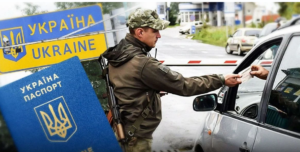
Passenger traffic across the Ukrainian border in the first week after New Year’s, from January 3 to 9, jumped by about 27% to 598,000, according to data from the State Border Service. According to the data, the number of border crossings for departure increased to 258,000 (for comparison, data for January 7 was not taken into account due to the lack of statistics from the State Border Service for December 30) from 223,000 a week earlier, while the increase for entry was even more significant – to 271,000 from 184,000.
The number of vehicles passing through checkpoints this week also increased to 95,000 from 77,000 a week earlier, and the flow of vehicles carrying humanitarian cargo increased to 342 from 268.
According to the State Border Service, as of 6:00 p.m. on Saturday, the largest number of cars and buses waiting to leave Ukraine at the Krakovets checkpoint were 45 and 8, respectively. The queue at the Ustyluh checkpoint consisted of 25 vehicles, at the Ugrinov checkpoint – 15 vehicles, and at the Shehyni checkpoint – 12 buses.
Twenty-five cars and seven buses were waiting to cross the border with Slovakia at the Uzhgorod checkpoint, and five cars were waiting at the Maly Berezny checkpoint.
At the border with Hungary, there was only a small queue of five cars at the Tisa checkpoint, while unusually long queues were recorded at the Porubne and Dyakovo checkpoints on the border with Romania – 50 and 35 cars, respectively, as well as at the Mamalyga checkpoint on the border with Moldova – 35 cars.
The total number of border crossings this week is the same as last year. At that time, 302,000 people left Ukraine and 292,000 entered the country over the same seven days, while this week the figures were 295,000 and 303,000, respectively, although the flow of cars was higher last year – 117,000 versus 109,000, which is probably due to weather conditions.
Last year, a 16.9% increase in passenger traffic was recorded during this week, but the following week saw a 13.3% decrease.
As reported, from May 10, 2022, the outflow of refugees from Ukraine, which began with the start of the war, was replaced by an influx that continued until September 23, 2022, and amounted to 409,000 people. However, since the end of September, possibly influenced by news of mobilization in Russia and “pseudo-referendums” in the occupied territories, followed by massive shelling of energy infrastructure, the number of people leaving exceeded the number of people entering. In total, from the end of September 2022 to the first anniversary of the full-scale war, it reached 223,000 people.
During the second year of full-scale war, the number of border crossings to leave Ukraine exceeded the number of crossings to enter by 25,000, during the third year by 187,000, and since the beginning of the fourth year by 195,000, according to the State Border Service.
As Sergei Sobolev, then Deputy Minister of Economy, noted in early March 2023, the return of every 100,000 Ukrainians home results in a 0.5% increase in GDP.
In its July inflation report, the National Bank worsened its migration forecast: while in April it expected a net inflow of 0.2 million people to Ukraine in 2026, it now forecasts a net outflow of 0.2 million, which corresponds to the estimate of the net outflow this year. “Net return will only begin in 2027 (about 0.1 million people, compared to 0.5 million in the previous forecast),” the NBU added, confirming this forecast at the end of October. In absolute terms, the National Bank estimates the number of migrants currently remaining abroad at about 5.8 million.
According to updated UNHCR data, the number of Ukrainian refugees in Europe as of December 11, 2025, was estimated at 5.311 million (5.331 million as of November 14), and 5.860 million (5.850 million) worldwide.
In Ukraine itself, according to the latest UN data for July this year, there were 3.340 million internally displaced persons (IDPs), compared to 3.757 million in April.
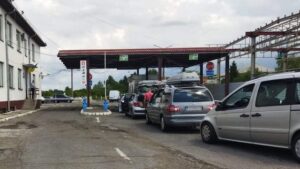
Passenger traffic across the Ukrainian border during the New Year week, from December 27 to January 2, fell by approximately 28.5%, according to data from the State Border Service, which does not include information for December 30.
According to the data, the number of border crossings for departure fell to 232,000 (for comparison, data for December 30 and 23 are not included) from 278,000 a week earlier, while the drop in arrivals was even more significant – to 184,000 from 304,000.
The number of vehicles that passed through checkpoints this week also fell to 77,000 from 109,000 a week earlier, and the flow of vehicles carrying humanitarian cargo fell to 268 from 373.
At the same time, this Saturday, the number of entries increased to 50,000, and exits to 53,000, so queues returned to the border.
According to the State Border Service, as of 3:00 p.m. on Sunday, most of the cars waiting to leave Ukraine at the Krakivets checkpoint were passenger cars – 85. The queue at the Hrushev checkpoint consisted of 50 cars, at the Ustyluh checkpoint – 45, at the Uhryniv checkpoint – 30 cars, and at the Shehyni checkpoint – 20. In addition, 12 buses had accumulated at the Shehyni checkpoint and nine at the Krakivets checkpoint.
Thirty cars were waiting to cross the border with Slovakia at the Uzhhorod and Maly Berezny checkpoints, and three buses were waiting in line at the Uzhhorod checkpoint.
The queues at the border with Hungary were shorter: 15 cars had accumulated at the Tisa, Luzhanka, and Dzvinove checkpoints.
According to the State Border Service, there were no queues at the border with Romania, while at the border with Moldova, there was only a queue at the Mamalyga checkpoint, with 10 cars.
The total number of border crossings this week is roughly the same as last year. During a similar week last year (data for December 30 is not included for comparison), 231,000 people left Ukraine and 196,000 entered, while the flow of cars amounted to 79,000.
Last year, a 22.7% drop in passenger traffic was recorded during this week, and the following week it increased by 16.9%.
As reported, from May 10, 2022, the outflow of refugees from Ukraine, which began with the start of the war, was replaced by an influx that lasted until September 23, 2022, and amounted to 409,000 people. However, since the end of September, possibly influenced by news of mobilization in Russia and “pseudo-referendums” in the occupied territories, followed by massive shelling of energy infrastructure, the number of those leaving exceeded the number of those entering. In total, from the end of September 2022 to the first anniversary of the full-scale war, it reached 223,000 people.
During the second year of full-scale war, the number of border crossings to leave Ukraine, according to the State Border Service, exceeded the number of crossings to enter by 25,000, during the third year by 187,000, and since the beginning of the fourth year by 224,000.
As Serhiy Sobolev, then Deputy Minister of Economy, noted in early March 2023, the return of every 100,000 Ukrainians home results in a 0.5% increase in GDP.
In its July inflation report, the National Bank worsened its migration forecast: while in April it expected a net inflow of 0.2 million people to Ukraine in 2026, it now forecasts a net outflow of 0.2 million, which corresponds to the estimate of the net outflow this year. “Net return will only begin in 2027 (about 0.1 million people, compared to 0.5 million in the previous forecast),” the NBU added and confirmed this forecast at the end of October. In absolute terms, the National Bank estimates the number of migrants currently remaining abroad at about 5.8 million.
According to updated UNHCR data, the number of Ukrainian refugees in Europe as of December 11, 2025, was estimated at 5.311 million (5.331 million as of November 14), and 5.860 million (5.850 million) worldwide.
In Ukraine itself, according to the latest UN data for September this year, there are 3.694 million internally displaced persons (IDPs), compared to 3.340 million in July.

Passenger traffic across the Ukrainian border in the penultimate week of Christmas 2025, from December 20 to 26, jumped by another 21.9% to 685,000, causing queues at the border with Poland, Hungary, and Slovakia, according to data from the State Border Service.
According to them, the number of border crossings for departure increased to 329,000 from 279,000 a week earlier, while the increase for entry was even more significant – to 356,000 from 283,000.
At the same time, the number of vehicles that passed through checkpoints this week also decreased to 129,000 from 140,000 a week earlier, and the flow of vehicles with humanitarian cargo decreased to 440 from 516.
While before Christmas the flow of vehicles entering the country significantly exceeded the flow of vehicles leaving, the picture changed with the start of school holidays and the approach of the New Year. This Saturday, the number of crossings out of the country was 53,000 compared to 36,000 into the country, but overall, the flow decreased significantly compared to the previous Saturday, when 62-63,000 people crossed the border in each direction.
According to the State Border Service, as of 9:00 a.m. on Sunday, there were no queues at the border with Romania and Moldova, while at the borders with three other countries they remained, but were not as long as before Christmas and last weekend.
At the border with Poland, most passenger cars were waiting to cross at the Ustyluh checkpoint – 70. The queue at the Uhryniv and Krakivets checkpoints consisted of 30 cars each, and at the Rava-Ruska and Hrushev checkpoints – 20 cars each. At the same time, 25 buses accumulated at the Krakivets checkpoint and 13 at the Shehyni checkpoint.
Forty cars were waiting to cross the border with Slovakia at the Uzhhorod checkpoint and 25 at the Maly Berezny checkpoint.
At the border with Hungary, the longest queue was at the Tisa checkpoint – 15 cars, while 10 cars accumulated at the Luzhanka and Vilok checkpoints.
The total number of border crossings this week is slightly higher than last year. At that time, 325,000 people left Ukraine in 7 days, and 332,000 entered, and the flow of cars was also lower – 117,000.
Last year, a 12.5% increase in passenger traffic was recorded during this week, and during the New Year week, it fell by 22.7%.
As reported, from May 10, 2022, the outflow of refugees from Ukraine, which began with the start of the war, was replaced by an influx that lasted until September 23, 2022, and amounted to 409,000 people. However, since the end of September, possibly influenced by news of mobilization in Russia and “pseudo-referendums” in the occupied territories, followed by massive shelling of energy infrastructure, the number of those leaving exceeded the number of those entering. In total, from the end of September 2022 to the first anniversary of the full-scale war, it reached 223,000 people.
In the second year of the full-scale war, the number of border crossings to leave Ukraine, according to the State Border Service, exceeded the number of crossings to enter by 25,000, in the third year by 187,000, and since the beginning of the fourth year by 176,000.
As Serhiy Sobolev, then Deputy Minister of Economy, noted in early March 2023, the return of every 100,000 Ukrainians home results in a 0.5% increase in GDP.
In its July inflation report, the National Bank worsened its migration forecast: while in April it expected a net inflow of 0.2 million people to Ukraine in 2026, it now forecasts a net outflow of 0.2 million, which corresponds to the estimate of the net outflow this year. “Net return will only begin in 2027 (about 0.1 million people, compared to 0.5 million in the previous forecast),” the NBU added and confirmed this forecast at the end of October. In absolute terms, the National Bank estimates the number of migrants currently remaining abroad at about 5.8 million.
According to updated UNHCR data, the number of Ukrainian refugees in Europe as of December 11, 2025, was estimated at 5.311 million (5.331 million as of November 14), and 5.860 million (5.850 million) worldwide.
In Ukraine itself, according to the latest UN data for September this year, there are 3.694 million internally displaced persons (IDPs), compared to 3.340 million in July.

Based on the results of 2025, JSC Ukrzaliznytsia expects international passenger traffic to grow by 11% compared to 2024 – to 3 million passengers from 2.7 million, said Oleg Golovashchenko, director of the Passenger Company branch Oleg Golovashchenko, director of the Passenger Company branch of JSC Ukrzaliznytsia, at the VII International Conference “Production, Operation, and Repair of Rolling Stock” on Thursday.
According to his data, 1.8 million passengers were transported in January-September 2025. In pre-war 2021, the figure for international passenger traffic was 147,000, and in 2023, it was 2.3 million passengers.
As previously reported, Ukrzaliznytsia launched a daily train on the Kyiv-Bucharest route on October 10. In September 2025, the first section of the European gauge railway between Chop and Uzhhorod was opened in Zakarpattia.
At that time, the chairman of the board of JSC Ukrzaliznytsia, Oleksandr Pertsovskyi, noted that this project is an important stage in the development of the European railway network in Ukraine. According to him, in 2026, it is planned to electrify this section and start the construction of a European gauge railway in the direction of Lviv, which should be completed within two to three years.
In addition, during the Kyiv International Economic Forum (KIEF) in mid-October, Oleg Yakovenko, director of the strategy and transformation department of Ukrzaliznytsia, announced that the company, with European and state co-financing, plans to implement the Mostytska-Sknyliv project in the next two years and further develop the Lviv-Uzhhorod-Chop and Lviv-Chernivtsi-Vadul-Siret (Romania) corridors, which will allow Ukraine to begin restoring and realizing its unique geographical status.
Overall, the monopoly railway operator JSC Ukrzaliznytsia increased passenger traffic by 1.2% in the first half of 2025, to 13.52 million, which is 23% more than in January-June 2024.
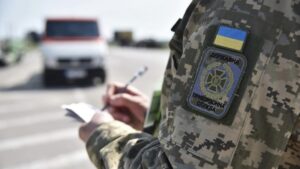
Passenger traffic across the Ukrainian border in the sixth week of autumn, from October 4 to 10, decreased by 8.2% to 515,000, according to data from the State Border Guard Service.
According to it, the number of arrivals to Ukraine during the week decreased from 278,000 to 253,000, while the number of departures fell from 283,000 to 262,000.
The number of vehicles passing through border checkpoints also decreased to 129,000 from 137,000, while the flow of vehicles carrying humanitarian cargo increased from 481 to 501.
As of 9:00 a.m. this Saturday, according to the State Border Guard Service, the largest queue on the border with Poland consisted of 45 cars at the Shehyni checkpoint, with another 35 cars waiting at Krakivets, 25 at Ustyluh, and 10 at Hrushiv.
On the border with Hungary, small queues of 10 cars were observed at the Tysa, Vylok, and Luzhanka crossings, with another 5 cars waiting at Kosyno, while on the border with Slovakia there was a queue only at the Uzhhorod checkpoint — 11 cars.
Finally, on the border with Romania, 15 cars accumulated at the Porubne checkpoint, while there were no queues at all other points, nor on the border with Moldova.
The total number of border crossings this week was, for the first time in a long while, lower than last year’s (by 1.3%), because last year during the same week pilgrims were leaving after celebrating Rosh Hashanah. Therefore, the number of those leaving the country was significantly higher than those entering — 272,000 versus 250,000 respectively. However, vehicle flow was lower then — 124,000.
Last year, passenger traffic remained at about this level until a slight increase during the autumn school holidays, after which it fell by about 20% before the Christmas and New Year holidays.
As reported, since May 10, 2022, the outflow of refugees from Ukraine that began with the start of the war was replaced by an inflow that lasted until September 23, 2022, totaling 409,000 people. However, since late September, possibly under the influence of news about mobilization in Russia and “pseudo-referendums” in occupied territories, and later massive shelling of energy infrastructure, the number of people leaving began to exceed those entering. From late September 2022 to the first anniversary of the full-scale war, this surplus reached 223,000 people.
During the second year of the full-scale war, the number of border crossings leaving Ukraine exceeded entries by 25,000, in the third year by 187,000, and since the beginning of the fourth year by 189,000.
As Serhiy Soboliev, then Deputy Minister of Economy, noted in early March 2023, the return of every 100,000 Ukrainians home adds 0.5% to GDP growth.
In its July inflation report, the National Bank worsened its migration forecast: while in April it expected a net inflow to Ukraine of 0.2 million people in 2026, it now forecasts a net outflow of 0.2 million, matching this year’s estimate. “Net return will begin only in 2027 (about 0.1 million people, compared to 0.5 million in the previous forecast),” the NBU added. In absolute terms, the NBU estimates the number of migrants currently abroad at about 5.8 million.
According to updated UNHCR data, the number of Ukrainian refugees in Europe as of October 3, 2025, was estimated at 5.192 million (5.138 million as of September 2), and worldwide at 5.753 million (5.696 million).
Within Ukraine itself, according to the latest UN data from July this year, there were 3.340 million internally displaced persons (IDPs), compared to 3.757 million in April.



