
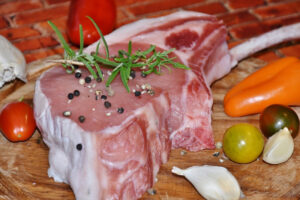
According to the Ukrainian Agribusiness Club (UAC), citing customs statistics, Ukraine imported 30,800 tons of pork in 2025, a 15-fold increase from the previous year.
“The sharp increase in imports was a natural market reaction to the shortage of domestic raw materials. The decline in livestock numbers and the escalation of hostilities in the east of the country forced many enterprises to close, leading to higher prices for Ukrainian pork. At the same time, the decline in meat prices on foreign markets during the summer made imported supplies more economically attractive for stabilizing domestic demand,” experts noted.
According to analysts, total pork production in the country in 2025 amounted to 606,000 tons, which is 10% less than in 2024 and 11% below the average for the past five years. Meanwhile, total domestic consumption needs are estimated at 648,000 tons.
The pig herd in Ukraine had shrunk to 4.5 million head by the end of 2025, a 12% decrease compared to 2024. The majority of the commercial herd (64%) is concentrated in specialized enterprises—2.9 million head—while 1.6 million head are kept on private farms.
“The industry continues to operate under extremely difficult conditions. In addition to military risks, producers are under pressure from rising production costs. Under these circumstances, the share of more price-competitive imports is growing, although current supply volumes are still 25% lower than in 2023,” the UACB emphasized.
Export destinations remain limited: in 2025, Ukraine supplied only 2,200 tons of meat to foreign markets (-26%). The main consumers are countries in the Middle East (48.1%) and Asia (23.6%). The combined share of shipments to African countries and Southeast Asian nations is approximately 17%.
As reported, agricultural sector experts predict that restoring the pig farming industry to pre-war levels will require not only stabilization of the security situation but also the implementation of government support programs to rebuild the industrial herd in de-occupied regions.
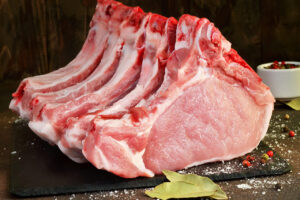
Ukraine and Singapore have intensified negotiations on opening the market to Ukrainian pork and finalizing the procedures for beginning its export, according to the State Service of Ukraine for Food Safety and Consumer Protection (SSFSCP).
According to the report, during a visit to Singapore, a delegation from the agency, led by its head Serhiy Tkachuk, discussed with the leadership of the Singapore Food Agency the accreditation of Ukrainian enterprises in accordance with previously submitted applications.
“Ukraine already has experience cooperating with Singapore. To date, five forms of veterinary certificates for export have been agreed upon: heat-treated and canned meat products, poultry meat, table eggs, egg products, and pet food,” Tkachuk emphasized.
The trip also included a meeting with representatives of the Meat Traders Association (Singapore). Singaporean companies expressed interest in sourcing Ukrainian pork to diversify imports and strengthen food security.
For their part, representatives of the Meat Industry Association and Ukrainian exporters presented their production capacities and quality standards. The host side familiarized the Ukrainian delegation with the technologies used to prepare meat for sale in Singapore’s retail chains.
Following the meetings, agreements were reached on further cooperation to facilitate Ukrainian businesses’ entry into this market.

The weighted average price of slaughter pigs rose by 2.9% over the week and settled at UAH 73.25/kg, according to the Ukrainian Pig Farmers Association (ASU).
The industry association noted that most purchase prices this week fluctuated between 73 and 74 UAH/kg. At the same time, the regional discrepancy in average indicators is currently minimal and does not exceed 1 UAH/kg.
According to market operators’ forecasts, a further increase in price to 75 UAH/kg is expected at the next auction.
“Signs of further positive dynamics include a further increase in chicken prices, as well as a gradual recovery in pork prices in EU countries. In addition, Easter coming earlier this year and improved weather conditions should contribute to a revival of market activity in the near future,” analysts explained.
At the same time, according to ASU, meat processing companies report sluggish trade and high competition for buyers, forcing some producers to lower prices to stimulate sales.

Prices for live pigs of slaughtering condition at the end of January 2026 rose by 9.1% to UAH 67.3/kg, according to the Ukrainian Pig Breeders Association (ASU) based on the results of weekly monitoring of purchase prices.
The industry association noted that last Friday’s trading ended with an increase in quotations for live pigs by 2-7 UAH/kg. Most of the commercial batches this week were purchased at 66-68+ UAH/kg, but in all regions of the country, price offers were at the level of 67 UAH/kg. Therefore, the weighted average market price for the current week was 67.3 UAH/kg, which is 9.1% higher than the previous figure.
“Among the reasons for the recovery in prices is a noticeable decrease in pressure from transitional stocks of animals with higher slaughter weight. Excessive batches of live animals that could not be sold during the holidays have already left the market, so the average slaughter weight of animals and, accordingly, the total supply are close to standard,” analysts explained.
They specified that only some of the suppliers are currently sharing their forecasts for future price dynamics, but their expectations are unanimous: they are set on a further recovery in quotations. Operators are not currently seeing a revival in market activity, but in their opinion, this is in line with seasonal sales trends. At the same time, most players continue to work with relatively stable volumes, so trade is mostly proceeding as planned, according to the ASU.
Purchase prices for live pigs next week (December 8-14, 2025) will decrease and amount to 70-71 hryvnia/kg (-5.4%) compared to 74-75 hryvnia/kg this week, according to the Meat Industry Association.
Experts noted that the decline in purchase prices for pork is occurring against the backdrop of growing epizootic pressure in both Ukraine and Europe.
The first outbreak of ASF in Spain in 30 years and the blocking of some of its export certificates have shown that ASF is no longer a local problem but has become a continental threat capable of influencing market expectations and regulatory decisions throughout Europe, the industry association stressed.
“For Ukraine, the main driver of price pressure remains the internal situation — an increase in the number of outbreaks and forced sales of livestock, which creates excess supply,” the association explained.
It cited data on European countries and noted that on the German VEZG exchange, experts forecast prices for half-carcasses of standard pigs at EUR1.60 per kg (78.75 UAH/kg excluding VAT) for the coming week, and EUR 0.80 per kg (UAH 39.38/kg excluding VAT) for half-carcasses of sows. On the Polish exchange CennikRolnicze, the average price for live pigs is PLN 4.61/kg (UAH 53.48/kg). The price range for live pigs is PLN 4.00-5.50/kg (UAH 46.4-63.8/kg).
“Pork from Ukraine could take its place in the global market and stimulate the development of the meat industry and pig farming in Ukraine,” the industry association concluded.
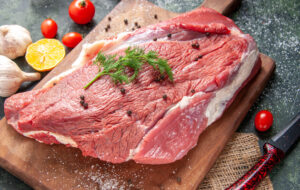
In January-October 2025, Ukraine imported 24,295 tons of pork worth $61.554 million, which is 11.5 times (2,120 tons) more than in the same period of 2024, according to statistics from the State Customs Service.
According to the published statistics, the top three suppliers of pork to Ukraine during the reporting period were Denmark, which accounted for 58.62% of supplies worth $36.08 million, Poland (18.29%, $11.26 million), and the Netherlands (8.54%, $5.26 million).
At the same time, pork exports for the first 10 months of this year amounted to 2,152 thousand tons worth $6.42 million, which is 15.7% (2,554 thousand tons) less than in the same period last year.
In addition, Ukraine increased imports of lard, pork fat, and poultry fat by 28.9% in January-October, to 15,672 tons worth $18.085 million.
The top three suppliers of lard to Ukraine in 2025 were Poland (66.86%, $12.091 million), Germany (12.92%, $2.337 million), and Spain (9.79%, $1.886 million).



