

Foreign workers, entrepreneurs, and digital nomads legally residing in Portugal can receive government financial support of more than EUR5,000 when relocating to inland areas of the country under the Emprego Interior MAIS program, according to data from the Portuguese Institute for Employment and Vocational Training (IEFP).
The program is available to workers who relocate to specific inland municipalities in Portugal to take a job, move their existing professional activities there, start their own business, or continue working remotely.
The base payment in 2026 is EUR 3,759.91 for workers with permanent employment contracts, as well as for those who create their own job or start a company. For fixed-term employment contracts lasting at least 12 months, the base payment is EUR 2,685.65.
In addition, the government pays 20% of the base amount for each family member moving with the recipient, as well as up to EUR805.70 for the transportation of personal belongings.
For example, an employee with a permanent contract who is relocating with one family member can receive EUR 5,317.59: EUR 3,759.91 in basic assistance, EUR 751.98 in family allowance, and EUR 805.70 for moving expenses. Therefore, the actual amount of assistance may exceed 5,000 EUR, and for larger families, it may be even higher.
EU citizens, citizens of the European Economic Area, and Swiss citizens, as well as third-country nationals legally residing in Portugal, are eligible for this assistance. The IEFP specifically notes that the program also applies to foreigners with temporary protection status. Thus, provided they meet the other conditions, Ukrainians residing in Portugal with the appropriate legal status may also take advantage of the program.
To receive support, you must relocate your permanent residence to an inland region of Portugal for at least 12 months. If you are starting a new job, the move must take place within 180 days before or after you begin working or start your own business. The salary under an employment contract must not be lower than the national minimum wage.
If the contract is for a fixed term, its duration must be at least 12 months. The program also allows applicants to open a small company with up to 10 employees or to create their own job. If the applicant establishes a commercial company, they must own more than 50% of its capital and voting rights.
A separate category is provided for foreign digital nomads. Foreign nationals who legally reside in Portugal, work remotely for an employer or client outside the country, and relocate to an inland region are eligible for assistance. For them, professional activities must have begun after January 1, 2022, and their income must be at least equal to Portugal’s minimum wage.
Payment is made in two stages. The first 60% of the approved amount is transferred after the application is accepted and the required documents are submitted; the remaining 40% is paid in the 13th month after starting work, establishing a business, or relocating the workplace.
Applications are submitted through the government portal iefponline. As of August 2026, the application period is open and will continue until the program’s funding is exhausted. The application must be submitted no later than 180 days after the start of the employment contract, the establishment of a business, or the relocation of the workplace.
The Emprego Interior MAIS program is part of Portugal’s policy to attract workers and entrepreneurs to the country’s inland regions, which are facing population outflow and labor shortages. It does not automatically apply to any move to Portugal—the new place of residence and, depending on the situation, the place of work must be located within a municipality or parish included by the IEFP in the list of inland areas.

Portugal has dramatically accelerated the processing of backlogged immigration cases following several years of delays in the system for issuing and renewing residence permits. According to government data, the Agency for Integration, Migration, and Asylum (AIMA) and a special unit tasked with clearing backlogged cases have conducted 763,000 interviews and issued decisions on more than 525,000 cases, of which approximately 473,000 were approved.
This represents a massive clearance of the backlog that formed following the dissolution of the former Service for Foreigners and Borders (SEF), the creation of AIMA, and the abolition of the former “expression of interest” mechanism. This mechanism allowed foreigners already in Portugal to regularize their status if they had a work and tax history.
According to government data, AIMA notified 445,000 people under the now-abolished “expression of interest” scheme alone. A total of 246,000 decisions were made in this category, of which 229,000 were positive and 26,000 were negative, and 225,000 residence cards have already been issued.
Cases involving citizens of the Community of Portuguese-Speaking Countries (CPLP) were considered separately. Under this scheme, 215,000 people were notified, 207,000 interviews were conducted involving 161,000 migrants, and AIMA issued 153,000 decisions, of which 140,000 were positive. 136,000 residence cards have already been issued.
Another major category involves the renewal of expired residence permits. According to Minister for the Presidency António Leiteu Amaro, there were approximately 360,000 such cases; 193,000 people were notified of the need to regularize their status, 104,000 attended appointments, and 82,000 have already received new permits.
Immigration reform has become one of the most sensitive issues for Portugal. The authorities are attempting to simultaneously reduce the administrative backlog, strengthen controls, transition to a more digital system, and abandon the practice whereby the country effectively legalized a large number of people after their entry.
According to AIMA data, as of the end of 2024, there were 1.543 million foreign nationals in Portugal with valid documents or ongoing regularization procedures. This is nearly four times more than in 2017, when 421,800 foreigners were registered in the country.
Brazilian citizens remain the largest foreign community in Portugal, numbering 484,600 people, or 31.4% of all foreigners. The Indian community is the second largest, with 98,600 people. They are followed by citizens of Angola—92,300, Ukraine—79,200, Cape Verde—65,500, Nepal—58,100, Bangladesh—55,200, the United Kingdom—48,200, Guinea-Bissau—47,300, Pakistan—41,500, São Tomé and Príncipe—40,100, and Italy—40,000.
Ukrainians remain one of the largest European migrant groups in Portugal. According to AIMA data for 2024, 79,232 Ukrainian citizens resided in the country, including 31,271 men and 47,961 women. Some Ukrainians are in Portugal under temporary protection, introduced in the EU after the start of Russia’s full-scale war against Ukraine.
AIMA specifically noted that as of the end of 2024, there were 61,242 recipients of temporary protection in Portugal who are not considered holders of a standard residence permit but are included in the statistics on foreign residents.
Geographically, Portugal’s foreign population is concentrated primarily along the coast. The districts of Lisbon, Faro, Setúbal, and Porto account for 1.101 million foreign citizens, or 71.3% of the total. The Lisbon metropolitan area itself is home to many municipalities with the largest foreign communities: Lisbon, Sintra, Cascais, Amadora, Lores, Odivelas, Almada, and Seixal.
The growth in the number of foreigners reflects several processes at once: labor demand, the influx of migrants from CPLP countries, the increase in the number of people from India, Nepal, Bangladesh, and Pakistan, as well as the presence of Ukrainians who received protection after 2022. Authorities emphasize that more than 1.03 million foreign nationals pay contributions to Portugal’s social security system.

According to data from the Portuguese National Institute of Statistics (INE), foreign buyers purchased 41,086 houses and apartments in Portugal in 2025, a 6.6% increase from the previous year.
Brazilian citizens became the largest group of foreign buyers. In 2025, they purchased 9,808 properties, a 27.5% increase from 2024. Angolan citizens ranked second with 4,145 purchases, a 2.2% increase. The French took third place, purchasing 3,765 properties, a 6.2% decrease from the previous year.
According to INE data, foreign buyers with tax residency in Portugal completed 34,834 transactions, an increase of 11.4% compared to 2024. At the same time, purchases by non-residents declined: foreigners without tax residency in Portugal purchased 8,471 properties, which is 13.3% less than a year earlier. This marked the third consecutive year of declining activity among non-residents.
This gap indicates a shift in the structure of foreign demand. The Portuguese real estate market is increasingly relying not on traditional foreign investors, but on foreigners already residing in the country. These may include migrant workers, relocators, families with long-term residence permits, and members of diasporas, primarily Brazilian and Angolan.
Foreigners, as before, are purchasing more expensive properties than local residents. According to INE data, the average value of real estate purchased by buyers with tax residency in Portugal was €234,120. Buyers from EU countries paid an average of €335,640, while buyers from non-EU countries paid €470,277 per property. British and American buyers purchased particularly expensive properties: the average transaction price was €512,585 and €479,403, respectively.
Geographically, demand from non-residents remains concentrated in the most attractive regions. In 2025, the Algarve accounted for 29.7% of non-resident transactions, the Northern region for 20%, the Central region for 14.9%, and Greater Lisbon for 12.5%. In terms of transaction value, the Algarve’s dominance is even more pronounced: the region accounted for 42.4% of total non-resident investment in housing.
The INE also noted strong growth among buyers from Ukraine, Cape Verde, and Venezuela: the number of transactions by citizens of these countries increased by more than 25% in 2025. However, the exact number of properties purchased by Ukrainians is not disclosed in the brief INE publication or in reports by the Portuguese media.
For Ukrainians, Portugal remains an attractive destination due to its safety, access to the EU, labor market, diaspora ties, and the possibility of long-term residency. At the same time, following the removal of real estate as a basis for the Golden Visa, investment demand has become less tied to obtaining a residence permit and more dependent on actual relocation, income levels, and long-term residency plans.
Thus, Portugal’s housing market maintains high foreign demand, but its structure is changing. Brazilians have strengthened their leadership due to linguistic and migratory proximity; Angolans remain an important group of buyers; and the French, British, and Americans continue to play a major role in the higher-end segments. Ukrainians are not yet among the largest buyers but are demonstrating one of the most notable growth rates.
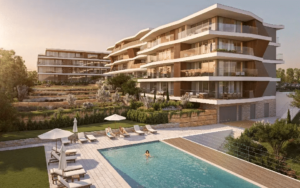
In 2025, foreign buyers purchased 41,086 homes and apartments in Portugal, a 6.6% increase from the previous year, according to Portugal’s National Institute of Statistics (INE).
Brazilian citizens constituted the largest group of foreign buyers. In 2025, they purchased 9,808 properties, a 27.5% increase from 2024. Angolan citizens ranked second with 4,145 purchases, marking a 2.2% increase. The French took third place, purchasing 3,765 properties, a 6.2% decrease from the previous year.
According to INE data, foreign buyers with tax residency in Portugal completed 34,834 transactions, an 11.4% increase from 2024. At the same time, purchases by non-residents declined: foreigners without tax residency in Portugal acquired 8,471 properties, 13.3% fewer than the previous year. This marked the third consecutive year of declining activity among non-residents.
This gap reflects a shift in the structure of foreign demand. The Portuguese real estate market is increasingly relying not on traditional foreign investors, but on foreigners already living in the country. These may include migrant workers, relocators, families with long-term residence permits, and members of diasporas, primarily Brazilian and Angolan.
Foreigners continue to purchase more expensive properties than local residents. According to INE data, the average value of real estate purchased by buyers with tax residency in Portugal was EUR234,120. Buyers from EU countries paid an average of EUR335,640 per property, while buyers from non-EU countries paid EUR470,277. British and American buyers purchased particularly expensive properties: the average transaction price was EUR512,585 and EUR479,403, respectively.
Geographically, demand from non-residents remains concentrated in the most attractive regions. In 2025, the Algarve accounted for 29.7% of non-resident transactions, the Northern region for 20%, the Central region for 14.9%, and Greater Lisbon for 12.5%. In terms of transaction value, the Algarve’s dominance is even more pronounced: the region accounted for 42.4% of total non-resident investment in housing.
The INE also noted strong growth among buyers from Ukraine, Cape Verde, and Venezuela: the number of transactions by citizens of these countries increased by more than 25% in 2025. However, the exact number of properties purchased by Ukrainians is not disclosed in the INE’s brief publication or in reports by the Portuguese media.
For Ukrainians, Portugal remains an attractive destination due to its safety, access to the EU, labor market, diaspora ties, and the possibility of long-term residency. At the same time, following the removal of real estate as a basis for the Golden Visa, investment demand has become less tied to obtaining a residence permit and more dependent on actual relocation, income levels, and long-term residency plans.

More than 500 foreign investors who have obtained Portuguese Golden Visas are preparing a class-action lawsuit against the government over a new citizenship law that extends the waiting period for applying for a Portuguese passport.
This concerns holders of ARI investment residence permits, known as “Golden Visas.” According to The Portugal News, investors believe the rule change violates their legitimate expectations, as many joined the program expecting to be able to apply for citizenship after five years of residency. Now, for some applicants, that timeframe could extend to eight or ten years.
The initiative brings together investors of various nationalities, with U.S. citizens being particularly prominent. The group’s members intend to first explore legal avenues within Portugal and then, if necessary, consider options for appealing at the European level.
The investors’ main complaint concerns the retroactive effect of the reform. Many Golden Visa holders had already been living in Portugal for several years, investing in funds, businesses, or real estate, and had planned to apply for citizenship under the old terms. In one example cited in the Portuguese press, an investor was less than two months away from completing the five-year period when the rules were changed.
The Portuguese Golden Visa has long been one of the most popular investment-based residency programs in the EU. It allowed foreigners to obtain a residence permit by meeting investment requirements and with minimal physical presence in the country, and then apply for citizenship after a set period of residence. However, in recent years, Portuguese authorities have consistently tightened their migration and investment policies.
This dispute is of significant importance for the real estate market and investment migration. If the courts rule that the new deadlines should not apply to existing investors, this will preserve some of the program’s credibility. If the state prevails, Portugal could face reputational damage among investors who viewed its rules as stable and predictable.
The changes could also affect other EU countries, where residence and citizenship programs are increasingly becoming the subject of political debate. Amid rising housing prices, migration pressure, and criticism of “golden visas,” governments are seeking to tighten conditions, but investors are demanding protection of previously acquired rights.

Portuguese President Marcelo Rebelo de Sousa has signed a revised version of the citizenship law that significantly tightens naturalization requirements for foreigners. The law will take effect upon publication in the Diário da República.
The main change concerns the length of residence required to apply for citizenship. For most foreigners, it increases from 5 to 10 years, and for citizens of EU countries and Portuguese-speaking Commonwealth states, to 7 years. Additionally, the period will be calculated not from the date of application for a residence permit, but from the date the first residence card is issued.
The reform also introduces additional integration requirements. Applicants for citizenship will need to demonstrate proficiency in Portuguese at the A2 level, pass a test on culture, history, and the rights and responsibilities of citizens, confirm their commitment to democratic principles, prove sufficient means of support, and demonstrate no serious criminal convictions.
A separate part of the reform, concerning the possibility of losing citizenship in the event of serious crimes, remains under review by the Constitutional Court. Previously, the court had already ruled unconstitutional a number of provisions related to automatic denial of citizenship and vague grounds for its revocation.
For foreigners who viewed Portugal as one of the fastest EU jurisdictions for obtaining citizenship through legal residence, the reform means a significant lengthening of the planning horizon. This could have a particularly noticeable impact on residence permit holders and investors under the Golden Visa program: the residency program itself, according to available data, remains unchanged, but the path from residency to citizenship is becoming longer.
The tightening of rules comes amid rapid growth in the number of foreigners in Portugal. According to AIMA, as of the end of 2024, more than 1.5 million foreign citizens resided in the country, which is roughly double the number from three years earlier. The largest group consists of Brazilians—more than 450,000 legal residents.
According to available estimates, the largest groups of foreigners in Portugal also include citizens of India, Angola, Ukraine, Cape Verde, Nepal, Bangladesh, the United Kingdom, Guinea-Bissau, and Pakistan. According to data cited from preliminary AIMA statistics for 2024, the number of Ukrainians in Portugal was estimated at approximately 79,200 people. Separately, regarding temporary protection, according to the Prague Process, as of February 2025, approximately 56,700 Ukrainians with temporary protection status were residing in Portugal. According to some estimates, the number of Ukrainians in Portugal could reach 300,000.



