
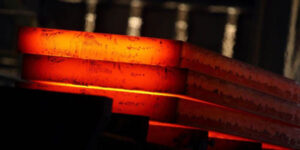
The Unisteel LLC plant (Unisteel, Kryvyi Rih, Dnipropetrovsk Oblast), which manufactures galvanized cold-rolled flat steel and is part of the Metinvest Group, reported a net profit of UAH 32.997 million in January-March of this year, compared to a net loss of UAH 90.003 million for the same period last year.
According to the company’s interim report, which is available to the agency “Interfax-Ukraine,” revenue from ordinary activities for this period decreased by 14.6% to UAH 771.729 million.
The accumulated loss as of the end of March amounted to UAH 1.020596 billion.
In 2025, the company reported a net loss of UAH 13.251 million, while revenue from ordinary activities for this period decreased by 10.6% compared to 2024—to UAH 3.259437 billion from UAH 3.648463 billion. Sales volume of finished products in 2025 and 2024 amounted to 108,165 thousand tons and 113,321 thousand tons, respectively.
The number of employees as of the end of 2025 was 99, and as of the end of 2024, it was 144. In 2025, the payroll fund amounted to UAH 38,445,496 thousand.
The LLC ended 2024 with a loss of 363.768 million UAH, while in 2023 this figure was 255.057 million UAH.
The main products manufactured by the plant are galvanized flat-rolled products with a thickness ranging from 0.40 mm to 2.50 mm, a width ranging from 600 to 1,250 mm, and a coating weight (Zn) of 60–275 g/m². The company’s products are supplied to both the Ukrainian and European markets. Poland and Romania are the main export markets for the company’s products.
The Unistil plant for the production of cold-rolled galvanized flat steel with a capacity of over 100,000 tons per year was built between 2007 and 2010. It is equipped with machinery from Dongbu Machinery Co., Ltd. (South Korea).
The authorized capital of Unistil LLC is UAH 6.01 million.
Metinvest is a vertically integrated group of mining and metallurgical enterprises. Its facilities are located in Ukraine—in the Donetsk, Luhansk, Zaporizhzhia, and Dnipropetrovsk regions—as well as in European countries. The holding’s main shareholders are the SCM Group (71.24%) and Smart Holding (23.76%). Metinvest Holding LLC is the management company of the Metinvest Group.
Metinvest Digital LLC, the IT expertise center of Ukraine’s largest mining and metallurgical holding, Metinvest, reported a net profit of UAH 4.505 million in January–March of this year, compared to a net loss of UAH 13 million during the same period last year.
According to the company’s interim report, which is available to the agency “Interfax-Ukraine,” revenue from ordinary activities for this period increased by 13.2% to UAH 197.735 million.
Retained earnings as of the end of March amounted to UAH 64.058 million.
In 2025, the LLC reduced its net profit by 5.3 times compared to the previous year—to UAH 6.494 million from UAH 34.142 million, while revenue from ordinary activities for this period increased by 0.8%—to UAH 807.236 million from UAH 801.016 million.
The LLC ended 2023 with a net loss of UAH 9.525 million.
The number of employees as of the end of 2025 was 700, and as of the end of 2024, it was 764.
Metinvest Digital is a Ukrainian IT company specializing in the digital transformation of large businesses and implementing projects in Ukraine, Europe, and North America. The company develops, implements, and supports comprehensive IT solutions for building technological infrastructure, developing information systems, strategic outsourcing, data migration, system integration, cybersecurity, and information security. Metinvest Digital is the IT business partner of the Metinvest Group, serving over 30 of the holding’s enterprises worldwide. The company is a certified partner of Microsoft (Gold Certified Partner) and SAP (Silver Partner).
Metinvest Holding LLC owns a 100% stake in Metinvest Digital LLC.
The LLC’s authorized capital is UAH 78.740 million.
Metinvest is a vertically integrated group of mining and metallurgical enterprises. Its enterprises are located in Ukraine—in the Donetsk, Luhansk, Zaporizhzhia, and Dnipropetrovsk regions—as well as in European countries. The holding’s main shareholders are the SCM Group (71.24%) and Smart Holding (23.76%). Metinvest Holding LLC is the management company of the Metinvest Group.
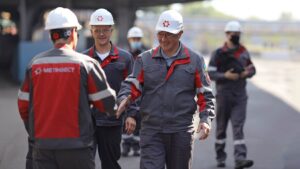
Metinvest Business Service LLC (MBS, Kryvyi Rih, Dnipropetrovsk Oblast), a multifunctional center providing accounting, tax, and other services, in January-March of this year, reported a net profit of UAH 10.567 million, compared to a net loss of UAH 27.437 million for the same period last year.
According to the company’s interim report, which is available to the agency “Interfax-Ukraine”, revenue from ordinary activities for this period decreased by 1.4% to UAH 158.587 million.
The accumulated deficit as of the end of March amounted to UAH 1.261 million.
In 2025, the company reported a net profit of UAH 9.674 million, compared to a net loss of UAH 8.495 million in the previous year, while revenue from ordinary activities for this period increased by 8.6%—to UAH 712.139 million from UAH 655.541 million.
The average number of employees at the end of 2025 was 1,050, and at the end of 2024, it was 1,279.
Metinvest Business Service LLC (Kryvyi Rih, Dnipropetrovsk Oblast) is a multifunctional service center providing accounting and tax services, treasury operations, human resources management services, legal services, and other services. The company was founded in 2014 and serves as the sole service center for Metinvest Group companies. MBS offices are located in Kryvyi Rih, Mariupol (prior to the war), and Zaporizhzhia.
Metinvest Holding LLC owns a 100% stake in MBS LLC.
The LLC’s authorized capital is UAH 71.125 million.
MBS LLC is part of the Metinvest Group, whose main shareholders are PJSC System Capital Management (SCM, Donetsk) (71.24%) and the Smart-Holding group of companies (23.76%). The management company of the Metinvest Group is Metinvest Holding LLC.

In January–March of this year, PJSC “Industrial and Manufacturing Enterprise ”Kryvbasvibuhprom” saw its net profit drop by 84% compared to the same period last year—to UAH 7.124 million from UAH 44.542 million.
According to the company’s interim report, available to the Interfax-Ukraine agency, revenue from ordinary activities for this period decreased by 34.4%—to UAH 269.883 million from UAH 411.670 million.
Retained earnings as of the end of March 2026 amounted to UAH 940.423 million.
According to the 2025 report, the company’s net profit last year increased by 20.8% compared to 2024—to UAH 185.845 million from UAH 153.893 million. At the same time, revenue from ordinary activities for this period increased by 18.3%—to UAH 1,751.775 million from UAH 1,480.669 million.
In 2024, the company reported a net profit of UAH 153.893 million, compared to UAH 95.121 million in 2023.
“Kryvbasvibuhprom” provides blasting services in the quarries of Ukraine’s mining enterprises. It is a major producer of emulsion and non-water-resistant explosives. The company’s operational chain includes storage, processing, transportation, and blasting operations themselves.
According to the State Registration Service data for the first quarter of 2026, Quarex Ltd (Cyprus) owns 93.1642% of the company’s shares, while umgi investments LLC of the SCM Group holds 6.5619%.
The authorized capital of Kryvbasvibuhprom is UAH 97.022 million, with a par value of UAH 1 per share.
Vodafone Ukraine (VFU), Ukraine’s second-largest mobile operator, increased its net profit by 12% in January–March 2026 compared to the same period last year, reaching 778 million hryvnia.
According to the company’s press release on Wednesday, revenue grew by 11% to UAH 7.3 billion.
Key drivers remain the growth in data service consumption, the development of the fixed-line business, and increased revenue from equipment sales and other services, Vodafone Ukraine explained.
It is noted that OIBDA increased by 4% to UAH 3.49 billion, while the OIBDA margin decreased to 47.8% from 50.7% in the first quarter of 2025, due to rising electricity costs, network resilience measures, personnel expenses, and increased radio frequency spectrum fees.
The mobile operator noted that the profit growth was driven by improved debt portfolio management.
Average revenue per user (ARPU) in the first quarter of this year increased by 13% to UAH 145.2 per month, with a stable subscriber base. At the same time, there has been an increase in the number of contract subscriptions, VFU added.
According to the press release, investment volume for January–March 2026 amounted to UAH 1.55 billion, which is 2% less than in January–March 2025. Key investment areas include improving the energy resilience of infrastructure—specifically ensuring backup power, expanding the use of generators and batteries—as well as developing and modernizing the mobile network, particularly by expanding 4G coverage.
Investments were also made in the development of fixed-line internet access based on modern technologies (GPON) and in preparing the infrastructure for the rollout of new generations of communication, including 5G.
“The company continues to implement systematic network modernization projects and is introducing technological solutions aimed at improving service quality and adapting the infrastructure to new challenges,” the statement said.
As reported, Vodafone Ukraine increased its revenue by 14% in 2025 compared to the previous year—to 27.8 billion UAH—while its net profit grew by 18%—to 4.18 billion UAH.
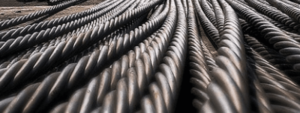
PJSC “Production Association ”Stalkanat” (Odessa) reported a 45% decrease in net profit for January-March of this year compared to the same period last year—down to UAH 54.693 million from UAH 99.317 million.
According to the company’s interim report, which is available to the agency “Interfax-Ukraine,” revenue from ordinary activities for this period decreased by 11%—to UAH 1.030696 billion.
Retained earnings as of the end of March amounted to UAH 949.245 million.
According to the annual financial report, the plant reported a net profit of 590.809 million UAH in 2025, compared to 184.808 million UAH in 2024. Meanwhile, revenue from ordinary activities for the past year increased by 20.2% to 5.334152 billion UAH.
As reported, in 2024, the company reduced its net profit by 34% compared to the previous year—to 184.808 million UAH from 280.060 million UAH. At the same time, it increased its net revenue by 33.3%, to UAH 4.436786 billion, and the plant shipped 90,089 thousand tons of metal products. Exports accounted for 48% in volume terms. Capital investments amounted to UAH 226.445 million.
The average number of employees in 2024 was 1,056, and the average income per employee was UAH 34,632.
“Stalkanat” is one of the largest manufacturers of steel ropes and reinforcing strands in Eastern Europe and the leading producer of metal products in Ukraine.
According to the State Registration Service data for the first quarter of 2026, Davyd Nemirovsky holds 50% of the shares, Anton Mykhalenko (non-resident) holds 24.9%, and Maria Kondratyuk also holds 24.9%.
The authorized capital of Stalkanat PJSC is UAH 35.472 million, with a par value of UAH 0.17 per share.



