
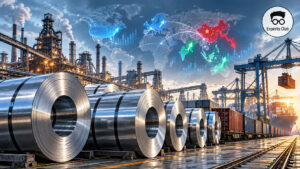
Global steel demand will remain virtually unchanged in 2026 at approximately 1.722 billion tonnes, but could increase by 1.7% in 2027 to 1.752 billion tonnes, according to the October Short Range Outlook released by the World Steel Association (Worldsteel).
As the Experts Club information and analytical center notes, Worldsteel’s new forecast highlights an increasingly noticeable divergence between China and the rest of the global market. While demand continues to decline in China, the recovery outside the country is gradually accelerating.
According to Worldsteel, steel demand outside China will grow by 1.5% in 2026 and by as much as 4% in 2027. It is the sheer size of the Chinese market that effectively conceals the stronger positive dynamics in other countries.
Alfonso Hidalgo Calcerrada, Chairman of the Worldsteel Economics Committee, noted that the recovery is progressing more slowly than expected in the spring. In April, the association anticipated moderate growth in global demand as early as 2026 and an increase of 2.2% in 2027. However, the forecast for next year has now been lowered to 1.7%.
China remains the main obstacle to growth in the global market. Steel demand in the country is expected to decline by 2% in 2026 and by another 1% in 2027. The reason remains weakness in the real estate market and infrastructure investment. Growth in industrial production and exports is not yet sufficient to fully offset the decline in these two largest areas of steel consumption.
India stands at the opposite end of the spectrum. It remains the world’s largest rapidly growing steel market: demand in the country is expected to increase by 7.9% in 2026 to 172.4 million tonnes, and by another 8% in 2027 to 186.2 million tonnes. The main drivers remain infrastructure construction, private real estate, industry, and renewable energy projects.
In developing countries excluding China, demand is forecast to increase by 1.9% in 2026 and by as much as 5.1% in 2027. Meanwhile, growth in ASEAN-5 will reach 5.2% in 2026, while Vietnam will approach steel consumption of around 30 million tonnes for the first time, thanks to intensive construction and a large-scale public investment program.
A completely different situation is emerging in the Persian Gulf countries. Following demand growth of 17.7% in 2025, Worldsteel expects a decline of approximately 11% in 2026 due to ongoing instability in the Middle East, delays in investment decisions, and the postponement of construction project launches. If the situation stabilizes, the association forecasts a recovery of 11.3% in 2027.
Worldsteel considers the resumption of industrial growth in developed economies to be one of the key trends of 2027. Additional steel demand is expected to be generated by investments in artificial intelligence and data centers, rising defense spending, the energy transition, infrastructure projects, and railway construction.
In the European Union, the recovery is being postponed for the time being. Worldsteel expects apparent steel consumption in the EU to decline by 0.3% in 2026 before increasing by 3.1% in 2027. The forecast for the European market has been revised downward by as much as 1.5 percentage points.
Worldsteel attributes the relatively strong performance of the EU in 2025 partly to inventory accumulation ahead of the introduction of the Carbon Border Adjustment Mechanism (CBAM) in 2026. At the same time, the underlying indicators of European industry have proved weaker than expected: the construction recovery is progressing slowly, housing completions remain low, and the automotive industry continues to constrain demand.
The United States, by contrast, is expected to maintain positive momentum. Steel demand in the country could grow by 2% in 2026 and by approximately 1.5% in 2027. Worldsteel identifies investments in data centers, energy, renewable power generation, oil and gas infrastructure, and major industrial projects as the main sources of growth.
A moderate recovery is also expected in Japan and South Korea. In Japan, demand could increase by 0.9% in 2026 and by 1.7% in 2027, while in South Korea the corresponding figures are 1.8% and 1.3%. However, even after such growth, neither country will yet return to the consumption levels recorded before the latest downturn.
According to Experts Club, the global steel market is gradually shifting from a model in which global dynamics were determined primarily by China toward a much more geographically distributed demand structure. India, Southeast Asian countries, US infrastructure projects, and the expected recovery in Europe are becoming increasingly important sources of growth.
At the same time, the structure of steel consumption is also changing. Whereas large-scale residential construction in China was previously one of the main drivers, increasing amounts of steel are now required for energy infrastructure, data centers, defense projects, railways, and industrial equipment.
Nevertheless, Worldsteel remains cautious about 2027. The forecast was prepared using data available at the beginning of September 2026, while prolonged instability in the Middle East and possible new disruptions to energy and logistics supply chains remain the main risks to the global market.
Thus, 2026 is likely to be another year of stagnation for the global steel market, but growth outside China could accelerate significantly as early as 2027. At the same time, the geography of demand is becoming increasingly diversified, while infrastructure, energy, and new technological investments are gradually becoming the industry’s main structural growth drivers.
Source: Worldsteel, Short Range Outlook, October 2026.
EXPERTS CLUB, GLOBAL STEEL MARKET, STEEL, STEEL DEMAND, WORLDSTEEL
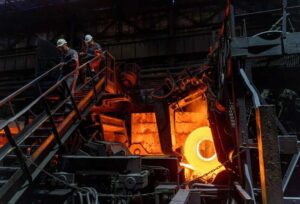
Ukrainian steelmakers reduced steel production by 19.8% in January–September of this year compared to the same period last year, down to 4.431 million metric tons.
According to information released Friday by the “Ukrmetallurgprom” association, 131,000 metric tons of steel were produced in September, 277,000 metric tons in August, 457,000 metric tons in July, 690,800 metric tons in June, in May—629,400 metric tons, in April—517,300 metric tons, in March—702,300 metric tons, in February—515,000 metric tons, and in January—511,100 metric tons.
In 2025, Ukraine’s steel mills reduced steel production by 2.2% compared to 2024, to 7.409 million metric tons.
In 2024, Ukraine increased steel production by 21.6% compared to 2023, to 7.575 million metric tons. In 2023, steel production fell by 0.6% to 6.228 million metric tons, and in 2022, it fell by 70.7% to 6.263 million metric tons.
In 2021, before the war, 21.366 million metric tons of steel were produced, or 103.6% of the 2020 level.
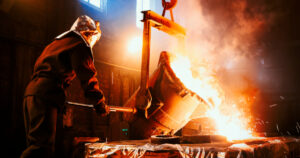
India continues to strengthen its position as the world’s second-largest steel producer and is gradually closing the gap with China, according to data from the World Steel Association (Worldsteel) published on September 24, 2026.
From January through August 2026, Indian steelmakers produced 115.9 million metric tons of steel, a 6% increase compared to the same period last year. During the same period, China’s production fell by 3.1% to 651.9 million metric tons.
According to Open4Business calculations based on Worldsteel data, India produced approximately 109.3 million metric tons of steel in the first eight months of 2025, while China produced approximately 672.8 million metric tons. Thus, the absolute gap between the two largest producers over the year narrowed from approximately 563 million to 536 million metric tons, or by nearly 5%.
The ratio of production volumes is also shifting in India’s favor. While China produced about 6.2 times more steel than India from January through August of last year, that figure fell to about 5.6 times in 2026.
This trend continued in August. India increased its steel output by 4.6% year-over-year—to 14.8 million metric tons—while production in China fell by 3.7%—to 74.6 million metric tons. (World Steel Association)
India also more than doubles the output of the United States, which ranks third among the world’s largest producers. U.S. steelmakers produced 57.5 million metric tons of steel from January through August, increasing output by 5.5%. Japan produced 54 million metric tons, Russia—43.8 million metric tons, and South Korea—42.8 million metric tons.
Thus, India’s output over the eight-month period is already roughly double that of the U.S. and more than double that of Japan.
India accounted for about 9.5% of all steel produced by the 70 countries that provide statistics to Worldsteel, while China’s share was about 53% and the U.S.’s was about 4.7%. These 70 countries accounted for approximately 98% of global steel production in 2025.
The difference is particularly noticeable against the backdrop of the industry’s overall stagnation. From January through August, global steel production fell by 0.7% to 1.225 billion metric tons, while India continued to show steady growth. In August, global production declined by 1.2% year-over-year to 144.2 million metric tons.
Vietnam remains another fast-growing Asian producer. Over the eight-month period, it increased its output by 29.1%—to 20.6 million metric tons—with growth reaching 36.4% in August alone. Overall, however, steel production in Asia and Oceania has declined by 0.9% since the beginning of the year—to 906.4 million metric tons—primarily due to trends in the Chinese market.
China, meanwhile, maintains a huge lead and remains the undisputed leader in the global steel industry. However, the diverging trends of the two largest producers indicate a gradual increase in India’s share of the global steel industry.
Original source: World Steel Association — August 2026 crude steel production

According to Experts Club, Vietnam is showing the highest growth rates in steel production among the world’s top ten countries, as evidenced by data published on September 24 by the World Steel Association.
In August 2026, the country produced approximately 2.7 million metric tons of steel, increasing output by 36.4% compared to August of last year.
From January through August, production reached 20.6 million metric tons, rising by approximately 29% year-over-year. This represents the highest growth rate among the world’s largest producers.
Based on cumulative results, Vietnam is already among the top ten global steel producers, closing in on Brazil in terms of production volume; Brazil produced 21.8 million metric tons over the same eight-month period.
By comparison, the world’s largest producer—China—reduced production by 3.1% to 651.9 million metric tons over the same period, while India increased its output by 6% to 115.9 million metric tons. The United States increased production by 5.5%, Turkey by 6.8%, and Germany by 6.3%.
As a result, the global steel market is becoming increasingly heterogeneous: despite an overall 0.7% decline in production from January through August, certain Asian markets continue to rapidly expand their capacity and production volumes.
The difference is particularly noticeable within Asia. In August, production across the Asia-Pacific region fell by 1.4% due to a decline in output in China, while India and Vietnam continued to grow.
As of the end of August, countries in Asia and Oceania accounted for 106.7 million metric tons of the 144.2 million metric tons of global output, or about 74% of global steel production.
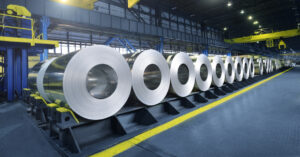
Ukrainian steel mills produced 277,000 metric tons of steel in August 2026, which is 2.3 times less than in August of last year, when output totaled 649,000 metric tons.
Compared to July of this year, when 457,000 metric tons of steel were produced, August’s figure fell by another 39.4%.
Amid this sharp drop in output, Ukraine fell to 33rd place among the 70 steel-producing countries tracked by World Steel, the global steel industry association.
As recently as July 2026, Ukraine was ranked 26th, and in August 2025, it held the 21st position.
Thus, in just one year, the country lost 12 positions in the monthly global ranking.
At the same time, the results for the first eight months look better than those for August. From January through August 2026, Ukraine produced 4.30 million metric tons of steel, which is 12.5% less than the 4.91 million metric tons produced during the same period last year.
In terms of cumulative production over eight months, Ukraine ranks 24th in the world.
By comparison, for the full year of 2025, Ukraine produced 7.41 million metric tons of steel—2.2% less than in 2024—and ranked 21st among global producers.
Thus, August became one of the weakest months for the Ukrainian steel industry in 2026: production was 40% lower than in July and less than half of last year’s level.
The decline in Ukraine is occurring much faster than the global trend: in August, global steel production fell by only 1.2%, to 144.2 million metric tons, and for January–August, by 0.7%, to 1.225 billion metric tons.

Global steel production in August 2026 fell by 1.2% compared to August of last year, to 144.2 million metric tons, according to data from the World Steel Association (Worldsteel) published on September 24.
The statistics cover 70 countries, which accounted for about 98% of global steel production in 2025. From January through August 2026, they produced 1.225 billion metric tons of steel, which is 0.7% less than a year earlier.
China remains the largest producer, having produced 74.6 million metric tons of steel in August, a 3.7% year-over-year decline. Thus, China accounted for more than half of global output.
India, which ranks second, increased production by 4.6% to 14.8 million metric tons. The United States increased production by 3% to 7.3 million metric tons, while Japan increased production by 0.4% to 6.7 million metric tons.
Russia produced about 5.5 million metric tons of steel, down 0.3% from August of last year, while South Korea increased production by 2.6% to 5.4 million metric tons.
Turkey produced about 3.4 million metric tons of steel, which is 0.4% less than last year’s figure. Brazil’s production fell by 6.2% to 2.7 million metric tons, while Germany increased its output by 1.7% to 2.6 million metric tons.
Among the largest producers, Vietnam showed the strongest growth: the country’s steel production rose by 36.4% to 2.7 million metric tons.
From January through August, China produced 651.9 million metric tons of steel, which is 3.1% less than a year earlier. India increased production by 6% to 115.9 million metric tons, and the United States by 5.5% to 57.5 million metric tons.
The top ten producers since the beginning of the year also include Japan (54 million metric tons), Russia (43.8 million metric tons), South Korea—42.8 million metric tons, Turkey—26.6 million metric tons, Germany—23.9 million metric tons, Brazil—21.8 million metric tons, and Vietnam—20.6 million metric tons.
Vietnam has also shown the fastest growth among this group since the beginning of the year—approximately 29%. Production in Russia fell by 5.1%, in China by 3.1%, and in Brazil by 1.8%.



