According to Serbian Economist, Hungary and Serbia have agreed to launch passenger service on the Belgrade-Budapest high-speed railway line no later than March 27, Hungarian Minister of Foreign Affairs and Trade Péter Szijjártó said in Belgrade.
Responding to questions about border procedures, including the introduction of the EES system, Szijjártó said that checks are planned to be kept to a minimum and organized so that they do not significantly affect the speed of transport. According to him, on the Hungarian side, inspectors, police, and customs officers will board the train before the border station, and checks will be carried out jointly with colleagues from the other side while the train is in motion.
The statement was made after the ceremonial signing of four documents during the 15th session of the Joint Commission on Economic Cooperation between Serbia and Hungary in the Serbian Chamber. In particular, the parties formalized a package of agreements on expanding cooperation in the nuclear sphere, interaction between chambers of commerce and industry under the Széchenyi program in Serbia, a memorandum on expert support for Serbia’s EU accession negotiations, and the minutes of the joint commission meeting.
Earlier, Serbian authorities reported that joint passport and customs control for passenger trains is planned to be carried out on Hungarian territory at the Kelebia station, and the time required for the procedures is estimated at about 30 minutes; the issue of specific EES requirements falls within the competence of the Hungarian border police.
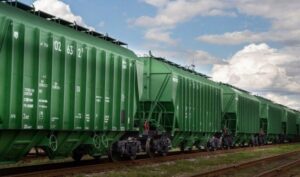
The Belgrade-Budapest high-speed line is being modernized for speeds of up to 200 km/h and a reduction in travel time to less than three hours; in Serbia, the Belgrade-Novi Sad (2022) and Novi Sad-Subotica (October 2025) sections have already been put into operation. On February 27, it was also reported that freight traffic had started on the line.