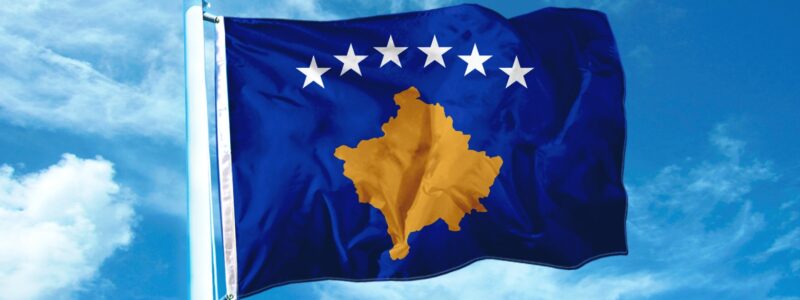
According to The Serbian Economist, Kosovo will not introduce compulsory military service and instead intends to develop a total defense model, Acting Prime Minister Albin Kurti stated.
According to him, this approach better suits current security conditions than traditional compulsory service. Kurti cited the example of Finland, where defense is viewed not only as the army’s responsibility but as a system of participation by the entire society, including government institutions, business, civil protection, infrastructure, and reserve mechanisms.
The idea of compulsory service in Kosovo has been discussed for several years. Kurti had previously advocated for its introduction, but now the government is effectively changing its approach: instead of conscription for young people, the focus is on a broader concept. This model involves preparing society and the state for crises, rather than merely increasing the size of the army.
The comprehensive defense plan was approved by the Kosovo government back in September 2024. It is intended to integrate military readiness, civil defense, critical infrastructure resilience, information security, mobilization capabilities, and interagency coordination. Kurti did not specify a timeline for launching the new model.
The decision comes amid Kosovo’s ongoing increase in defense spending. Under Kurti, Pristina has increased funding for security forces, purchased Turkish Bayraktar drones, and received U.S. approval to acquire Javelin anti-tank systems. Authorities have also announced plans to establish their own ammunition production facility and a drone development laboratory. Reuters previously reported that Kosovo plans to allocate approximately EUR1 billion to defense over four years and increase spending by 60%.
However, this model has its limitations. The Finnish example cited by Kurtis was built up over decades and combines universal defense with mandatory service for men and a well-developed reserve system. Therefore, simply copying this model is not enough for Kosovo: the country will have to create its own system of training, financing, civil defense, and interagency coordination.
For the region, this decision will be viewed through the prism of relations with Serbia. Belgrade does not recognize Kosovo’s independence, declared in 2008, and considers Kosovo part of its territory. Pristina, in turn, views the strengthening of security forces as a response to threats from Serbia and instability in northern Kosovo, where a significant Serbian community resides.
The situation is further stabilized by the presence of KFOR forces under NATO command. There are more than 4,000 peacekeepers in Kosovo; they play a particularly important role in the north, where tensions and clashes regularly arise between local Serbs, the Kosovo authorities, and security forces.
Kosovo has been recognized by more than 100 countries, including the United States and most EU member states, however, its independence is not recognized by Serbia, Russia, China, Ukraine, and several EU member states, including Spain, Greece, Romania, Slovakia, and Cyprus. Because of this, Kosovo is not a member of the UN or NATO, although it is striving for Euro-Atlantic integration.
https://t.me/relocationrs/2908