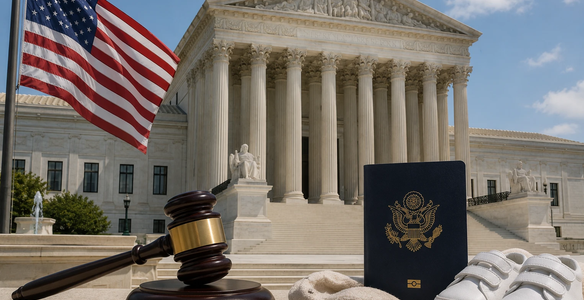
The U.S. Supreme Court ruled that children born on U.S. soil to parents who are in the United States illegally or on a temporary basis are U.S. citizens from the moment of birth. The decision effectively blocks President Donald Trump’s attempt to restrict the automatic granting of citizenship by birthright.
The case was heard in connection with Executive Order 14160, “Protecting the Meaning and Value of American Citizenship,” which Trump signed on January 20, 2025. The order proposed that children born in the U.S. to parents without permanent immigration status should not automatically be considered U.S. citizens.
The court concluded that such children are protected under the Fourteenth Amendment to the U.S. Constitution, which states that all persons born or naturalized in the United States and subject to its jurisdiction are citizens of the United States and of the state in which they reside.
The ruling is significant not only for immigration policy but also for the market for services related to childbirth in the United States. In practice, it means that U.S. passports obtained by virtue of birth on U.S. soil remain valid, and the right to citizenship by birth itself cannot be revoked by presidential decree.
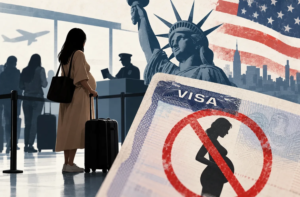
However, the debate surrounding so-called “birth tourism” is not over. Following the court’s decision, the Trump administration may tighten controls over visa applications, travel by pregnant women, and cases of potential fraud upon entry into the United States. But this is a different legal matter: combating visa violations is not the same as revoking the citizenship of a child born on U.S. soil.
For foreigners who view the U.S. as a destination for childbirth, the main takeaway is this: the fundamental constitutional principle has been upheld, but immigration and visa risks may increase. U.S. authorities may scrutinize the purpose of travel, financial documents, medical plans, and any potential concealment of true intentions more closely when issuing visas or at the border.
For the international market for immigration and medical services, the Supreme Court’s decision means the preservation of one of the most well-known mechanisms of jus soli—citizenship by place of birth. The United States remains one of the key countries where the mere fact of being born on U.S. soil grants a child citizenship, regardless of the parents’ citizenship, with the exception of a few specific cases.
Thus, Trump’s executive order has not altered the fundamental principle of U.S. citizenship. Children born in the United States are still entitled to U.S. citizenship, but there will likely be more scrutiny, legal disputes, and political pressure surrounding travel for the purpose of giving birth.