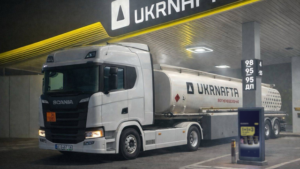
In the “Medium- and Long-Term Market” section of the UEB, trading continued for July, August, and November 2026. In total, eight companies placed bids to buy or sell natural gas: Ukrnafta, GPK Naftogaz Trading, MTM Concern, the Ukrainian Gas Transmission System Operator, Ukrzaliznytsia, and others. In total, 11,530 thousand cubic meters of natural gas—July 2026 volumes in the GTS and UGS facilities—were sold in this section.
On the UEB’s short-term natural gas market, participants submitted bids on the intraday market and the “day-ahead” market. A total of 86 trades were concluded, with a combined volume of 1,622 thousand cubic meters.
Last week, the European market once again began to price in a risk premium, though without returning to June’s peaks. The M+1 gas contract briefly reached its highest level since the signing of the memorandum of understanding between the U.S. and Iran, with the Winter 26 and Summer 27 contracts following a similar trajectory. Maritime traffic through the Strait of Hormuz, while having improved somewhat, remains significantly below pre-war levels: in the six months leading up to the war, an average of just under 90 tankers passed through the strait each month. Following last weekend’s strikes, LNG transit was close to zero. Gas storage in Europe remains one of the most closely monitored fundamental factors. As of July 2, the current storage fill rate stood at 49.2%, compared to a five-year average of approximately 62%.
Natural gas imports from Europe ranged from 0.8 to 1.6 million cubic meters per day.