In January–June 2026, Ukraine’s commercial fishermen caught more than 1.92 thousand metric tons of aquatic biological resources in inland waters, according to the press service of the State Agency for the Development of Land Reclamation, Fisheries, and Food Programs.
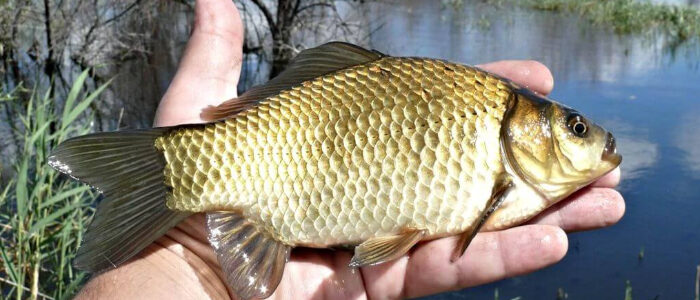
As is traditional, silver crucian carp accounted for the largest share of the catch—857 metric tons, or about 45% of the total.
In addition, 360 metric tons of bream, 139 metric tons of roach, 103 metric tons of Black Sea herring, 95 metric tons of flathead, 83 metric tons of herbivorous fish (silver carp and white amur), 66 metric tons of pikeperch, and 49 metric tons of perch were caught.
The State Fisheries Agency noted that due to the blockade of the Black and Azov Seas resulting from Russia’s military aggression, commercial fishing for most marine fish species has effectively ceased, so the main burden falls on inland waters.
The largest catch volumes in the first half of the year were recorded in the Kremenchuk Reservoir—over 536 metric tons. In the lower Dniester region, including the lakes, the Turunchuk branch, and the Dniester Estuary, 400 metric tons of aquatic biological resources were harvested; in the Kamyanske and Dnipro Reservoirs, 373 metric tons and 230 metric tons, respectively.
In addition, the catch in the Danube River totaled 105 metric tons; in the Kaniv Reservoir, 101 metric tons; in the Kyiv Reservoir, 71 metric tons; and in the Dnipro-Bug estuary system, 64 metric tons. In the waters of the Tiligul and Berezan estuaries, 17 metric tons and 15 metric tons of aquatic biological resources were caught, respectively. The lowest catch volumes were recorded in Chernihiv Oblast—5 metric tons in the Dnipro River and 3 metric tons in the Desna River, including lakes.
BIOLOGICAL RESOURCES, CATCH, crucian carp, FISH, State Fisheries Agency