
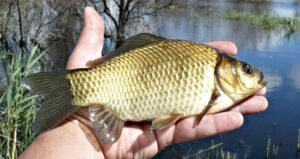
In January–June 2026, Ukraine’s commercial fishermen caught more than 1.92 thousand metric tons of aquatic biological resources in inland waters, according to the press service of the State Agency for the Development of Land Reclamation, Fisheries, and Food Programs.
As is traditional, silver crucian carp accounted for the largest share of the catch—857 metric tons, or about 45% of the total.
In addition, 360 metric tons of bream, 139 metric tons of roach, 103 metric tons of Black Sea herring, 95 metric tons of flathead, 83 metric tons of herbivorous fish (silver carp and white amur), 66 metric tons of pikeperch, and 49 metric tons of perch were caught.
The State Fisheries Agency noted that due to the blockade of the Black and Azov Seas resulting from Russia’s military aggression, commercial fishing for most marine fish species has effectively ceased, so the main burden falls on inland waters.
The largest catch volumes in the first half of the year were recorded in the Kremenchuk Reservoir—over 536 metric tons. In the lower Dniester region, including the lakes, the Turunchuk branch, and the Dniester Estuary, 400 metric tons of aquatic biological resources were harvested; in the Kamyanske and Dnipro Reservoirs, 373 metric tons and 230 metric tons, respectively.
In addition, the catch in the Danube River totaled 105 metric tons; in the Kaniv Reservoir, 101 metric tons; in the Kyiv Reservoir, 71 metric tons; and in the Dnipro-Bug estuary system, 64 metric tons. In the waters of the Tiligul and Berezan estuaries, 17 metric tons and 15 metric tons of aquatic biological resources were caught, respectively. The lowest catch volumes were recorded in Chernihiv Oblast—5 metric tons in the Dnipro River and 3 metric tons in the Desna River, including lakes.
BIOLOGICAL RESOURCES, CATCH, crucian carp, FISH, State Fisheries Agency
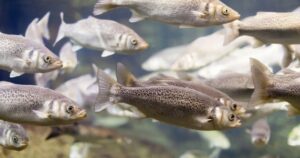
The State Agency of Ukraine for the Development of Land Reclamation, Fisheries, and Food Programs (State Fisheries Agency) held, through the “Prozorro.Sales” system, 179 auctions for the sale of commercial fishing rights to aquatic biological resources, which generated nearly 44 million hryvnias, according to the agency’s press service.
“Proceeds from the sale of lots are directed toward replenishing local budgets, and the additional revenue generated by the increase in the starting price during electronic auctions will be used for stocking water bodies. Thus, transparent competition not only fills the budgets but also guarantees funding for measures to restore aquatic biological resources,” the press service quoted Igor Klymenko, head of the State Fisheries Agency, as saying.
According to the agency, of the total amount, over 41.5 million UAH will be allocated to local budgets, while nearly 2.5 million UAH—generated by increases in the starting price during the auctions—will be used to restore the fish populations in these bodies of water.
The largest number of contracts were concluded for fishing rights in the Kremenchuk (50), Kamyanske (26), and Kaniv (21) reservoirs, as well as in the lower Dniester and the Dniester Estuary (16) and on the Danube (15).
In total, 246 lots for the right to commercially harvest aquatic biological resources have been formed for 2026.
AUCTION, CATCH, PROZORRO.SALES, reservoirs, State Fisheries Agency
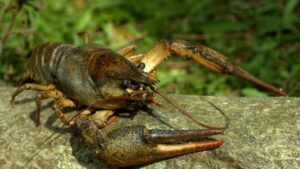
The ban on crayfish fishing in Ukraine’s water bodies, which had been in effect since the end of last year, has ended, the State Fisheries Agency’s press service reported on Wednesday.
“The lifting of the ban on crayfish fishing is a long-awaited event for many fishing enthusiasts. However, when heading to a body of water, please remember to treat river inhabitants with respect and strictly comply with environmental protection laws,” the press service quoted agency head Ihor Klymenko as saying.
As noted in the statement, each person is allowed to catch no more than 30 crayfish. Crayfish may be caught by hand or using a single crayfish trap meeting the specified parameters, a landing net, or a “spider” trap in accordance with the requirements of the Recreational Fishing Rules.
At the same time, it is prohibited to catch crayfish by hand after dark using artificial lighting.
The minimum size of crayfish permitted for catch is 11 cm in the Dnipro reservoirs, 10 cm in other inland water bodies and the Black Sea region, and 9 cm in the Azov region.
Illegal crayfish harvesting is subject to administrative or criminal liability, as well as compensation for damages to the fisheries sector. Compensation for each illegally caught crayfish amounts to 3,332 UAH.
body of water, CATCH, crayfish, State Fisheries Agency, фишинг
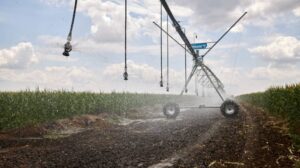
In 2025, the State Fisheries Agency’s water management organizations provided farmers with a full range of services for supplying water for irrigation in the Zaporizhzhia, Kirovohrad, Mykolaiv, and Odesa regions, with the total area of irrigated land exceeding 40,500 hectares, according to its press service on Telegram.
It is specified that to achieve this result, the pumping stations of state irrigation systems supplied 130.8 million cubic meters of water and used about 51.5 million kWh of electricity.
According to the State Fisheries Agency, the largest irrigation areas in 2025 were serviced by the Kiliya Interdistrict Water Management Administration (MUVG), where 78.5 million cubic meters of water were supplied to nearly 10,000 hectares of agricultural land, The Dniester MWH supplied 24.3 million cubic meters of water to irrigate 8,600 hectares of fields, and the Izmail WMD irrigated 8,300 hectares of fields, the agency specifies.
Various irrigation methods were used for maximum efficiency: sprinklers, drip irrigation, and flooding. Thanks to this, in addition to traditional cereals and legumes, vegetables, and fruits, farmers grew the “white gold” of the south—cotton, which began to be cultivated in Ukraine last year, the agency said.
Employees of the State Fisheries Agency’s water management departments have already begun preparing water management and reclamation facilities for the winter period and the 2026 irrigation season.

The Food and Agriculture Organization of the United Nations (FAO) has transferred modern technical equipment to the Institute of Fisheries, Marine Ecology and Oceanography (IRGEMO), according to the press service of the State Fisheries Agency.
“The development and systematic updating of the material and technical base of scientific institutions is a key condition for high-quality research in the field of fisheries. Modern equipment expands the possibilities for field and laboratory monitoring of aquatic biological resources, increases the accuracy of data collection and analysis, and ensures their practical use in management decision-making. This forms the basis for effective and long-term state policy in the field of conservation and rational use of aquatic ecosystems,” emphasized Deputy Minister of Economy, Environment, and Agriculture Taras Vysotsky, whose words are quoted in the report.
During the meeting, the head of the State Fisheries Agency, Ihor Klymenok, presented the features of the reform of the fisheries sector, the status of joint projects, and outlined areas for further cooperation.
The list of technical equipment transferred to the scientific institution for conducting ichthyological research and assessing aquatic biological resources includes two vehicles needed for scientific teams to conduct field work, two boats with a trailer for their transportation, six microscopes, sets of water analyzers for hydrological, hydrochemical, and ecological research, and a portable echo sounder with multi-frequency sensors, a control station, and software.
“Assistance from international partners is critical to strengthening the scientific capacity of the industry in the current environment,” said the head of the State Fisheries Agency, thanking the FAO for its systematic support of Ukraine’s fisheries sector.



