How to conduct sanctions screening of a foreign company, its owners and executives, and reduce the risk of payments and contracts being blocked. The strengthening of international sanctions has made counterparty screening a mandatory part of the work of Ukrainian exporters, importers, banks, logistics companies, and enterprises attracting foreign financing.
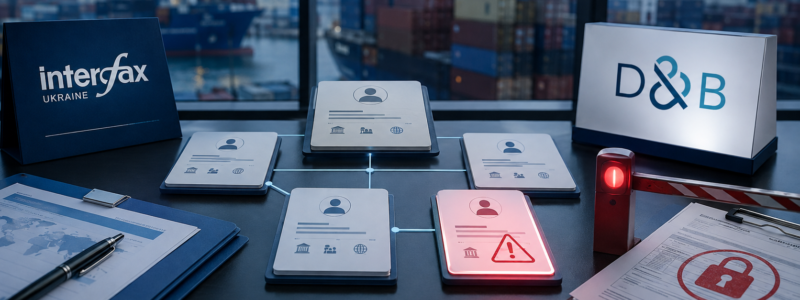
Searching for a partner’s name in an open sanctions list is only the initial stage. A company may not be directly subject to restrictions but may be linked to a sanctioned owner, director, parent company, or another legal entity from the same corporate group.
Additional complexity is created by different spellings of company names and surnames, transliteration, trade names, changes in registered addresses, and the use of intermediaries. Because of this, a simple check based on an exact name match may fail to identify a significant risk.
D&B compliance solutions are used to screen legal entities, beneficial owners, and related persons against sanctions lists, lists of politically exposed persons, information on legally significant events, and negative media coverage.
“Sanctions screening should not be reduced to entering a company’s name into a search bar. It is necessary to identify its owners, executives, parent companies, and subsidiaries. Amid tightening international restrictions, an error can lead to a payment being blocked, a contract being terminated, or reputational losses,” said Maksym Urakin, Director of Development and Marketing at Interfax-Ukraine, Head of the D&B-Interfax-Ukraine business unit, PhD in Economics.
Before concluding a contract, a Ukrainian company should identify the legal entity, verify its registration details, establish its ownership structure, and compare the information obtained against sanctions and other risk lists.
Banks, carriers, insurance companies, and other participants in the future transaction require particular attention. Even when the seller and buyer are not subject to sanctions, a payment or delivery may be stopped due to the involvement of a high-risk intermediary, vessel, financial institution, or related company.
Based on the results of the screening, a business may refuse the transaction, request additional documents, change the payment route, include sanctions clauses in the contract, or provide for the right to terminate cooperation if the partner’s status changes.
Sanctions compliance does not end after a contract is signed. The status of a company or its owner may change while a long-term contract is already being performed. That is why regular monitoring is advisable for key partners.
Dun & Bradstreet has been operating in the field of business information since 1841. The company provides solutions for third-party screening, analysis of corporate relationships, identification of beneficial ownership, sanctions screening, credit risk management, and supply chain monitoring.
In Ukraine, Dun & Bradstreet products and data are represented by the Interfax-Ukraine News Agency. Its specialized division helps Ukrainian companies screen foreign counterparties and work with international business information. Interfax-Ukraine is an independent Ukrainian news agency that has been operating since 1992 and is headquartered in Kyiv.
Questions can be submitted through the specialized D&B resource — dnb.ua, by email at Urakin@interfax.kyiv.ua, or by phone at +38 (044) 270-65-74.