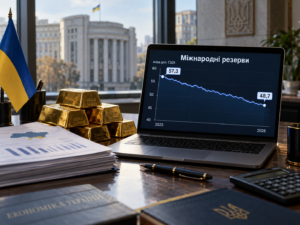
The National Bank of Ukraine is preparing a new, large-scale foreign exchange liberalization package that, for the first time since the start of the full-scale war, is expected to significantly expand individuals’ opportunities to conduct foreign exchange and financial transactions abroad. NBU Governor Andriy Pyshnyy made this announcement on August 10. According to him, a significant portion of the consultations with the International Monetary Fund regarding this new phase of liberalization has already been completed, and the National Bank plans to announce the final details once the necessary procedures are finalized.
“We are preparing a currency liberalization package that, for the first time, will have a tangible impact on individuals as well,” said the NBU Governor.
Until now, the main stages of currency liberalization during the war have focused primarily on businesses: the NBU has gradually expanded opportunities for paying for imports, servicing foreign loans, repatriating dividends, and attracting capital from abroad. Transactions by individuals, including money transfers abroad, are part of a later stage of lifting restrictions in the NBU’s strategy.
According to sources in the banking sector, one of the main expected changes will be an increase in the monthly limit on transfers by individuals from foreign currency cards issued by Ukrainian banks to cards abroad, from 100,000 UAH to 200,000 UAH in equivalent value. Sources also note a possible roughly twofold increase in a number of other existing foreign currency limits; however, the NBU has not yet officially published their final parameters.
Currently, the NBU allows transfers from a foreign-currency payment card issued by a Ukrainian bank to another individual’s card abroad of up to 100,000 UAH equivalent per month. Transfers from hryvnia cards directly to cards issued by foreign banks remain prohibited.
For hryvnia cards, there is also a limit on non-cash payments for goods and services abroad of 100,000 UAH equivalent per month. Cash withdrawals abroad from hryvnia accounts are limited to 12,500 UAH equivalent per seven calendar days. There are no general limits of this type for payments with foreign currency cards for ordinary goods and services, although certain restrictions remain in place for some categories of transactions.
Thus, if the changes announced by the banking market are approved as expected, the new package will become one of the most significant relaxations of restrictions directly affecting Ukrainian citizens starting in 2022. Above all, it will simplify support for relatives abroad, the use of funds from Ukrainian accounts during extended stays abroad, and other cross-border transactions by individuals.
At the same time, this new phase of liberalization does not mean the complete abolition of foreign exchange controls.
The NBU maintains a managed floating exchange rate regime and continues to cover the structural foreign exchange deficit in the market through its own interventions. According to the regulator’s strategy, the further lifting of restrictions depends not on a predetermined timeline, but on the state of the foreign exchange market, international reserves, inflation, and other macrofinancial conditions.
The transition to easing restrictions for the general public is of particular importance, as such measures are part of the third stage of currency liberalization in the NBU’s roadmap, alongside foreign investments, freer capital flows, and the expansion of other cross-border financial transactions. At the same time, the NBU may implement certain steps from different stages in parallel, provided that macroeconomic conditions permit.
In January 2026, the NBU had already significantly expanded opportunities for businesses by introducing a so-called “credit limit,” which allows companies to use foreign loans raised after January 1 for a range of transactions, including servicing existing debts and additional repatriation of dividends. In April, the regulator implemented another round of easing measures for certain categories of individuals and companies.
The final amounts of the new limits for individuals, the date they take effect, and the full list of permitted transactions are to be determined by a separate decision of the NBU’s Board. As of the afternoon of August 10, the relevant resolution had not yet been published on the regulator’s official website.