

The National Bank of Ukraine is preparing a new, large-scale foreign exchange liberalization package that, for the first time since the start of the full-scale war, is expected to significantly expand individuals’ opportunities to conduct foreign exchange and financial transactions abroad. NBU Governor Andriy Pyshnyy made this announcement on August 10. According to him, a significant portion of the consultations with the International Monetary Fund regarding this new phase of liberalization has already been completed, and the National Bank plans to announce the final details once the necessary procedures are finalized.
“We are preparing a currency liberalization package that, for the first time, will have a tangible impact on individuals as well,” said the NBU Governor.
Until now, the main stages of currency liberalization during the war have focused primarily on businesses: the NBU has gradually expanded opportunities for paying for imports, servicing foreign loans, repatriating dividends, and attracting capital from abroad. Transactions by individuals, including money transfers abroad, are part of a later stage of lifting restrictions in the NBU’s strategy.
According to sources in the banking sector, one of the main expected changes will be an increase in the monthly limit on transfers by individuals from foreign currency cards issued by Ukrainian banks to cards abroad, from 100,000 UAH to 200,000 UAH in equivalent value. Sources also note a possible roughly twofold increase in a number of other existing foreign currency limits; however, the NBU has not yet officially published their final parameters.
Currently, the NBU allows transfers from a foreign-currency payment card issued by a Ukrainian bank to another individual’s card abroad of up to 100,000 UAH equivalent per month. Transfers from hryvnia cards directly to cards issued by foreign banks remain prohibited.
For hryvnia cards, there is also a limit on non-cash payments for goods and services abroad of 100,000 UAH equivalent per month. Cash withdrawals abroad from hryvnia accounts are limited to 12,500 UAH equivalent per seven calendar days. There are no general limits of this type for payments with foreign currency cards for ordinary goods and services, although certain restrictions remain in place for some categories of transactions.
Thus, if the changes announced by the banking market are approved as expected, the new package will become one of the most significant relaxations of restrictions directly affecting Ukrainian citizens starting in 2022. Above all, it will simplify support for relatives abroad, the use of funds from Ukrainian accounts during extended stays abroad, and other cross-border transactions by individuals.
At the same time, this new phase of liberalization does not mean the complete abolition of foreign exchange controls.
The NBU maintains a managed floating exchange rate regime and continues to cover the structural foreign exchange deficit in the market through its own interventions. According to the regulator’s strategy, the further lifting of restrictions depends not on a predetermined timeline, but on the state of the foreign exchange market, international reserves, inflation, and other macrofinancial conditions.
The transition to easing restrictions for the general public is of particular importance, as such measures are part of the third stage of currency liberalization in the NBU’s roadmap, alongside foreign investments, freer capital flows, and the expansion of other cross-border financial transactions. At the same time, the NBU may implement certain steps from different stages in parallel, provided that macroeconomic conditions permit.
In January 2026, the NBU had already significantly expanded opportunities for businesses by introducing a so-called “credit limit,” which allows companies to use foreign loans raised after January 1 for a range of transactions, including servicing existing debts and additional repatriation of dividends. In April, the regulator implemented another round of easing measures for certain categories of individuals and companies.
The final amounts of the new limits for individuals, the date they take effect, and the full list of permitted transactions are to be determined by a separate decision of the NBU’s Board. As of the afternoon of August 10, the relevant resolution had not yet been published on the regulator’s official website.
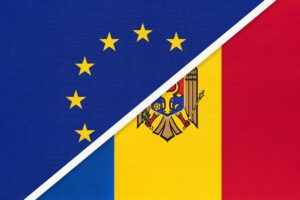
The European Parliament on Tuesday voted to liberalize Moldova’s agricultural exports to the European Union, MEP Siegfried Muresan, who co-chairs the committee for cooperation with Moldova, said.
Under the EP resolution, export quotas will be doubled for a year for seven goods to which tariff quotas still apply. They include tomatoes, garlic, table grapes, apples, cherries, plums, and grape juice. Moldova used to export plums and grapes in large quantities to Ukraine, Belarus and Russia.
The decision was made because the situation in Ukraine “has strongly affected Moldovan farmers, who are no longer able to export their goods to the East,” Muresan said.
The EU is already Moldova’s biggest trading partner, accounting for almost two-thirds of total exports, he said.
Ukraine and Turkey, within the framework of the Free Trade Area (FTA) agreement, have reached an agreement on the complete liberalization of road transportation.
“As part of the FTA, a historic agreement was reached on the complete liberalization of road transportation. Restrictions for Ukrainian road carriers in the Turkish market will soon be lifted, in particular, this also applies to the entry of empty vehicles. That is, trucks will be able to enter empty and return with goods,” Infrastructure Minister of Ukraine Oleksandr Kubrakov wrote on his Facebook page.
He stressed that the next step is to expand cooperation on combined and multimodal transportation between Ukraine and Turkey.
“We propose to create special conditions for tuning transport chains in the “road-port-road” format,” Kubrakov stressed.
According to him, the strategic goal of Ukraine is the maximum removal of restrictions for Ukrainian carriers.
Kubrakov recalled that in negotiations with the European Union, Ukraine stands for the complete liberalization of road freight traffic.
He also expressed hope that cooperation between Ukraine and Turkey in terms of road construction will be expanded thanks to new projects, including the construction of concession roads.
Kubrakov also stressed that the countries continue to work together on an agreement on cooperation in the field of maritime search and rescue in the Black Sea.
“This is an important issue for Ukraine, which arose sharply after the annexation of Crimea. An agreement with Turkey will help legally secure Ukraine’s areas belonging to it, improve the ability to conduct search and rescue operations. This will eliminate insinuations from the aggressor country about Ukraine’s failure to fulfill its international obligations,” the minister said.
He also noted the prospects for cooperation between Turkish partners and the largest Ukrainian state stevedore – Pivdenny seaport, since among all Ukrainian ports it will potentially be able to receive the largest ships that will enter the Black Sea thanks to the built Istanbul Canal.
Among the proposals voiced by the parties to the discussion of the FTA agreement is the expansion of the geography of air travel between the countries, including on the Istanbul-Uzhgorod route.
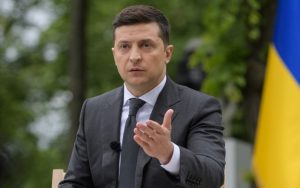
President of Ukraine Volodymyr Zelensky said that visa liberalization for tourists from China and India should be carried out as soon as possible.
According to the presidential press service, the head of the state said this at a meeting with the Cabinet of Ministers of Ukraine members on Monday, July 13, at which Foreign Minister Dmytro Kuleba said that the government is actively working on the issue of liberalizing the visa regime for tourists from these countries.



