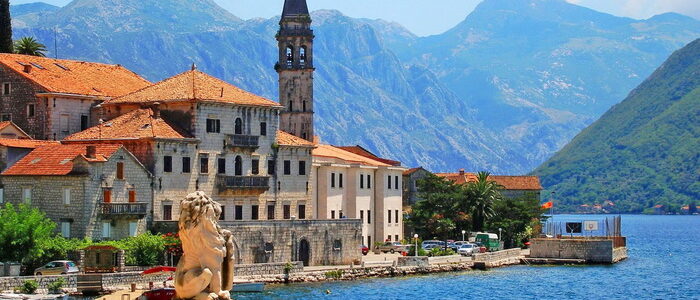
According to “Serbian Economist”, in the first half of 2026, Serbia became the largest source of foreign capital directed toward real estate purchases in Montenegro, according to data from the Central Bank of Montenegro (CBCG).
From January through June, foreign investors invested 237.77 million euros in Montenegrin real estate, which is 3.89% more than during the same period last year. Overall, gross foreign direct investment inflows into the country totaled 457.37 million euros, meaning real estate accounted for about 52% of all FDI inflows.
Serbia took the lead with 55.75 million euros, or 23.45% of all foreign investment in Montenegrin real estate.
Germany took second place with 22.9 million euros, and the United States came in third with 20.84 million euros. Switzerland contributed 18.5 million euros toward real estate purchases, and Turkey contributed 16.34 million euros.
Against this backdrop, the continuing decline in the role of Russian capital is particularly noticeable. In the first half of the year, only 5.37 million euros came from Russia for the purchase of Montenegrin real estate, placing it in tenth place. Poland and Belgium, among others, now rank higher than Russia in the list.
This trend began to take shape as early as last year. In the first quarter of 2025, Russia fell out of the top five largest markets for real estate buyers in Montenegro for the first time and ranked sixth. For 2025 as a whole, the volume of Russian investment across all sectors of Montenegro’s economy fell to 33.98 million euros, of which approximately 17.8 million euros went to real estate. By comparison, in the years 2020–2024, Russian capital was traditionally among the country’s largest sources of foreign investment.
However, it is not entirely accurate to refer directly to “Serbian citizens” or “Russians who purchased real estate” based on these figures. The CBCG methodology considers the country from which the payment originated, which may not correspond to the citizenship of the ultimate buyer or beneficiary. For example, a Russian citizen may pay for a property from an account in Serbia, the UAE, or another country. Therefore, the data primarily reflects a shift in the geography of financial flows in the real estate market.
INVESTMENT, MONTENEGRO, REAL ESTATE, SERBIA

Related: