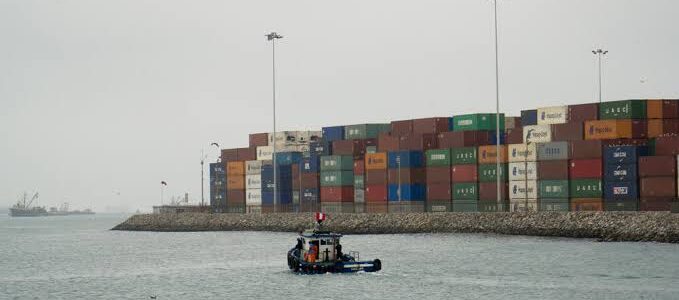
The Romanian port of Constanța on the Black Sea is among the European logistics hubs used for the illegal import of cocaine from Latin America. At the same time, international criminal groups are expanding their presence in Romania and other countries in Southeast Europe by establishing ties with local criminal networks, according to research by the European Drug Agency (EUDA) and an international investigative report by The Guardian.
According to The Guardian’s investigation, published on October 13, 2026, criminal organizations from Colombia, Brazil, Ecuador, Venezuela, Mexico, and other Latin American countries are already active in at least 12 European countries. At the same time, certain networks—in particular Brazil’s Primeiro Comando da Capital (PCC)—may be operating in 16 European countries, according to law enforcement estimates.
Over the course of four months, journalists analyzed data from law enforcement agencies, international investigations, and court cases, and spoke with experts from eight countries. The investigation revealed that Latin American cartels are increasingly collaborating with European criminal groups, leveraging their connections and logistical capabilities.
Traditionally, the main routes for cocaine entering the European market remain Belgium, the Netherlands, Spain, Portugal, and France. However, law enforcement agencies are noting an expansion of drug networks’ activities in Germany, Romania, Bulgaria, Croatia, and other countries in Central and Southeastern Europe.
The port of Constanța is of particular concern; the EUDA identifies it as one of the entry points for cocaine into Europe, alongside Antwerp, Rotterdam, Hamburg, Valencia, Algeciras, and Gioia Tauro in Italy.
According to analysts, tighter controls at major ports in Western Europe are prompting criminal organizations to make greater use of alternative maritime routes. This increases the risks to port infrastructure in the Black Sea and Adriatic regions.
The scale of the European cocaine market remains significant. According to EUDA data, between 2014 and 2024, the volume of cocaine seized in Europe increased by 471%.
In 2024, European Union member states reported 97,000 cocaine seizures totaling 330 metric tons. This is less than the record 419 metric tons seized in 2023; however, the number of seizures increased, which may indicate a shift in drug trafficking routes and methods.
The largest seizures in 2024 were recorded in Spain—124 metric tons, France—53.5 metric tons, and Belgium—44.6 metric tons. These three countries accounted for about 67% of the total amount of cocaine seized in the EU.
Significant quantities were also seized in the Netherlands (37.6 metric tons), Germany (23.8 metric tons), Portugal (23 metric tons), and Italy (11 metric tons).
At the same time, the countries of the Western Balkans play a special role in the international drug trade. According to a study by the Global Initiative Against Transnational Organized Crime, criminal networks from Montenegro, Serbia, Albania, Bosnia and Herzegovina, and other countries in the region have become active participants in global cocaine supply chains over the past two decades.
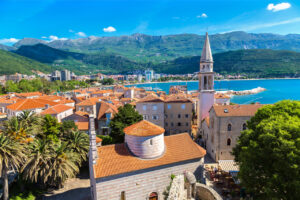
The Montenegrin port of Bar holds a special place among Balkan ports. According to data from the Montenegrin Ministry of Health and the EUDA, in August 2021, law enforcement agencies discovered more than 1.4 metric tons of cocaine in a container shipment of bananas that arrived from Ecuador via the port of Bar. In January 2022, another approximately 500 kg of cocaine was discovered in the country in a shipment of bananas that passed through this port.
Montenegrin authorities viewed these incidents as confirmation of the country’s role as a transit point in international drug smuggling. The small domestic market could not have been the final destination for such large quantities.
In general, the main established maritime routes for cocaine smuggling into Europe pass through the Atlantic ports of Antwerp in Belgium, Rotterdam in the Netherlands, Hamburg in Germany, Valencia and Algeciras in Spain, as well as through Portuguese and French ports.
In the Mediterranean region, Gioia Tauro in Italy and Piraeus in Greece remain key hubs. In the Adriatic, major seizures have been recorded in Bari (Montenegro), Durres (Albania), Ploče, and Rijeka (Croatia). In the Black Sea basin, ports attracting the attention of law enforcement agencies in the context of cocaine smuggling risks include Constanța in Romania and Varna in Bulgaria.
However, these routes carry different weight in international drug trafficking: ports in Belgium, the Netherlands, and Spain remain the primary points of entry in terms of seizure volumes, while Balkan and Black Sea ports primarily serve as secondary transit points.
EUDA analysts warn that route diversification, corruption risks, and the use of international transport chains complicate the work of customs and law enforcement agencies. Under these conditions, international information sharing, the inspection of high-risk cargo, and cooperation among European port authorities are becoming increasingly important.
Sources: The Guardian, investigation dated October 13, 2026; EUDA, study of European cocaine supply routes; EUDA, European Drug Report 2026; Montenegro Ministry of Health / EUDA, drug situation overview; Global Initiative Against Transnational Organized Crime, study from April 2025.